Sustainability remains a key focus in the fashion industry, and few understand this better than Hatta Dolmat.
The 43-year-old designer has long centred his work around issues that hold real significance.
“I’m exploring the use of locally produced pineapple fibre in clothing,” he casually remarks, while welcoming StarTrends into his Kuala Lumpur studio.
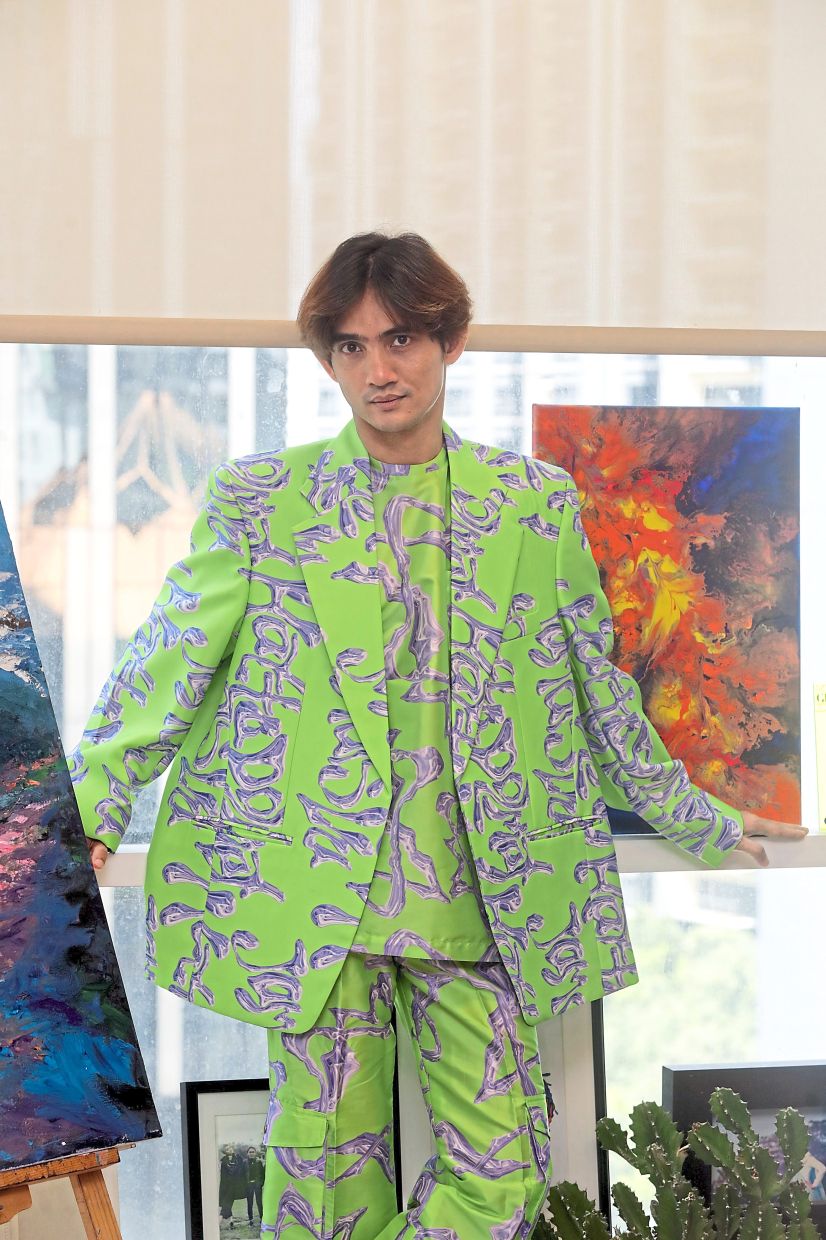
With eye-catching artworks and colourful memorabilia scattered throughout, the space offers a glimpse into yet another facet of his personality.
Hatta, recognised by the Malaysia Book of Records for creating the country’s first sustainable fashion collection back in 2021, is equally known for dressing celebrities.
His commitment to the environment and his presence on the glitzy red carpet underscores the breadth of his influence.
His clients include the likes of Yuna, Erra Fazira, Jaclyn Victor, Fasha Sandha and lots more.
Read more: Fashion finds its true self? Why authenticity now matters more than trends
Hatta is also the founder of the Kuala Lumpur Young Designers Association, described as an “impact-driven” collective.
Its mission has always been to nurture the next generation of talent and instill in them the importance of responsible design.
Four years ago, the association partnered with Malaysia’s Higher Education Ministry on a runway competition for students, with the theme focused squarely on sustainable fashion.
That said, the Melaka-born creative has a lighter, less-serious side to him.
During the photo shoot and interview, he smiles easily and shares candid stories from his past.
“This wasn’t my original plan, but my lecturers encouraged me to major in fashion,” Hatta says, reminiscing about his time at Universiti Teknologi Mara, where he earned his degree in design.
He laughs as he recalls the challenges and criticisms he faced early in his career, noting how he took them in stride.
“It’s not an easy industry. There are many ups and downs, but it teaches you to persevere and keep your eyes fixed on the path ahead.”
Tell us about your most recent collection and how it represents you.
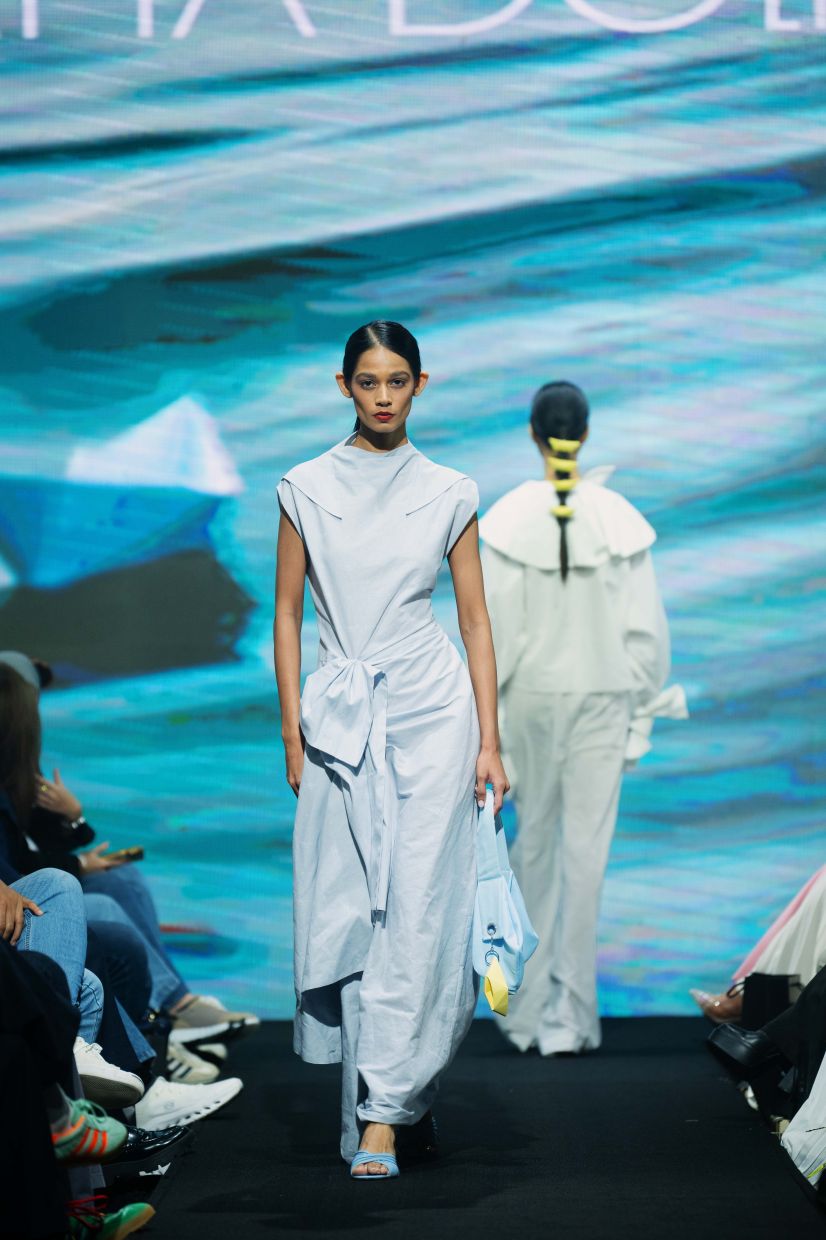
Named Perahu Kertas (paper boat), the collection reflects my 20-year journey as a designer and evokes many sentimental memories.
Although a paper boat is fragile, the concept of a vessel represents resilience – our shared effort to stay afloat. It also embodies movement and the ability to carry dreams forward, even through challenges.
Life, much like a journey at sea, isn’t always smooth sailing. But, like a boat, we must know when to moor during rough times and continue on with our voyage when the circumstances change.
For this collection, I worked with fabrics such as cotton, linen and denim, transforming them into easy-to-wear pieces like cropped jackets and oversized trousers.
While these designs are different from my usual glamorous aesthetic, each piece still bears the signature embellishments that define my style.
I’m toying with the idea of moving into fabric production.
Recently, I visited a university in Johor to learn more about their research on pineapple fibre, and I was genuinely excited by the possibilities.
There’s something inspiring about being involved at this early stage of textile manufacturing.
It feels like a real opportunity to uplift the fashion industry from the ground up, especially when it comes to sustainability.
I want to be part of that chain, contributing not just to the final designs, but to the very materials we use – shaping fashion in a more responsible and forward-thinking way.
Sustainable fashion seems to be central to your identity as a designer. Can you share your thoughts on responsible design?
I’ve always believed that fashion needs to be circular.
What a consumer buys is ultimately a designer’s responsibility, so sustainable fashion really has to start with us, the creators.
Back in 2021, I launched a collection using fabric made from RPET (recycled polyethylene terephthalate), produced from discarded bottles, and I continued exploring that path until 2024.
Now, I’m looking around at other sustainable options, like pineapple fibre fabric, and even textiles made from banana fibre.
Do you approach designing for red carpet events differently than for your sustainable collections? How different are the two experiences?
I actually started my career more in showbiz, designing lots of red carpet looks.
For those outfits, there’s really no escaping going all out and embracing the drama – a celebrity has to turn heads at an event.
I learned a lot along the way. I remember getting some pretty stinging critiques in my first year.
People were calling my designs “Christmas trees”.
That’s when I realised I needed to find a balance between glamour and restraint. I couldn’t just pile on colours and details endlessly.
Can you share your experience of working with celebrities? What about working with Malaysian stars that have gone international like Yuna?

For example, she once explained the fashion scene in LA (Los Angeles) to me, and it gave me a sense of how expectations can change depending on the city.
I was designing a dress for her, in 2012 and she told me she wanted something simple, yet still eye-catching.
I think I was just too starstruck at that time. I remember saying yes to everything.
It wasn’t until later that I realised I couldn’t find the fabric she wanted here in Malaysia.
I ended up scrambling and taking a last-minute flight to Bangkok to hunt for it.
I still remember that design.
It was for the Anugerah Industri Muzik, and Yuna was celebrated as one of the best-dressed stars that evening.
Read more: How Malaysian women are elevating their headscarf styling with chic accessories
What are your thoughts on how fashion is perceived in different markets? Would you say there is a difference between the local scene and the global one?
I think in Western countries, people tend to prefer more subtle designs.
Here in Malaysia, most of us like things a bit more va-va-voom.
It’s not about better or worse – just different tastes.
As designers, we have to learn to adapt and adjust based on what’s needed.