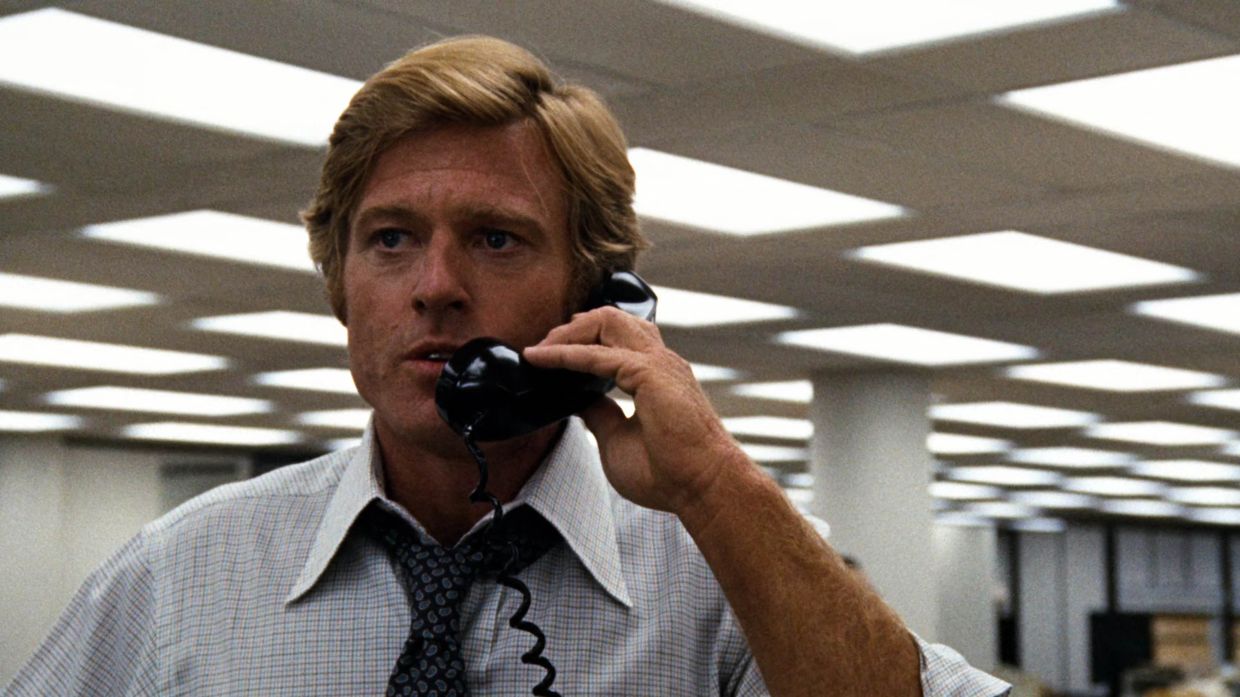
He played a flaxen-haired ballplayer and a blue-jeaned outlaw. A tweedy journalist and a repp-tied politician. He embodied a cocksure skier, a pea-coated spook, a coifed conservative lawyer and even a comic book side character.
Through a career that stretched six decades, Robert Redford, who died Tuesday (Sept 17) at 89, was an intellectual Marlboro Man tuned to maximum Americana.
Redford’s characters were “I’ll do it myself” men with skin as tough as elephant hide and a wardrobe gathered from an argyle-to-zoot-suit encyclopedia of American style.
Redford long claimed his spot (alongside names like Paul Newman, Steve McQueen and James Dean) on the Mount Rushmore of actors who have a permanent plot on designer mood boards.
The aura of Redford’s roguish strivers are what fashion designers like Ralph Lauren have been trying to bottle for decades.
Lauren’s denim cowboys remain echoes of The Sundance Kid; his corduroy-ed models continue to channel Redford as Bob Woodward in All The President’s Men.
Each time a designer makes a peacoat, they are – consciously or not – citing the one Redford wore as a CIA grunt in Three Days Of The Condor (Lauren, in fact, helped outfit Redford in brown pinstripes and flamingo pink suits to play the puzzling playboy at the centre of 1974’s The Great Gatsby).
Read more: How Giorgio Armani built an enduring fashion legacy of cinematic elegance
Redford arrived in Hollywood from nearby Santa Monica in 1960 with the winsome good looks of a high school quarterback.
He was handsome, certainly (“He’s no Robert Redford,” was once a common slight).
But audiences were able to see Redford (and by extension his style) as someone aspirational, yet not otherworldly.
In All The President’s Men, his hair might have been as feathery as Farrah Fawcett’s, but his complexion was pocked.
As his career journeyed onward, Redford let his skin leather. In 2018’s The Old Man & The Gun, in which Redford, at 82, played a three-pieced assassin, his craggy face called to mind the surface of Mars.
To watch his films today is to travel back in time before buccal fat extraction and Chiclet veneers had slithered into Hollywood, with a convincing argument that they probably shouldn’t have.
Redford’s breakthrough in the late 1960s coincided with a new interest among men in how to dress. In 1974, the cover of GQ magazine offered an illustrated riff on Redford as Jay Gatsby, with the headline “The movie that’s influencing what you wear”.
Redford was still a touchstone a decade later when he appeared in a dark suit on the cover of Esquire in 1988.
Yet, if Redford was a style icon, he was a reluctant one.
“I don’t see myself as beautiful,” Redford told The New York Times in 2013.
“I was a kid who was freckle-faced, and they used to call me ‘hay head’.”
Read more: ‘Tough, sexy look’: Terence Stamp remembered for redefining male beauty ideals
Further, Redford rarely spoke of his fashion sense and did not savour having his shopping habits catalogued. A remembrance like this probably wouldn’t have pleased him.
He had other things on his mind. Redford would go on to become a director, winning an Oscar for Ordinary People in 1980.
He moved to Utah, became a founder of the Sundance Film Institute and devoted much of his time to conservation causes.
“If you talk about an issue, what comes back is a description of what you’re wearing,” Redford told a reporter in 1984 while promoting the baseball film The Natural.
“Reporters only want to know how tall you are and if your teeth are capped.”
The matter, though, has long since been out of his hands. – ©2025 The New York Times Company
This article originally appeared in The New York Times.