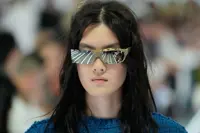
Dolce & Gabbana, Prada and Giorgio Armani lead a reduced schedule for men's fashion week opening Friday (Jan 17) in Milan, putting a brave face on a crisis in the luxury sector.
Fendi and Gucci are noticeably absent, having shown here last January but this season having opted to show mixed collections during women's fashion week in Milan in February.
But among the 16 live shows and dozens of other events over the next five days, down from 22 live shows last January, are still some of Italian fashion's biggest names – and some newcomers.
French designer Pierre-Louis Mascia kicks off proceedings Friday with a mixed men and women's collection for Autumn/Winter 2025.
Read more: Luxury sales jump could be an early signal of the fashion segment's rebound
The former fashion illustrator, who uses collage to create complex patterns printed onto fabric, staged his well-received first runway show last summer at the Pitti Uomo trade show in Florence.
He has described his style as "Hermes with a funkier side".
It is a tough time to be entering the industry, with Italian menswear sales falling 3.6 percent to 11.4 billion euros (approximately RM52.8bil) in 2024.
They had grown by 4.7 percent in 2023 and 20.3 percent in 2022, after the Covid-19 pandemic.
According to estimates from the Italian Fashion Chamber, the entire sector, including womenswear, ended the year with turnover down 5.3 percent, to 95.9 billion euros.
Luxury goods in general have been hit by weak domestic consumption in China, although geopolitical tensions and rising prices also play a factor.
"Mainly this depends on Chinese consumers and their crisis of confidence," said an analyst at Bernstein, Luca Solca.
"The collapse of the real estate market is making them feel poorer, reducing their desire to spend."
Read more: Play it safe? Here's hoping that fashion dares to be different this year
Solca said fashion shows helped the industry by getting people talking about brands, particularly on social media.
"They are a springboard which influencers can use to post comments," he added.
For Carlo Capasa, president of the Italian Fashion Chamber, the antidote to the crisis is creativity.
"We must continue to create dreams to restart consumption," he said.
"More than ever in times of crisis, we need to invest in creativity, which is our most important driver." – AFP