When the pandemic hit in 2020, fashion brands were forced to go online to sell their wares – and yes, most did so successfully. Now however, just having a website is no longer enough.
More and more, we are seeing fashion designers, labels and companies turn to cooler ways to stand out in cyberspace.
These include things like social media, as well as the metaverse – a virtual realm that mimics aspects of the physical world using technologies such as augmented reality (AR), artificial intelligence (AI) or digital currency.
Read more: Perfume in the metaverse? Beauty brands are now getting in the game
Gucci for example, explored creative online methods to entrenched itself within the digitally-savvy Gen-Z crowd.
The Italian fashion house’s social media campaigns reached out to users, offering them a chance to co-create together.
Consider #GucciGram, where illustrators were invited to repurpose three of Gucci’s iconic motifs on Instagram. With #24HourAce, the brand handed over the reins of its Snapchat account to a series of different artists for a full 24 hours and asked them to shoot a colourful mini-video.
Gucci also entered the metaverse to further its reach, setting up virtual stores on platforms like The Sandbox and Roblox.
These digital destinations allow users to play games, earn digital currency, create unique art pieces and buy limited edition digital Gucci items to dress their avatars.
The move shows that Gucci has moved on beyond just conventional ecommerce – which interestingly, was something considered as novel in the past.
“If you think back 20 years, there was a great deal of cynicism and skepticism about whether luxury could be sold online. Because there was a sense that you needed that physical, tactile and service-driven environment,” Robert Triefus, Gucci’s senior executive vice president, corporate and brand strategy, tells StarLifestyle.
“Of course, today, we know that was a fallacy, and that ecommerce is as adaptable for luxury fashion as it is for other industries.”
As such, it is probably safe to predict that fashion’s use of social media and the metaverse could be normalised in the future too – like how retail websites are now.

Creative freedom
A study released by Luxe Digital in July points to how Gucci has remained the most popular luxury brand online in 2022 so far, with 15.7% of the total search interest. Dior and Chanel follow close behind, with 11.8% and 10.8%, respectively.
“The most successful brands today are the ones that create ‘stickiness’ between the brand experience and the customer, and that ‘stickiness’ is based on pleasurable and engaging experiences,” explains Triefus.
He adds that the capabilities offered by AR and AI should be viewed as tools that can help craft exceptional experiences, tailored as much as possible to each client.
This is the case for Gucci, which has succesfully merged two worlds together to drive retail – beyond a physical boutique.
“On the whole, emotions and connections will keep on playing a fundamental role for our customers, on- and off-line. For this reason, the digital element is and will remain a natural extension of the store,” Triefus explains.
“We wanted to really ensure that the human touch was never lost throughout the entire customer journey.”
When it comes to digital campaigns, “cool” is the operative word that brands are looking for. Even among social media sites, there is a ranking of sorts. Certain platforms are seen as more trendy than others.

“I would say that TikTok is the platform to showcase brands to the new generation,” he relates.
Hatta launched a Hari Raya campaign on TikTok earlier this year.
In August, he curated TikTok content for Kuala Lumpur Fashion Week in collaboration with personalities to increase awareness for his brand – which gained massive attention and went viral, earning millions of views, comments and shares.
This is not just about farming “likes”, though.
TikTok launched its own shopping feature in April, combining live streams with ecommerce to allow viewers to buy products without leaving the app.
While Hatta does not think that TikTok is the only place for the younger crowd to shop online these days, he does see the importance of it.
He says TikTok content is not about a perfectly curated feed. To him, it is actually better to post stuff that are not super edited and polished.
He is of the opinion that authenticity resonates better with the Gen Z generation – and that, to him, is TikTok’s strength.
The spontaneity that TikTok offers is what youths prefer, he says.
“TikTok’s best feature is the ability to respond to comments with a video. By creating a video response, brands can demonstrate passion and care for the fans and consumers,” Hatta notes.
“This also builds credibility and fosters the growth of a community, while providing critical information for new potential customers.”
As for TikTok Shop, the social media platform sees it as offering a “shoppertainment” experience.
The term is a portmanteau, combining the words “shopping” and “entertainment”.
It can refer to brick-and-mortar stores adding entertaining elements to their in-person shopping experience, but most commonly it refers to ecommerce retailers creating immersive (read: cooler) digital experiences to boost online sales.
Darren Quek, strategy operations manager of TikTok Malaysia, points out that brands make it to shopping carts via the live shopping feature because users are able to discover products they love through joyful content.
“The hashtag #TikTokMadeMeBuyIt has reached more than 20 billion views and continues to be a trend that helps users and brands nurture shopping interest in the community,” he says.
While TikTok Shop is meant for all businesses, fashion has benefited from it greatly.
Quek reveals that TikTok’s live shopping feature created over 220% gross merchandise value increase (of the total sales within the fashion category) in July, compared to June.
He says the advantage of social media with a live shopping function is that brands can connect directly with their community in real-time and share dynamic links to products and services at the same time.
Exploring the unconventional
For Aeon, a retail website was never meant to exist as just something mundane.
“Connecting the site to all other access points has always been key. Now, in addition to maximising all the social platforms, it’s also about the seamless experience of customers whether they are browsing, or purchasing online to offline and back,” comments Low Ngai Yuen, Aeon group chief merchandise and marketing officer.
“Live shopping is a great feature and we had a great success story with the mid-autumn festival recently, pushing trends and lifestyle. We will be giving it another go with apparel come the Aeon Fashion Preview season in October.”
The company has been seen playing up its fashion offerings this year.
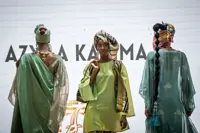
In July, Aeon held a runway show on the MRT. Last week, it threw a carnival of sorts in Kuala Lumpur, meshing together elements of fashion, food and music.
You could say the aim was to create buzz, especially on social media.
Jostling for attention online takes time and commitment though.
“While social influencers on the various platforms have made talk-ability of a brand more possible, competitions with new independent brands is also a growing tough fight – now it’s also about authenticity and following,” Low explains.
“We feel that digital fashion needs a longer gestation period – as customers take into consideration brand stories, in addition to aesthetic, functionality and price.”
However, there are still fashion companies adamant on sticking to conventional methods (again, websites are not anything new anymore) when it comes to retail.
CNCRD, a new player in the scene, just launched its digital store for sneakerheads to buy and sell their shoes in Malaysia. Along with the online platform, it also opened a physical showroom.
Ryan Ng, CEO of CNCRD, believes that a retail site and real-world boutique can still attract shoppers. The key, he explains, is to balance the scalability of ecommerce and the intimacy of an offline in-store experience.
Perhaps it bears down to how niche a product segment can be.
“Sneakers are an intimate product, the ability to feel and experience these products in hand is unforgettable,” Ng stresses.
Read more: What exactly is the metaverse and can fashion effectively conquer it?
“CNCRD believes that the sentiments are still strong when it comes to having a retail website,” he adds.
The company is not entirely disregarding the role of other digital means to stay relevant though.
“CNCRD does look at TikTok and the metaverse as an opportunity for a more immersive marketing penetration,” says Ng.
“These emerging platforms serve to be more inclusive when it comes to resonating with the younger generations. CNCRD will definitely look to investing and exploring our presence into these innovative segments.”
As such, the future of physical stores and online retail can only be enriched through the cool integration of the metaverse and social media.
How brands bring their products or service into consumers’ lives now lies in creative digitalisation.
Already a subscriber? Log in
Get 20% OFF The Star Digital Access
Cancel anytime. Ad-free. Unlimited access with perks.