The way we dress reflects our lifestyle. As such, what is observed in the local fashion scene celebrates our country’s diversity.
You can’t just force Malaysian fashion into a rigid mould, as it can be as varied as you want (or believe) it to be.
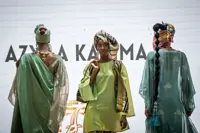
Local styles include a wide range of aesthetics and offerings. From modestwear to resortwear, as well as contemporary chic or classic glamour, they fit different preferences.
“There is no one trend or style for the entire nation,” declares Andrew Tan, the organiser of Kuala Lumpur Fashion Week.
Fashion needs in Malaysia are not limited to specific groups of people too.
“For example, our country is very big with modestwear – but this is not just something for Muslim clientele. It is a style others can find appealing too. Not all ladies feel comfortable wearing a clothing item that’s form-fitting,” Tan explains.
Read more: Embodying the spirit of Merdeka, local brands celebrate the country in style
He goes on to point out that Malaysia is seeing a surge in demand for streetwear. This can be attributed to a growing younger generation who is style-conscious.
Tan adds that we have a celebrity-driven fashion culture, so the ready-to-wear market – which can adapt to fast trend changes according to the entertainment scene – is doing well too.
On the other end of the spectrum is couture, which is more glamorous but not so much trend-driven.
The local fashion here encompasses it all.
“Creativity-wise, Malaysia has some of the most diverse and innovative designers,” Tan claims.
“Our designers are also very in tune with what is happening around the world, so we are always pushing boundaries and Malaysians are generally adventurous when it comes to fashion.”

Malaysian state of mind
Womenswear designer Alia Bastamam says that a fashion identity comes from history and tradition. Being so diverse and multi-cultural, it is not easy to pinpoint one for Malaysia.
However, if she has to do it, she would say that our country’s fashion is steeped in “modern tradition”.
According to Alia, Malaysian designers and brands are relatively forward in keeping with the flow of fashion, but at the same time, they still have a keen eye for preserving culture.
“There are so many points of inspiration – luxurious saree drapes, the minimalist silhouette of a baju kurung, the sensuously modest neckline of a qi pao and many other finer details are always in the DNA of Malaysian designers,” she explains.
It may not be immediately noticeable, but the inspiration is there if one takes a very close look at each design.
Alia is known for her feminine resortwear (clothes worn by Westerners during vacations in warmer climates), which she presents to great fanfare every year on the runway.
She also releases a Hari Raya collection annually.
“For me, it’s exciting to be able to curate details from our roots to create something for fashion. For my recent Resort 2022 collection I made a streamlined saree for a sleek evening look and a key look from my Eid-Resort 2022 collection featured a selendang sleeve,” she enthuses.
Alia is counted as among the younger generation of designers making a big impact in Malaysia.
In her opinion, the multi-cultural aspect has definitely influenced the growth of our country’s fashion scene, but it is the multi-generational influence that is strengthening the industry and keeping it alive.
Preserving culture and heritage aside, Malaysian designers still have to look to the global market.
Alia believes she can do both.
“In the 10 years my brand has been around, the vision has become clearer. Alia Bastamam is a resort label that’s quite literally made for tropical cities, beaches and islands,” she comments.
“So in that sense, my resort aesthetic is truly for the Malaysian audience as well as an international market.”
Read more: In Malaysia, pre-loved fashion is slowly becoming well-loved fashion
Carven Ong, who has always styled himself as a couturier, says the designs you see on the runways reflect Malaysia – but maybe in a more situational manner.
For instance, his outfits for the Mercedes-Benz Fashion Week Kuala Lumpur in July comprised party looks. They signify how the country is opening up again, with life returning to normal after two years of pandemic restrictions.
While it is retro-inspired, drawing from the disco era of the 1960s and 70s, the bright colours and prints mirror Malaysia in its diversity.

“Malaysia is multi-cultural, so the fashion designs we have here should incorporate a lot of the different cultures,” he quips. “Colours, motifs and cuts – there is a lot of things we can draw from.”
Ong is a veteran fashion designer. He started his career more than 30 years ago and is still going strong.
His designs were spotted in the 2018 Hollywood film, Crazy Rich Asians. In 2019 and 2020, he created national costumes for the beauty queens representing Malaysia in the Miss Universe pageant.
Ong believes that traditional fabrics should be used more in Malaysia. He says batik is a very good example.
“Yes, of course you can use it in creative and modern ways,” he notes. “The best way to approach this is to work with the batik makers themselves. There is always a solution in balancing modernity and heritage when it comes to clothes.”
Local pride
The founders of Dia Guild think the fashion that comes out of Malaysia is as stylish and innovative as that from around the world – and deserves as much credit.
They started their retail platform with that in mind, which is to fight for the recognition of designers in Malaysia and other countries in South-East Asia.
Some of the brands found on Dia Guild include Malaysian favourites like Khoon Hooi, Pink Jambu, Talee Studio, Sophia By Shirley and Fern Batik.
“Each nation (Malaysia included) has a rich and unique fashion culture, often imbued with heritage and artisanship from each respective country,” Alia Farouk, one of the founders points out.

Another co-founder Kylie Francis says that most Malaysians can remember how we have grown up wearing traditional attires such as cheongsams, sarees and kebayas during celebrations.
“We should love how modern Malaysian fashion designers are able to draw inspiration from these different cultures by fusing traditional techniques such as batik with bold colours and beautiful, breathable materials like linen, cotton and silk,” she explains.
“This innovative fashion philosophy and identity could be described as ‘tropical chic’.”
According to Dia Guild’s Aisha Hassan, Malaysia’s multi-cultural landscape means that both designers and consumers can draw from a rich well of heritage, whether that’s traditional craftsmanship or various cultural identities.
She cites examples of products that result from unexpected fusions, like cheongsams made from batik or jewellery inspired by the Kuala Lumpur skyline.
“Malaysia’s fashion scene is all the better for it,” she says.
“Local designers and brands have been fortified by Malaysia’s rich and towering history at their back, and thus we hope that as the local fashion scene continues to grow, it will always remember these roots.”
One thing is for sure, all three of them think that Malaysia should not only be celebrated in the Merdeka month or when Malaysia Day nears.
Like how fashion in this country is essentially seasonless, it should also be appreciated all year round.
Indeed, Malaysians should be proud to wear local designs, our uniqueness and flair is far more valuable than what’s “on-trend” overseas or on social media, as it is woven using the cultural fabric of our nation.
Already a subscriber? Log in
Get 20% OFF The Star Digital Access
Cancel anytime. Ad-free. Unlimited access with perks.