A proper fashion shoot once meant weeks or months of planning. It used to involve a huge number of people too – models, photographers, makeup artists, hair stylists, wardrobe managers and much more.
The arrival of a pandemic altered everything. In Malaysia, Covid-19 decimated the modelling industry. It was a year of having to contend with change that seemed almost impossible to implement.
Physical distancing meant that large groups of people couldn’t gather in a small studio space. During the lockdowns, brands began finding different ways of shooting campaigns. Even the models themselves were asked to take on an expanded role.
Read more: A year into the pandemic, Milan's grand and storied fashion runways stay virtual
Fashion companies in the UK got models to photograph themselves at home with instructions conveyed via video calls. There were even instances of experimental use of drones in the US to do remote shoots.
It also became a matter of making the most of the resources at hand. Magazines relied on FaceTime to photograph celebrities for their spreads. A few labels even used their own employees for shoots.
Virtual models – products of computer generated imagery (CGI) – saw a sudden rise in popularity. They became natural replacements for human models in a time when everyone just worked from home.
Restrictions are now being relaxed – but modelling has changed. Will it eventually return to the modus operandi of the past? Can it? Runways are still being filmed in a near-empty room, after all.
Yes, the modelling industry in Malaysia survived – but it certainly wasn’t a walk in the park. The experience proved to be an insightful one though, as a few industry insiders here in the country let on.
Not a walk... on the runway?
It can’t be denied that business for the Malaysian modelling industry has been affected. Agencies here reported an extremely sharp decline in model bookings since the pandemic hit last year.
Andrews Models saw demand plunge about 70%. With the fashion retail industry badly affected, models became collateral damage. There are still some jobs, but they are few and far between.
“Fewer clients result in fewer jobs. A lessened interest in clothes – due to the stay home order or remote style of working – means new clothes are no longer a top priority," says founder Andrew Tan.
He notes that fashion is still a physical experience. While runway shows can go digital, people shopping for clothes would want to feel the items they buy. He also questions the effectiveness of social media in fashion.
Last year saw more brands engaging influencers. Not being able to organise conventional physical events freed up the budget for other marketing means – that is, Instagrammers.
“Instagram, in my opinion, is just a platform showing ‘accidental’ advertising masking as content. There’s not a lot of authenticity in it, and it has become a numbers game!” Tan comments.
Read more: Visual magic or digital noise? Fashion makes the best of online-only shows
Icon Model witnessed a drop of bookings by 80%. When contacted, a person speaking on behalf of the agency reveals that many shoots were cancelled or postponed after the first MCO last year.
“Clients took advantage of Covid-19 to ask for a lower rate. Now most brands are moving towards using local influencers or talents to showcase their products, as they are cheaper compared to a professional model.”
According to the agency, unclear standard operating procedures made it a headache for brands to plan their campaign shoots. The difficulty in bringing foreign models into the country (with borders closed) was another problem.
Malaysian model Sheena Liam says that she had to weather quite a few challenges when lockdowns came into place. In one instance, she was stuck in another state trying to travel to Kuala Lumpur for a shoot.
Liam was also forced to work within the restrictions the best she could. She relates how she outsourced and shot a regional campaign by herself, while having only a tiny team of three people to get it done.
“Balancing client expectations, being responsible and following proper guidelines are definitely challenging aspects – on top of the usual model requirements," Liam further points out.
“It can be tricky, because models now have to take over the role of the photographer, makeup artist, stylist, editor and more, depending on client requirements. I think we all have a new-found respect for influencers who do this for a living.”
On a positive note, the situation has led to brands in other countries outsourcing their shoots to people here. Gone are the days where everyone flew in from a different country to shoot a campaign meant for local use.
“It’s not completely terrible as many talented local creatives are given their chance to fully show what they can do," Liam notes, on how she shot a Chinese New Year campaign with a full Malaysian team for Bangkok label Pomelo.
She adds that runway shows going digital is a good thing. It allows more people to actually tune in. Also, she feels that virtual models created via CGI are a novelty – and they won’t replace human models anytime soon.
“I headlined Digital Fashion Week back in 2014, which was one of the firsts of its kind in the region. Digital and online media have literally been the mainstream means for the average person to get information on the fashion industry for a while now.”

Doing things differently
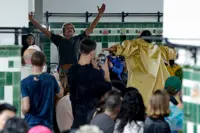
Runway guru Benjamin Toong had to embrace big changes as well. He recalls accompanying three of his models for an outdoor video shoot, which he describes as surprisingly very different. Nothing at all was what he expected.
“It was to replace a runway show. What I remember is that it took a lot longer. Unlike a traditional fashion show, you really have to capture the clothes in detail – from top to bottom.”
Also handling bookings, Toong says his clients started cancelling when the pandemic hit. He went from getting his models booked every week to having zero jobs available.
Toong however predicts a boom in business when restrictions are lifted and brands start spending again. He claims there was actually a mini spike in demand for models during the recovery MCO period last year.
“For the most part of 2020, there were no physical events. Once the pandemic is really over, I believe everyone will be scrambling to put on grand fashion shows – back to back.”
It is his opinion that digital runway shows will not be the industry’s mainstay. He says brands are aware that they cannot create the same wow factor with an online presentation.
Toong’s advice for models looking to break into the industry at these current uncertain times is to just start preparing themselves and picking up necessary skills. When things get better, it might not go back to what it was before.
New models need a more extensive range of abilities, beyond posing or being able to master their expressions. They may need to handle their own hair and makeup, for instance.
Toong explains: “It was possible for the more veteran models to fly solo and do a shoot by themselves. They have years and years of experience. Being dolled up for countless shoots would have somehow taught them the basics of getting camera-ready.”
Read more: 2021 fashion trends to mirror those of last year, say Malaysian style insiders
Models and agencies were not the only ones affected though. Brands also faced problems when the fashion industry was disrupted.
The women behind KL-based modestwear label Mimpi Kita were planning their Hari Raya campaign shoot last year when the MCO was announced. They were caught off guard by the strict restrictions.
Nurul Zulkifli, who founded Mimpi Kita with her two sisters, opens up about the experience, saying that it was a matter of just making the best of the situation. They couldn’t get models or even find an appropriate location for shooting at that time.
“Having to pivot quickly, we decided to change plans, alter the story line and have the campaign video done at home, with members from our team being the talents, videographer and art director," Nurul shares.
“It was certainly challenging having to shoot our biggest campaign (for the year) in a very unconventional way. We resorted to getting extra support from our family in Johor to make our campaign video complete via Zoom.”
Nurul says the pandemic has taught everyone that nothing is impossible. She believes the virus is going to be around for a while, until more countries achieve herd immunity and people are vaccinated. So everyone just has to adapt to a new normal.
Already a subscriber? Log in
Get 20% OFF The Star Digital Access
Cancel anytime. Ad-free. Unlimited access with perks.