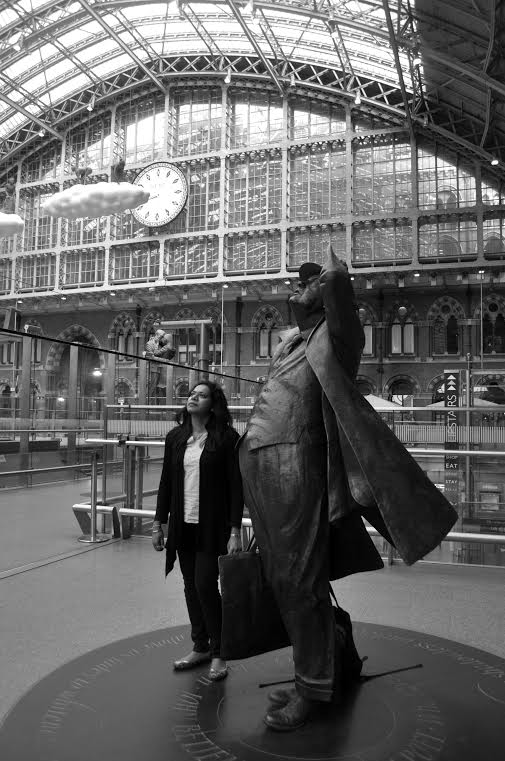
“There are certainly those little uncanny things that happen, moments that make your hair stand on end and you feel a different kind of energy in the air,” says Nirmala Karuppiah, a photographer and filmmaker, as she recalls the various late-night assignments she has undertaken through the years photographing traditional dance performances in Malaysia.
She reminisces about a visit to a Mak Yong/Main Puteri ceremony in a village outside of Kota Baru, Kelantan and documenting a Cantonese opera show in a temple situated beside a graveyard in one of Perak’s small towns.
The 43-year-old is candid about these spooky incidents, and even mentions that she has shot abandoned heritage houses only to discover “inhabitants” surfacing later in her prints.
“It’s all part of the territory – you just have to deal with it. I’ve always been interested in history and tradition, especially shooting traditional dance performances, which can be highly spiritual experiences. My work gravitates towards such old-world practices,” she adds during an interviewa.
As a military man’s daughter, the Kuantan-born Nirmala speaks fondly of her father’s stories about mapping Malaya during the height of the communist insurgency in the late 1950s to early 1960s.
“My dad still has all these wonderful stories of small towns and rural communities across the nation. His is an inner road tour of the country. I guess, listening to him talk gave me a strong interest in history, and yes, local geography. Of course, I also know where some the ‘haunted’ roads are, too,” she explains.
Later, she spent a few years building a portfolio in London, holding residencies in New York and Beijing, and participating in solo/group shows which have shown in London, New York, Sri Lanka and Beijing.
Nirmala’s latest exhibition Sanubari: Portraits In Motion, now showing at the National Visual Arts Gallery in Kuala Lumpur, is a collection of her ephemeral black-and-white prints documenting heritage dance performances such as the classical Indian genre Odissi, traditional Cantonese opera and the age-old healing rituals of Main Puteri.
Sanubari: Portraits In Motion, which first showed in London in July, is on its Kuala Lumpur leg now, before it travels to Colombo in Sri Lanka next month.
“This exhibition, which features 25 works, is a summation of my years documenting traditional dance practices in Malaysia,” says Nirmala, whose interest in capturing fading dance traditions, is equally, if not more, significant to her than anything else in her career.
Nirmala also reveals that she took up Odissi under Datuk Ramli Ibrahim early in her career to better understand the artistic complexion and complexities of the art form. “It was only a three-month stint, yet it was very helpful in giving me an insight into Odissi,” she reveals.
Nearly 80% of the Sanubari: Portraits In Motion exhibition features unpublished photos, lifted mainly from Nirmala’s three major projects, involving Odissi, Cantonese opera and Main Puteri/Mak Yong.
Her solo shows such as Touched By Mysticism (2004), Fluid Lucidity (2006) and Capturing Twilight (2010) have embodied her signature work in this traditional dance field.
“I compiled all of the works, which have coincidentally come from some of my most intense working experiences. They are three complete genres of dance from three races. But it’s not about promoting 1Malaysia or anything like that,” she asserts.
By revisiting different chapters of her career, though not boxed into a strict chronology, the exhibition showcases how Nirmala is a thorough and sensitive observer of the arts, documenting its diversity while bringing her own keen perspective to its traditions and struggles.
As inspiration, Nirmala cites the work of American writer, filmmaker and political activist Susan Sontag, while such photographers as Henri Cartier-Bresson, Eugene Atget and Sally Mann are constant guiding lights when it comes to her own artistic explorations.
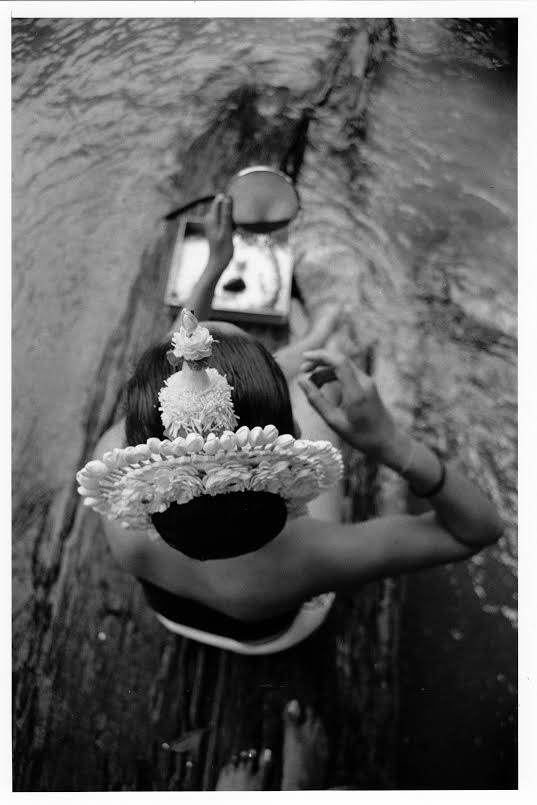
She also has a keen eye for metaphors, especially in the show’s signature piece Sanubari (2011), which captures a young Odissi dancer on a log by the river in Janda Baik in Selangor.
“The stream was flowing forward, while the dancer’s image can be seen through her reflection in the mirror. I was fortunate to catch this soulful moment. You can place your own interpretation on this photo,” says Nirmala, who values emotion, movement and symbolism in her works.
In her quest to be a visual historian, Nirmala is most interested in her photographs being informative and engaging, while she sometimes grapples with the personalities surrounding her larger-than-life subjects like the late Mak Yong diva Mek Sapiah and Cantonese opera doyen Elizabeth Choy Yim Heong.
“If you take the picture, you have to analyse and disseminate the picture and then you come to a conclusion. There is an inner depth to the picture and how you eventually explain the picture to the whole world, and why it is important. The process is part documentary, and part storytelling,” she says.
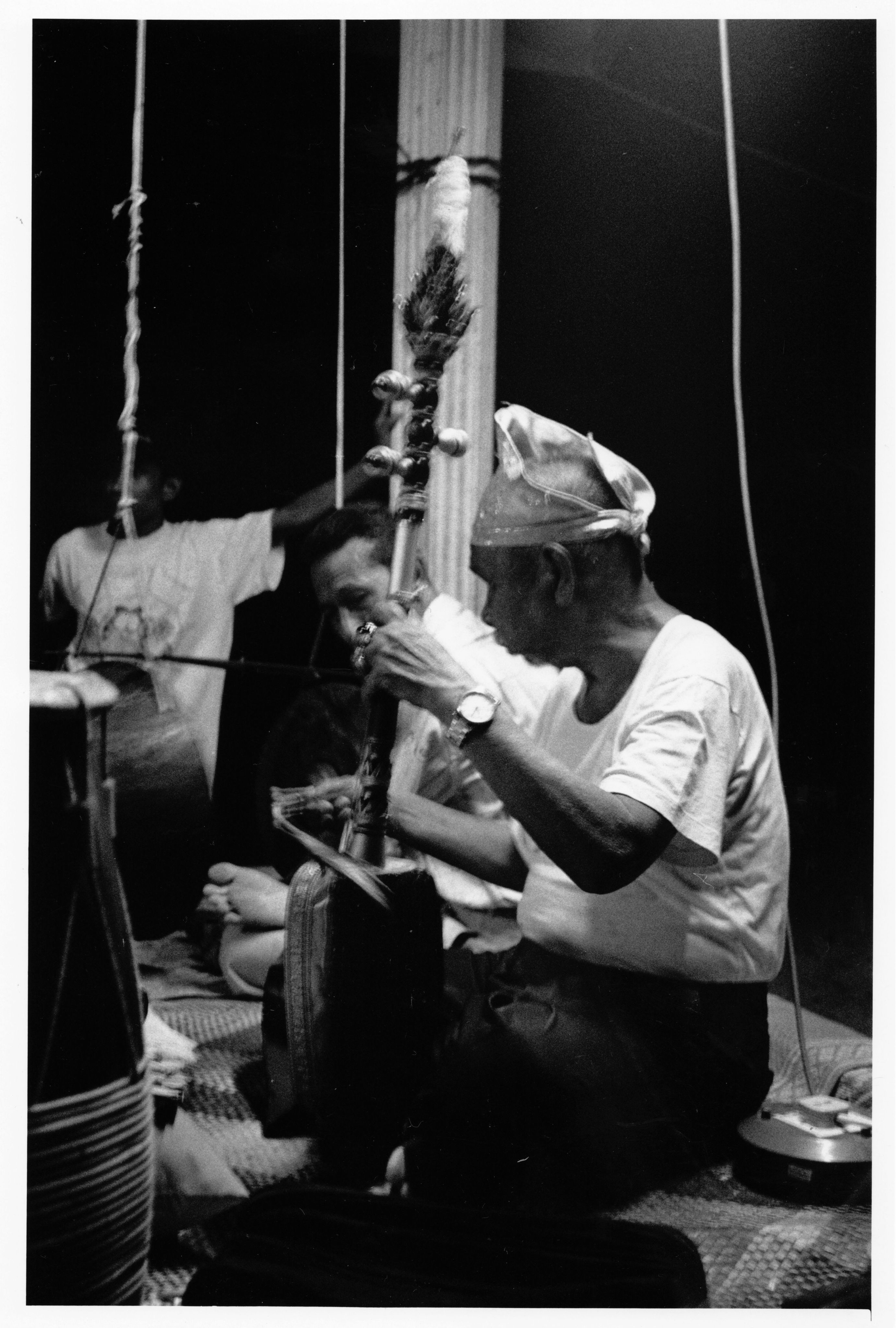
On her travels, Nirmala has often been asked about the legacy of Malaysian traditional dance and its future, while her vibrant images of Mek Sapiah in a deep sway and Choy in full operatic splendour have only grown with quiet pride and refinement in each exhibition staged abroad.
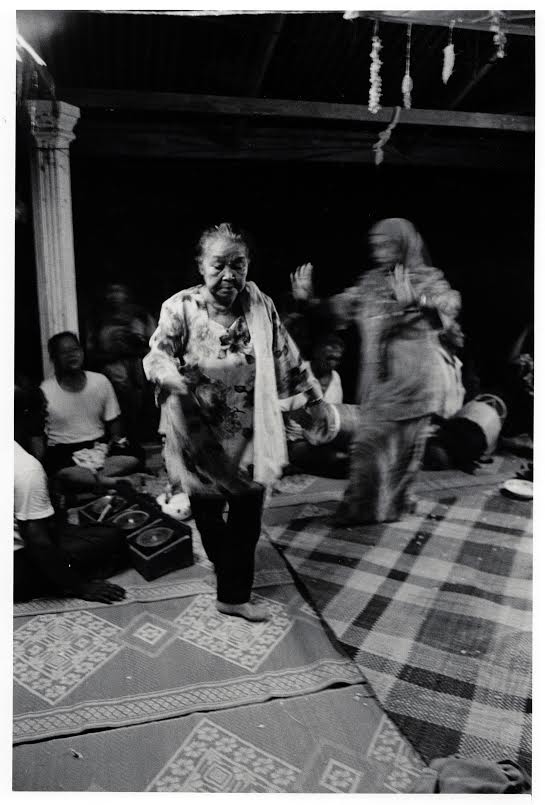
In 2012, Nirmala’s self-produced short film Capturing Twilight also made it into the 65th Cannes film festival. Her documentary weaved together the life of Choy and a tale of Cantonese opera in Malaysia. In Sanubari: Portraits In Motion, Choy is featured in a series of photos portraying life backstage in a Cantonese opera during the Hungry Ghost month (shot in Lahad, Perak), while there is a poignant print of Mek Sapiah revelling in the high spirits of a late night Mak Yong session in 2010. As Nirmala reveals, Mek Sapiah died two weeks later.
“The enthusiasm and curiosity for such images have come mostly from a foreign audience. They seem to appreciate what we seem to be losing – our dance traditions and more.
“If anything, my small role is to expand and invigorate the conversation when it comes to some of these endangered dance forms,” she says, while getting a measure of the long struggle ahead.
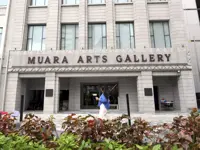
Nirmala Karuppiah’s Sanubari: Portraits In Motion is showing at the National Visual Arts Gallery, No. 2, Jalan Temerloh, off Jalan Tun Razak in Kuala Lumpur until Oct 25. The exhibition is open daily, from 10am-6pm. Free admission. Visit www.artgallery.gov.my for details.
Already a subscriber? Log in
Get 20% OFF The Star Digital Access
Cancel anytime. Ad-free. Unlimited access with perks.