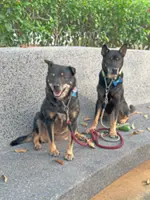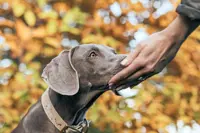
When he turned 10, Whisky started needing a nap after playtime. Photo: Stanley Saw
With dogs living 15 to 20 years, it's inevitable that we outlive our beloved pets. We know it when we adopt the puppy, but it comes crashing in when we spot the first white hair or stiff stretch. So, how do you ensure your furry love enjoys their golden years?
Stanley Saw fell in love with Whisky, his miniature Poodle, when the dog was a pup. They work together, play together, sleep together – it's a bond that never quits. But now Whisky is 15 years old, it's clear he's a senior dog.
"I first noticed that Whiskey was ageing when he was about 10," Stan reminisces. "It wasn't much, just that his hair was a bit lighter. Then white hairs appeared on his face. At the same time, the cataracts in his eyes started becoming more obvious."
Stan also noticed several changes in behaviour.
"Whisky started needing a nap after playtime. Like older people, he needed to recharge a bit more often. He also became less agile and he lost the ability to jump up onto high places. "
Seeing the dog become older had an emotional impact on Stan.
"Whisky is a huge part of our family life. He faithfully waits for me at the door when I’m out, and is never more than five feet away from me when I’m home. He’s at my feet when I’m lying on the couch, sleeps next to us on our bed every night, and goes on trips and adventures with us."
"In fact, our lives revolve around Whisky and Brandy, his nine-year-old companion. We try to dine in pet-friendly places, holiday in pet-friendly hotels, and are close to friends who have similar relationships with their fur kids."
"When we go on 'human only' holidays, we engage a trusted live-in petsitter instead of checking them into boarding facilities, to ensure that there is absolutely no change in their lifestyle. Yes, we spoil them silly. In short, while many may view Whisky as just a dog, for me, he’s my son."
As such, coming to terms with an ageing pet is hitting hard.
Whisky is 15 years old and enjoying his golden years. Photo: Stanley Saw
"I had to come to terms with it," Stan admits. "Dogs are man's best friend but they age differently than us. Like I'm a vampire and he's mortal."
As part of the change, Stan has adapted his home.
"We put steps next to our bed so Whisky doesn't have to jump up. Currently it's makeshift but we're having customised ones made. It will have low wide steps, so it's a stroll up, not a hop up."
"We also brought in a baby carriage so we can stroll him around without him getting tired. He loves it! He sits up high and looks out, so he can see and get fresh air without being over-tired. We also bought a baby harness so we can carry him and be handsfree."
Like human elderly care, there are also more medical consultations.
"We go to the vet and do full checkups regularly, three times a year. It includes blood tests, so we get the full picture on his health. Then, if there's an issue, we can be proactive."
For humans as well as pets, the right diet and lifestyle are essential for maintaining longterm health. As Stan is the managing director of a pet food supplies and marketing company, he has paid significant attention to this part of Whisky's life.
"I've managed and marketed pet food brands for more than two decades now. While there are many great commercial products, the best an owner can get for his pet is common sense. This is because diet is a complex issue.
"Good processed foods make for convenient staples, but you should include a good measure of fresh, raw and cooked foods too because they contain live cultures, such as enzymes. In addition, be aware that some dogs develop allergies and intolerances when they're older.
"You don’t really change anything when the dog gets older; you start incorporating changes the moment they are your pets. Whisky is extremely healthy for a dog his age not by chance, but more so by the choices we've made for him.
"Whisky loves the carrots, apples, steak and scallops we give him, and we top it up with supplements for his joints, skin and coat. Moderation is key. A little of everything makes a world of difference."
Mostly though, the chief ingredients that go into making for a happy healthy pet are love and companionship.
"You won’t have a healthy dog or cat if you feed them well but keep the poor fellas in a four by two feet crate," Stan points out. "A meaningful life involves engaging and enriching the emotional, mental, social, physical and spiritual senses."
But it's not a one-way street.
"Dogs, and in particular Whisky and Brandy, have taught us to celebrate life and to be grateful for every day that we are given to live," Stan says. "We try and live one day at a time."
And in the meantime, Whisky is enjoying his twilight years to the max, with the stroller, the steps and lots of love.
Translating dog years to human ages
The old adage that you can multiply a dog's age by seven and get the human equivalent is riddled with issues because dogs don't age evenly. Also, size has a significant impact on development.
Here is a brief summary of current thinking.
> For small dogs like Pomeranians and Shih Tzus, they are the equivalent of 15, teenagers, when they are one year old. At two, they are 24. At six, they hit 40. At 10, they hit 56 and at 11, they are 62. At 13, they are 68. At 15, they are 76. At 16, they are 80.
> For medium dogs like Cattle Dogs and Beagles, they are also 15 when they are one year old, and 24 at two. At six, they are 42, ageing a little faster than little dogs. At nine, they hit 56 and at 10, they are 60. At 11, they are 65. At 12, they are 69. At 14, they are 78.
> For large dogs like German Shepherds and Labradors, they are also 15 at one year old and 24 at two. But at five-and-a-half, they are 40. At seven, they hit 50 and at nine, they are 60, significantly older than smaller breeds. At 10, they are 66. At 11, they are 72. At 12, they are 77.
> Giant dogs like Great Danes and Malamutes stay young for longer than smaller dogs. They are the equivalent of 12, when they are one year old. At two, they are 22. But then they age faster. At four-and-a-half, they are already 40. At seven, they hit 56 and at seven-and-a-half, they are 60. At nine, they are 71. At 10, they are 79.
As with all dogs, breeding matters. So check with your vet to make sure you understand how your pet is ageing.
Adopt Me
Photo: Sherrina Krishnan-Leyow
Cesar is one year old, healthy and neutered. This handsome fellow was found abandoned when he was a puppy of three months. Today, he is a mighty mutt with a wonderful personality. He adores people and loves being cuddled and talked to. He listens attentively and gets along well with everyone.
Cesar is now looking for a kind and loving forever home. Interested adopters, please call Sherrina in Damansara Damai, Petaling Jaya (012-202 6384).