
In early June, Ally Betchan and her family went to a therapy center in Austin, Texas, the United States, hoping that she could learn to communicate. Like nearly 30% of people with autism, Ally is severely disabled and does not speak.
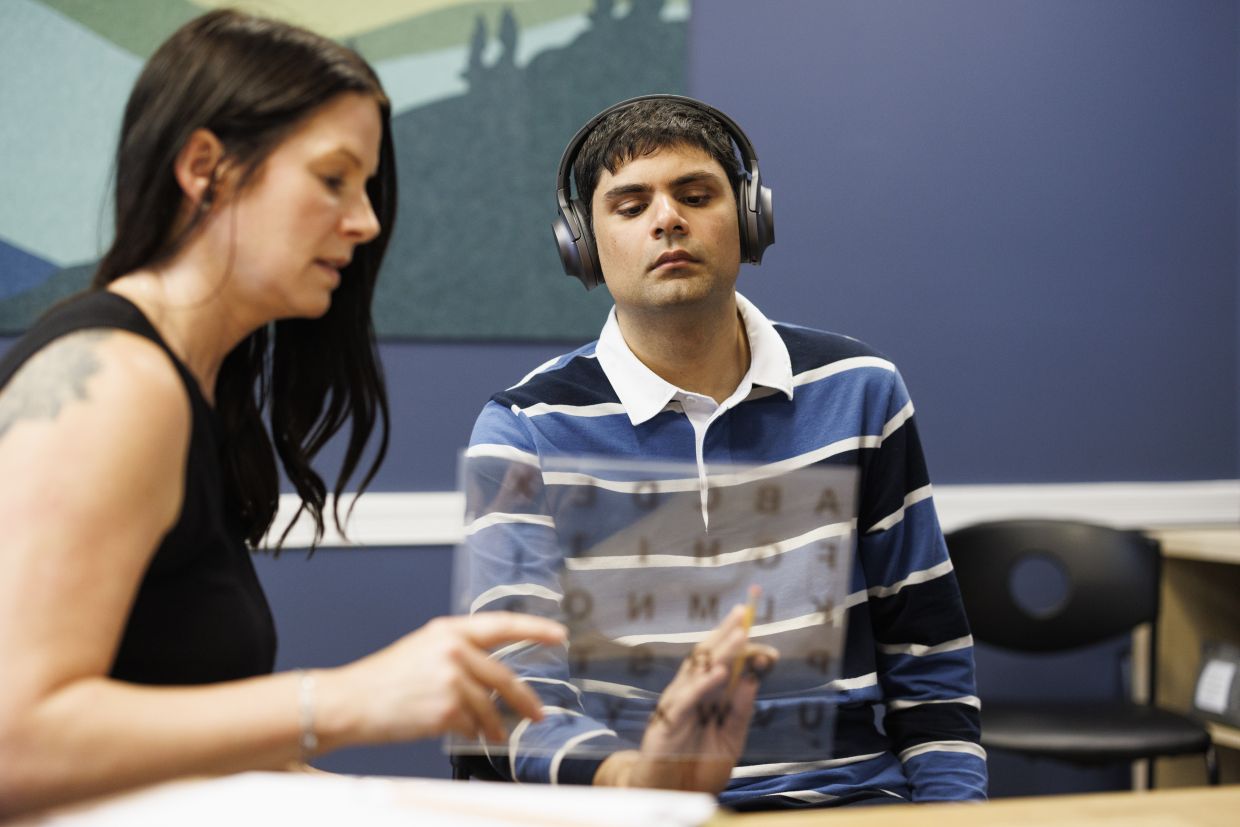
Ally, 22, sat quietly in a small room next to her instructor, Soma Mukhopadhyay, 63, who, by contrast, talked almost non-stop.
More than 30 years ago, Mukhopadhyay taught her non-speaking autistic son, Tito, to write and type independently, creating a communication method that supporters hailed as transformative and critics have challenged ever since.
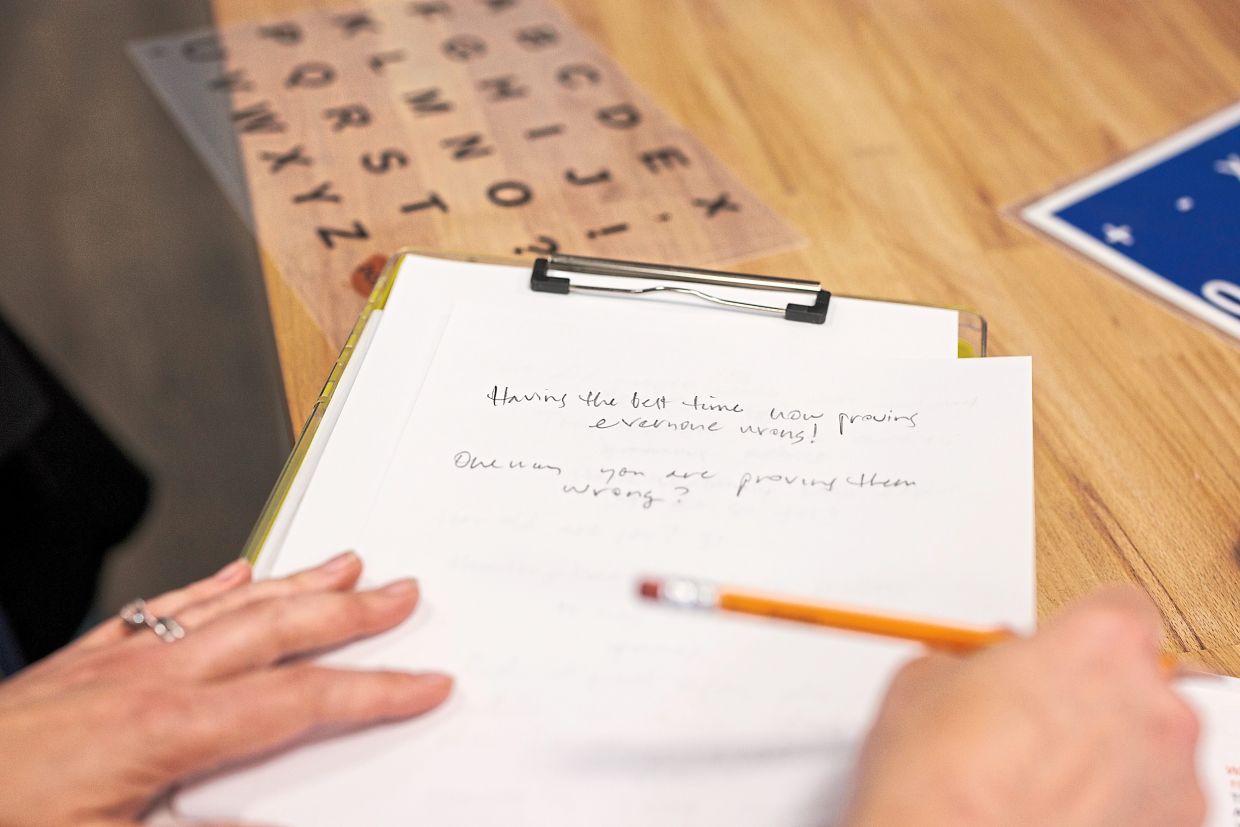
Mukhopadhyay held up a clear plastic sheet marked with the alphabet, prompting Ally to make up a story. As Ally tugged rhythmically at her purse, she slowly pointed at letters to spell "DONNA KNOWS," and then seemed to get stuck, pointing to a jumble of letters.
"I'm so lost," Mukhopadhyay said, shaking the sheet and pressing her to try again. As Mukhopadhyay occasionally tapped under the letter board on her thigh or leaned in the direction of a letter, Ally eventually spelled: "CARING HURTS."
"'Donna knows caring hurts' - that is a life lesson," Mukhopadhyay said, nodding in agreement. Then, Ally jabbed many letters in quick succession, but distinctly: "SHE LOVES THOSE WHO CARE FOR HER." Sitting beside her, Ally's mother, aunt and grandmother smiled.
Mukhopadhyay's technique, called the Rapid Prompting Method, or RPM, is one of several intended to help non-verbal people learn to communicate using letter boards held in midair by another person.
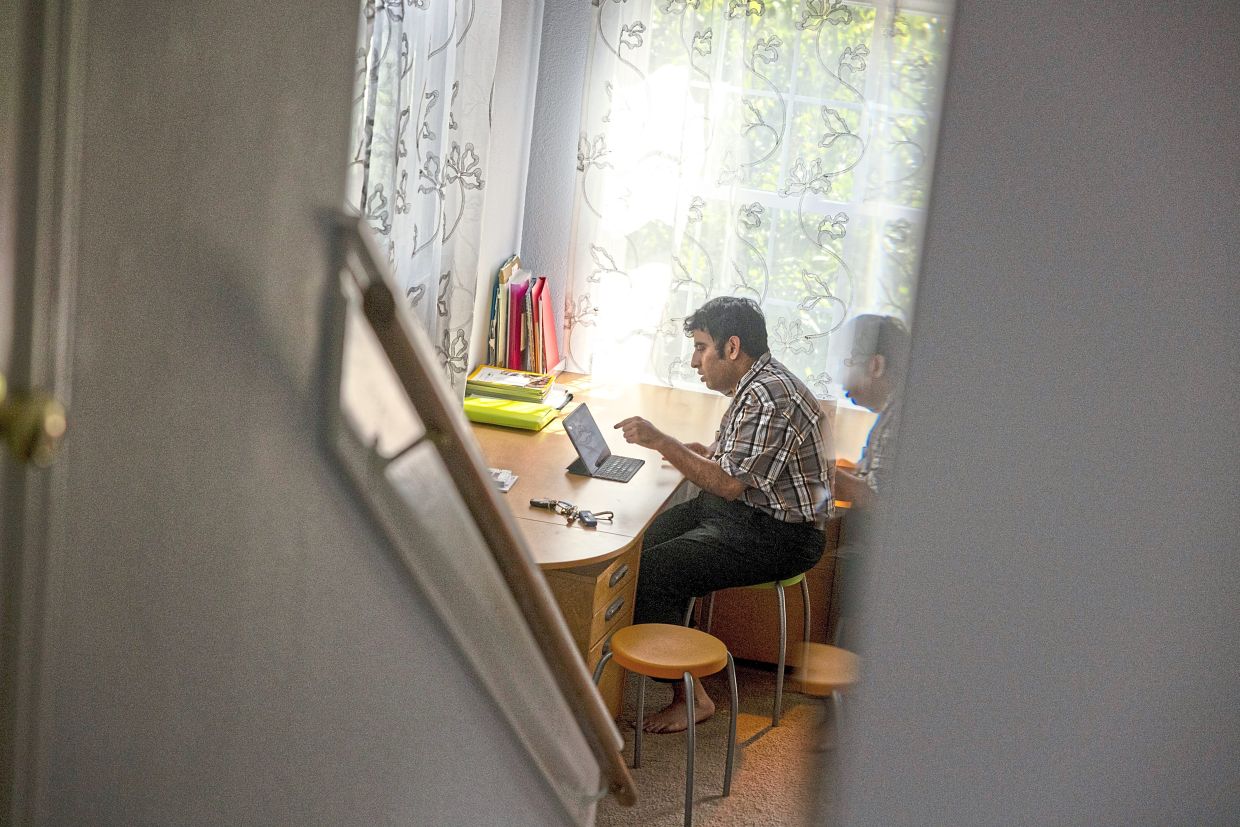
At the core of these assisted spelling methods is a radical assertion: that non-speaking autistic people, many of whom have been considered intellectually disabled their whole lives, may have typical or even extraordinary cognitive abilities, obscured by motor problems and an overwhelmed sensory system that has cut them off from the world around them.
Yet despite the potentially profound implications of these communication methods, there has been remarkably little scientific research evaluating them.
Citing the risk that the person holding the letter board may influence the messages, and a history of such abuses with prior assisted communication methods, many medical groups have cautioned against them.
All of this has led to a growing debate dividing autistic people, families and the scientific community.
The central question is less about whether breakthroughs like Tito's are possible, but whether they are as widespread as many proponents claim.
Do assisted spelling methods reliably reveal a person’s own thoughts, or do they give families a false sense of their loved ones’ inner world and capacities?
That uncertainty has led some autism experts to argue that assisted spelling requires urgent examination.
"Currently there is this incredible impasse," said Dr David Amaral, the research director of the MIND Institute at the University of California at Davis, California, with true believers on one side and skeptics on the other.
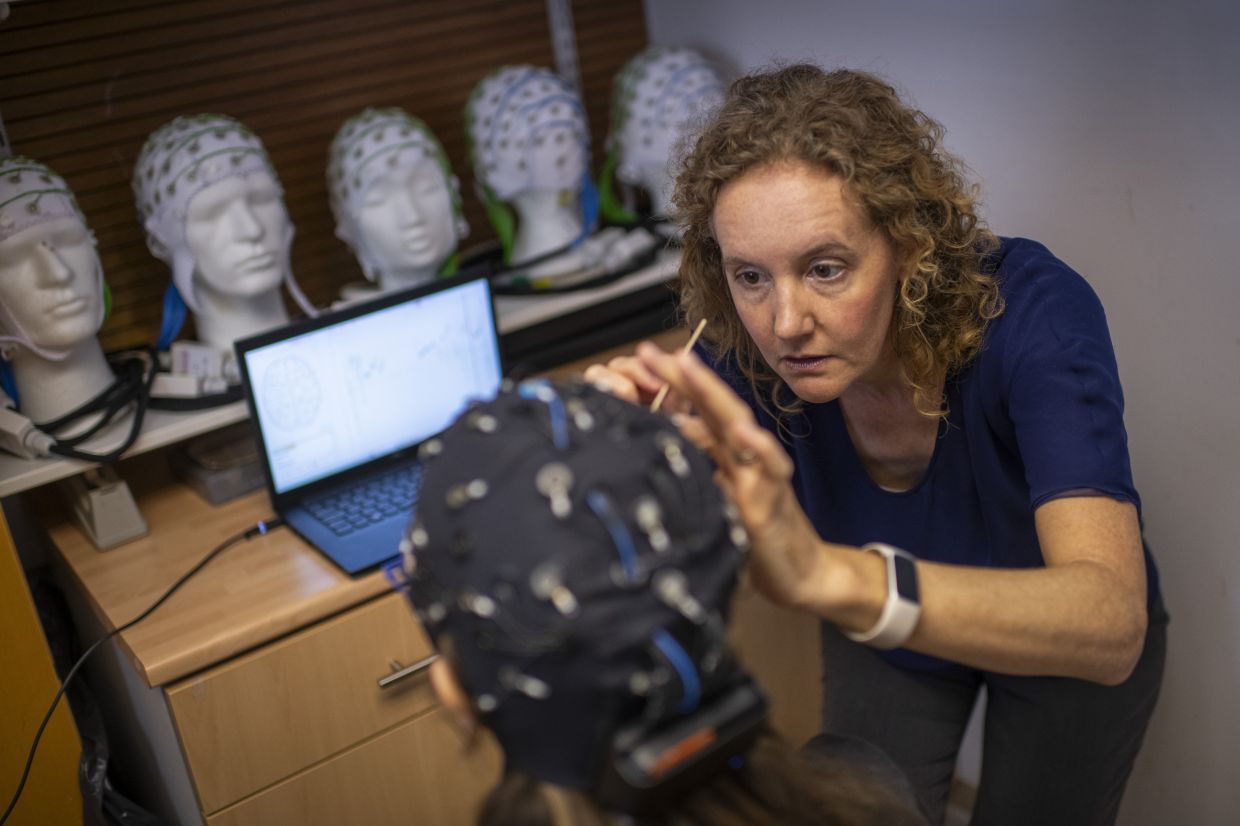
"My bottom line is that there's enough evidence that this does work for a subset of people that we should be understanding why it works, how it works and for whom,” he said. "We're not doing that now - there just isn't any science."
'Real' or 'Fake'?
Despite the lack of studies on the effectiveness of assisted spelling, the methods have steadily increased in popularity over the last decade.
In April, a book written by a non-speaking autistic man named Woody Brown, who was trained by Mukhopadhyay and communicates via a letter board held by his mother, shot up the New York Times bestseller list and sparked debates over the legitimacy of his authorship.
And perhaps most visibly, "The Telepathy Tapes," a viral podcast released in 2024, made the extraordinary claim that some autistic spellers have telepathic abilities.
That podcast is what brought the Betchan family to Mukhopadhyay's office last year. After hearing about assisted spelling on the show, the family began to wonder if Ally, silent for more than two decades, had something to say.
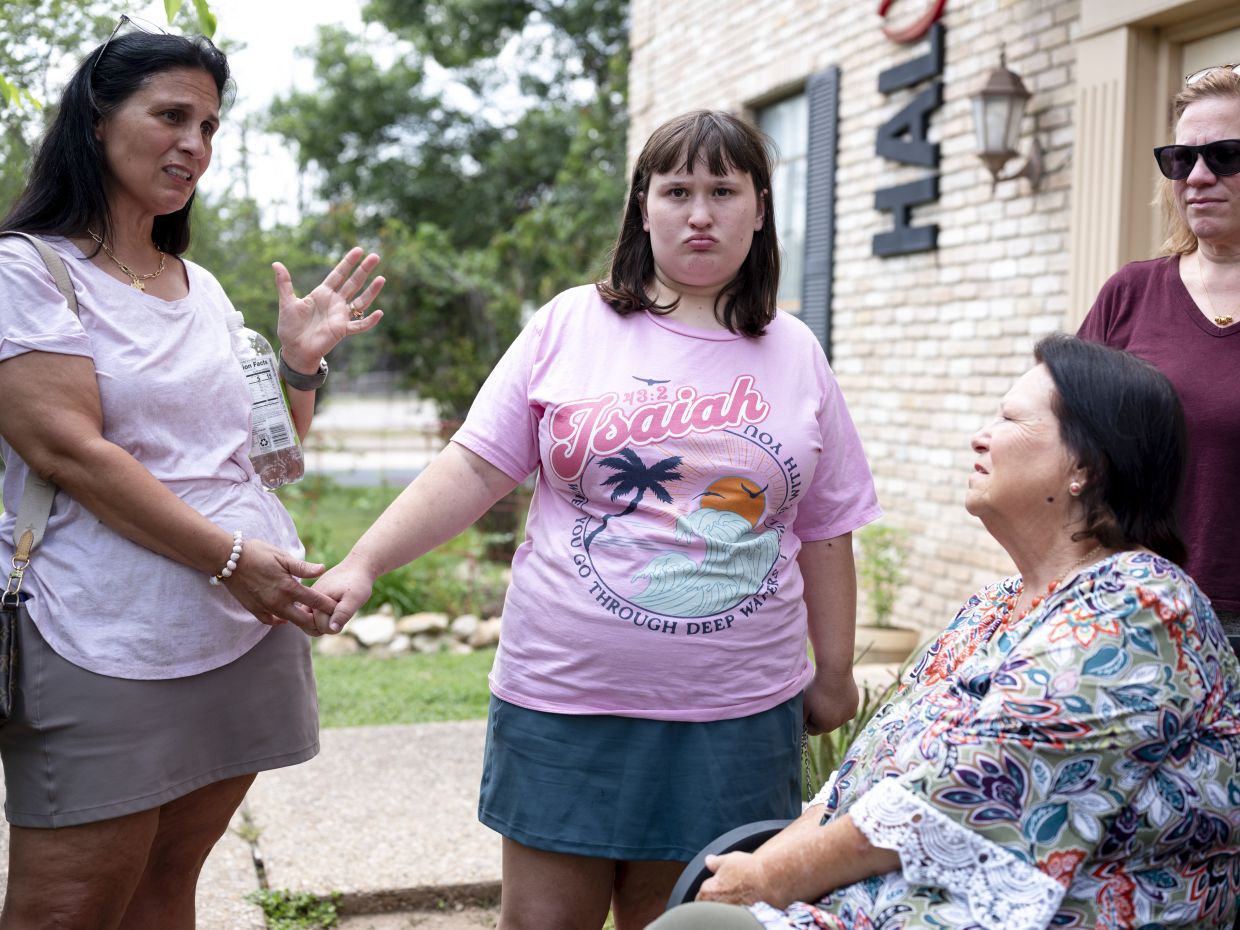
Then the family peppered Ally with questions: What town are you from? What street do you live on? How do you spell your mum's name? "She knew them all," said her mother, Elisha Betchan. "That's when I thought there may actually be something to this.
Soon afterward, they started working with Mukhopadhyay, paying US$110 (RM447) for each 45-minute session.
Though Ally's family is aware of the fraught debate over the legitimacy of assisted spelling, they said it was irrelevant given their firsthand experience. "We see what we see and we know, said her aunt, Cherie Kocian. "We don't need data to know that it's real."
But the potential consequences of assisted spelling becoming widely used without scientific research to back it are top of mind for Howard Shane, director emeritus of the Center for Communication Enhancement at Boston Children's Hospital.
In the 1990s, a method called facilitated communication exploded in popularity, promising miraculous access to the inner lives of people who were profoundly disabled. The method involved facilitators physically holding the arms or hands of nonspeakers as they typed on keyboards.
In 1992, lawyers in a sexual abuse case brought by a 16-year-old autistic girl named Betsy Wheaton asked Shane to evaluate the validity of the facilitated communication method used to elicit her allegations. Wheaton had claimed, through a facilitator, that her father and brother had sexually abused her.
In blinded tests, often referred to as message passing tests, Shane independently showed Wheaton and her facilitator images, sometimes matching and sometimes not, and asked Wheaton to type what she saw. Every object correctly identified was based on what the facilitator, and not Wheaton, had been shown.
Shane and other researchers went on to conduct dozens of blinded tests of facilitated communication, overwhelmingly finding that the nonspeakers were able to give the right answer only when their facilitators knew it.
"I never found anyone that passed," Shane said.
An untested theory
While experts like Shane disagree, practitioners of the newer forms of assisted spelling insist that their approaches, which do not rely on touch, bear no relation to facilitated communication.
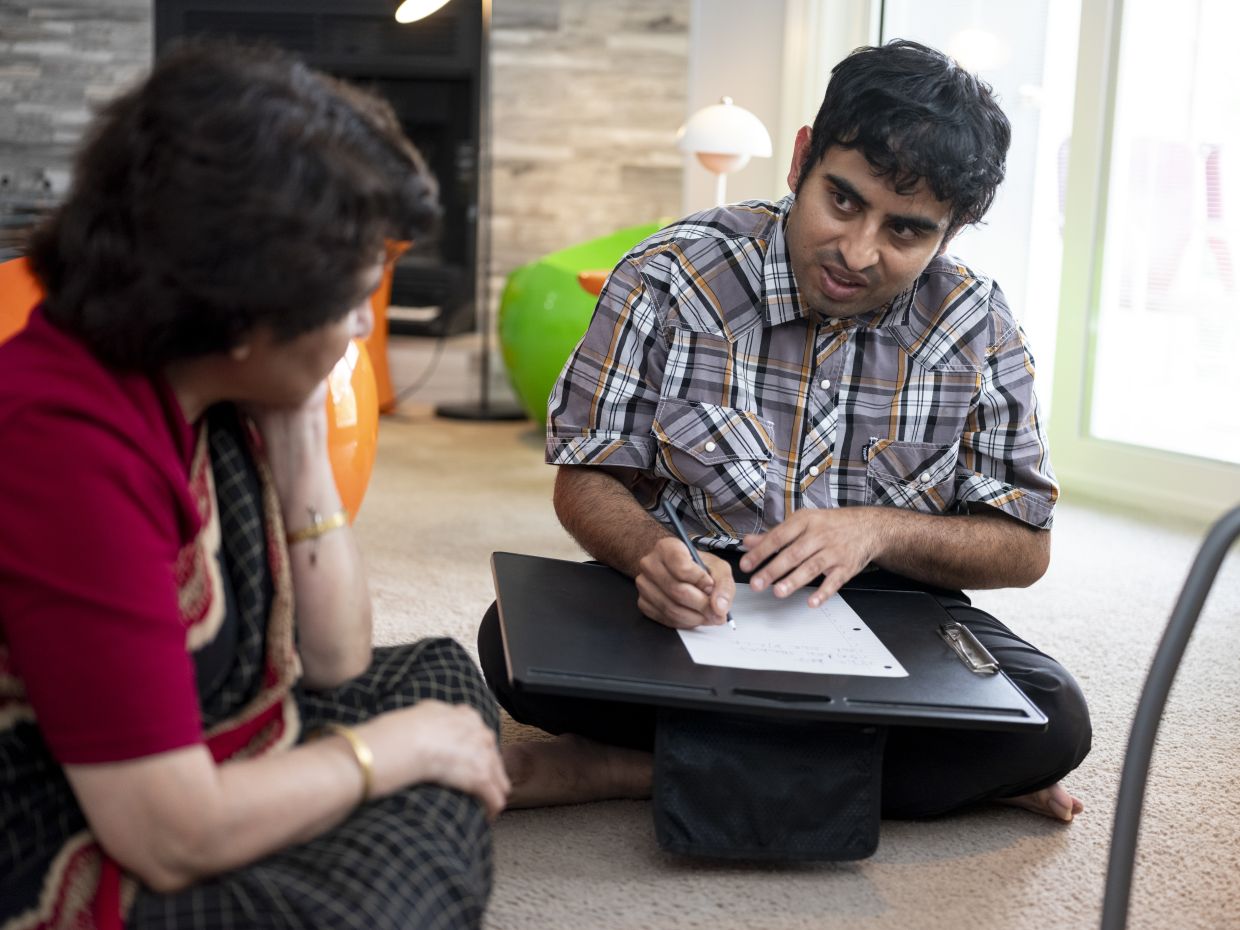
Mukhopadhyay's method made headlines in the early 2000s when she and Tito moved from Bangalore, India, to the US. While Mukhopadhyay had trained Tito to communicate using a letter board, he later moved on to writing and typing on his own. At age 11, Tito had published an autobiography that included works of poetry.
Language deficits in people with severe autism, Mukhopadhyay theorised, were a motor problem, not a cognitive one. Having a partner hold the letter board, she argued, provided motor support and steadied the dysregulation and sensory overload so common in people with autism, allowing them to communicate.
Many autism experts dispute Mukhopadhyay's motor theory. They point to data estimating that more than a third of autistic children are considered intellectually disabled. And they question how non-speakers, many of whom weren't taught to read and write at school, could know how to spell in the first place.
Mukhopadhyay and other practitioners have also raised suspicions because they refuse to take part in blinded experiments, arguing that such experiments put undue stress on severely disabled people to prove themselves to skeptics.
The refusal to conduct or participate in blinded studies is "the biggest red flag," said Alison Singer, the director of the Autism Science Foundation and the parent of a minimally speaking daughter who does not use assisted spelling.
The risk that the words might not be those of the non-speakers is "horrifying," Singer said. "Our children already can't speak, they can't communicate, and now you’re going to hijack their voice?"
Both Mukhopadhyay and Vosseller acknowledge that communication partners can steer responses.
"There are so many chances with the letter board where people can influence it," Mukhopadhyay said. Often, she said, she sees parents guide the output out of enthusiasm, but she does not question their belief that the words are their children’s own. "It would be wrong for me to come in between the parent and the child," she said.
But she brushed off the idea that these cases invalidated her method's integrity. "If they misuse it, they misuse it - it's up to them," she said.
While it is difficult to test cognitive ability in people who can’t speak, the idea that no autistic people are intellectually disabled “speaks to the enormous seduction of the 'intact mind,'" said Amy Lutz, a historian of medicine at the University of Pennsylvania whose son Jonah is minimally speaking and does not use assisted spelling.
That idea preys on parents' deepest hopes for their children, she said.