Even months after she was displaced by war, Soubhiye Zeiter starts every morning the same way: with a large cup of coffee and a few quiet moments beside a small table decorated with flowers outside her tent in Beirut, Lebanon.
But once the coffee is poured, the quiet disappears quickly.
By early morning, dozens of people are already lined up outside Zeiter’s small bakery stand in a tented settlement in the heart of the Lebanese capital, waiting for her mana’eesh – the popular Lebanese flatbread breakfast topped with cheese, meat or za’atar (a thyme and herb seasoning).
Children weave among customers, volunteers rush trays of dough in and out of ovens, and Zeiter, 63, greets nearly everyone who walks by, often calling people over to sit and have some coffee.
Known to many as Om Mohammed – an Arabic nickname that means Mohammed’s mother – the grandmother fled her home in the Beirut southern suburbs with 15 members of her family at the start of the war between Israel and Hezbollah.
She was living just south of the capital when the Israeli military issued an evacuation warning to the sprawling neighbourhoods ahead of an intense aerial bombardment.
The ongoing war between Israel and the Hezbollah militant group displaced over one million people in the tiny country during months of cross-border fighting.
Many families fled villages in southern Lebanon and Beirut’s southern suburbs, seeking shelter in schools, public buildings and tented settlements in Beirut and across the country.
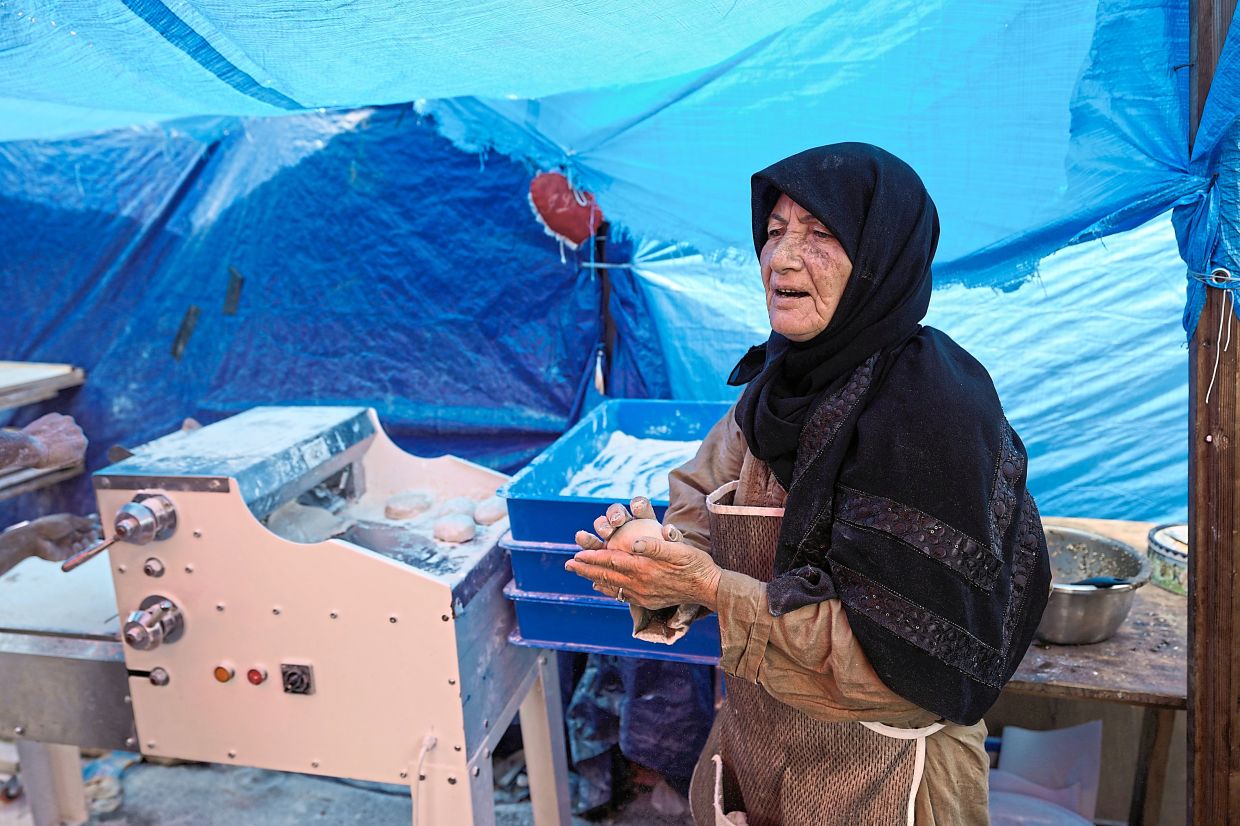
When Zeiter first arrived to the tented settlement between the Mediterranean Sea and the capital’s high-end downtown district, she went to an area nearby where aid was being distributed.
But after being told that she would have to stand in line for hours and still might not receive anything, she decided to make food to feed her family and those in need instead.
She began using her own saj – a traditional round metal griddle used across Lebanon – baking around 200 mana’eesh a day and handing them out for free.
As word spread, more people began showing up every morning, some donating ingredients. Soon the lines stretched longer than she could manage alone.
Now, her small corner of the camp looks more like a neighbourhood bakery. People who heard about what she was doing donated a larger gas-powered oven that hums from early morning until late at night.
Dough is rolled through a sheeter. Volunteers package bread as quickly as it comes out hot. The smell of thyme and baked dough drifts among rows of blue tents.
"We can’t keep up,” Zeiter said, laughing as people continued arriving at the stand. "We bake 3,000 to 3,500 mana'eesh daily and people still come and ask for more.”
What started as one woman cooking for displaced children has turned into a community effort supported almost entirely through donations.
She’s become a bit of a cult hero in her community, with even the Beirut governor visiting to have coffee with her one afternoon while touring the premises.
"People started donating gas, some donated flour or za’atar, some brought oil, cheese, sometimes people brought meat, some brought yeast,” she said. "Whatever I need for this bakery, people are helping me out.”
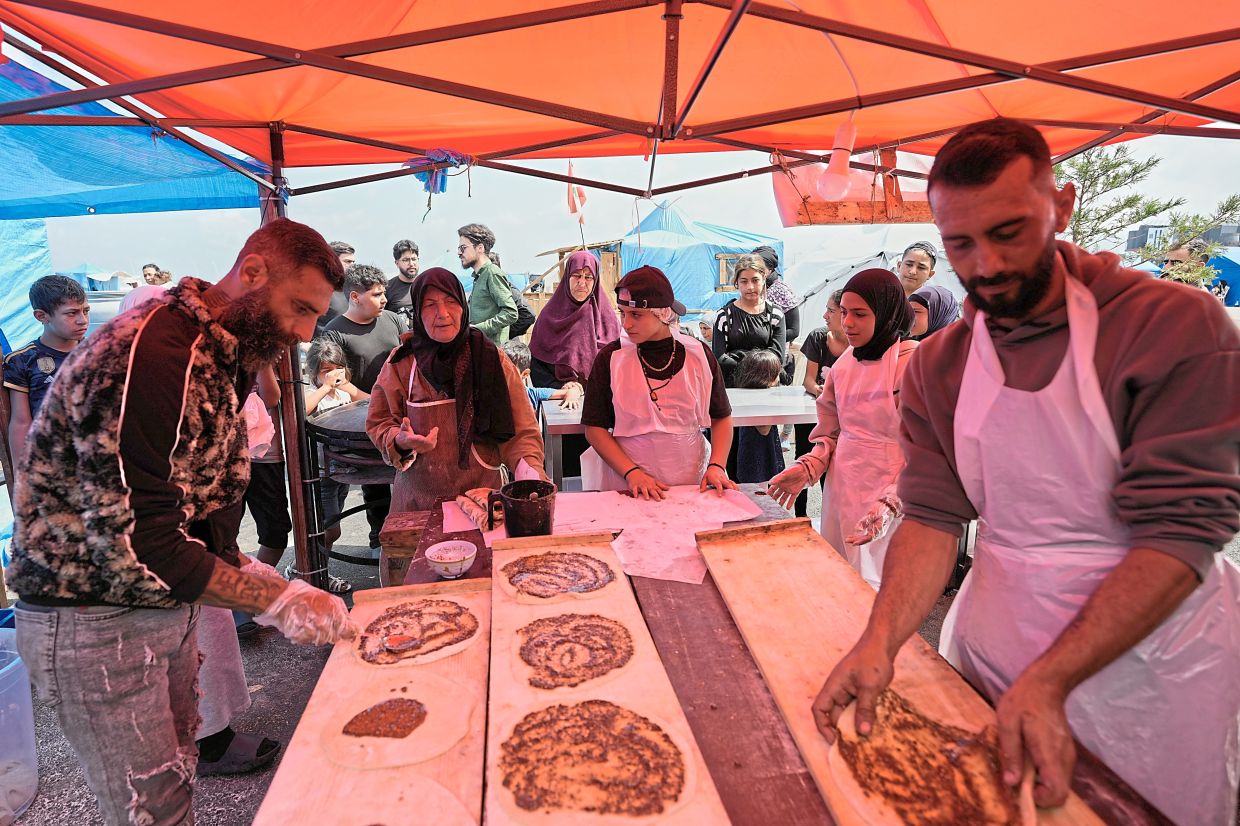
For Zeiter, the bakery is about more than food. She says she wants the tent settlement to feel less like a place of loss and more like the neighbourhoods people were forced to leave behind.
Throughout the day, she waves over passers-by, insists people sit together, and tries to create the kind of atmosphere she remembers from home.
"We’re all displaced. If I lost my home or got displaced that doesn’t mean that I have to lose my morale,” she said, wishing people even when scarred by war to love and care for each other.
"Displacement shouldn’t change us.”
Even with the success of her community initiative, the sounds of drones whizzing in the capital and the news of ongoing Israeli strikes in southern Lebanon are grim reminders that life has changed. She tries to do things that she did during better times, playing with her grandchildren and her small white dog, Bella.
Most importantly, she insists on brewing an extra pot of coffee – because she hates drinking coffee alone – so she can invite anyone who passes by her tent and wants to sit for a few minutes. The flowers matter too.
"What I love the most, in order to bring back memories, is to have flowers on the table or next to me when I drink coffee,” she said, her eyes filling with tears. "I feel like it makes up for things a little.” – AP