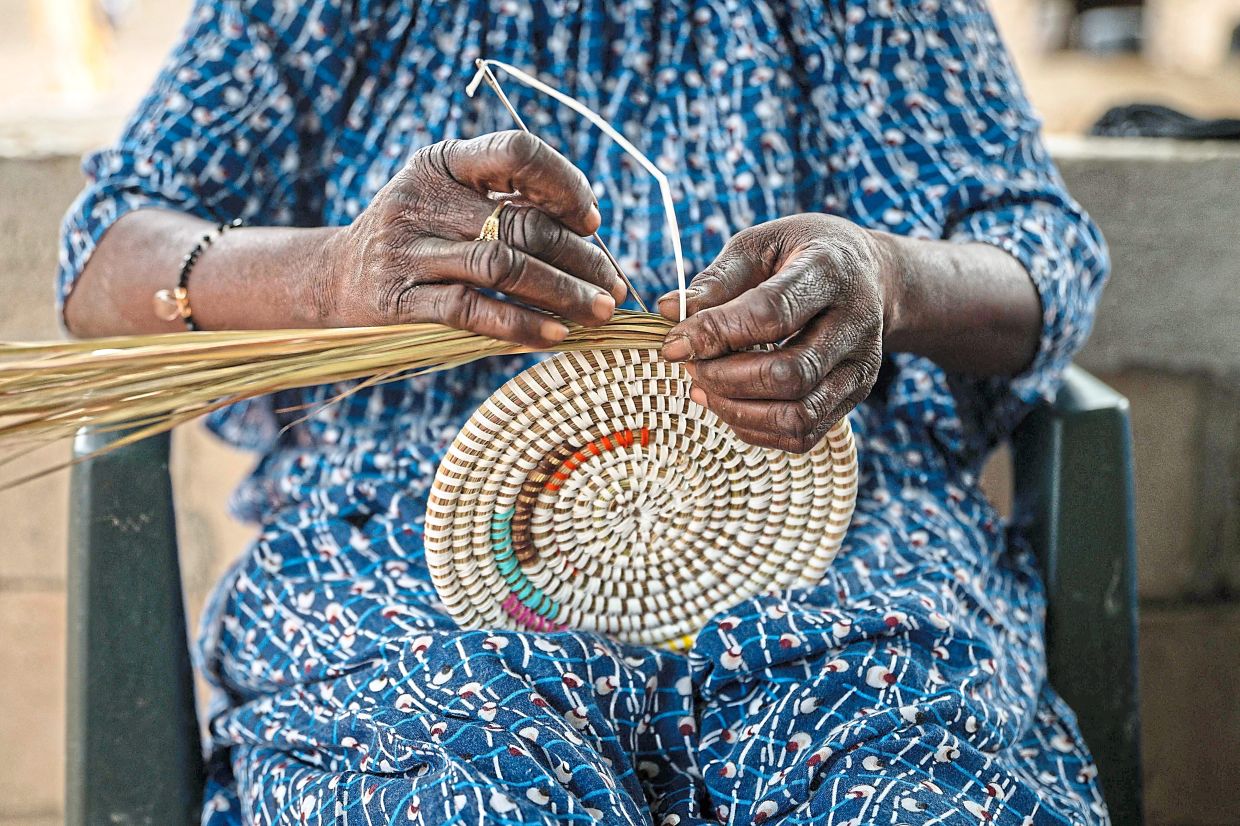
Under the shade of a large mango tree in her sandy courtyard in a village in northwest Senegal, Khady Sene rhythmically threads together reeds, the beginning of a new basket.
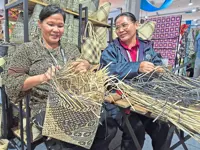
She and nearly a dozen other women have gathered as they do many afternoons to weave in a style passed down from mother to daughter for generations.
While the women of Mborine village rarely leave this corner of Senegal, their popular creations travel in much wider circles, having become trendy in places like the United States or France.
Flip over the tag on a Senegalese-style basket in a Western box store, however, and it very well might have been made in Vietnam, a large exporter of knockoffs. Meanwhile, the price for authentic handmade Senegalese baskets can be astronomical abroad, with little of the markup going to the weavers.
A speciality of a constellation of Wolof villages in the country's northwest, the baskets consist of coiled reeds bound by colourful plastic strips, which in the olden days were palm fibres.
"I've been doing this work since I was born", Sene said from her courtyard, as farm animals bleated beyond her compound's cinder-block walls.
The women can produce everything from winnowing baskets to large laundry-style hampers, which are sold domestically at endless roadside stalls and at markets around Dakar.
But "those who come to the market buy them at ridiculously low prices that don't even allow us to cover our costs", said the 35-year-old mother.
While a large laundry-style basket might sell for 13,000 CFA francs (RM95) at a market after passing through a middleman, those exported abroad go for well over US$150 (RM618).
For a craft imbued with so much national identity, Sene said she hopes authorities will create conditions that better support the artisans "so we can make a living from this work".
Mass-market appeal
In 2017 Fatima Jobe, a Gambian-Senegalese architect, was vacationing in Vietnam where she was shocked to stumble across a wholesaler who said he was the world's largest exporter of Senegalese-style baskets – ones made in Asia.
Already having worked with the Senegalese weaving community, Jobe was spurred into action.
"There are all these wonderful weavers who are ready to work," said Jobe, referencing the dozens of villages in Senegal's basket-making belt.
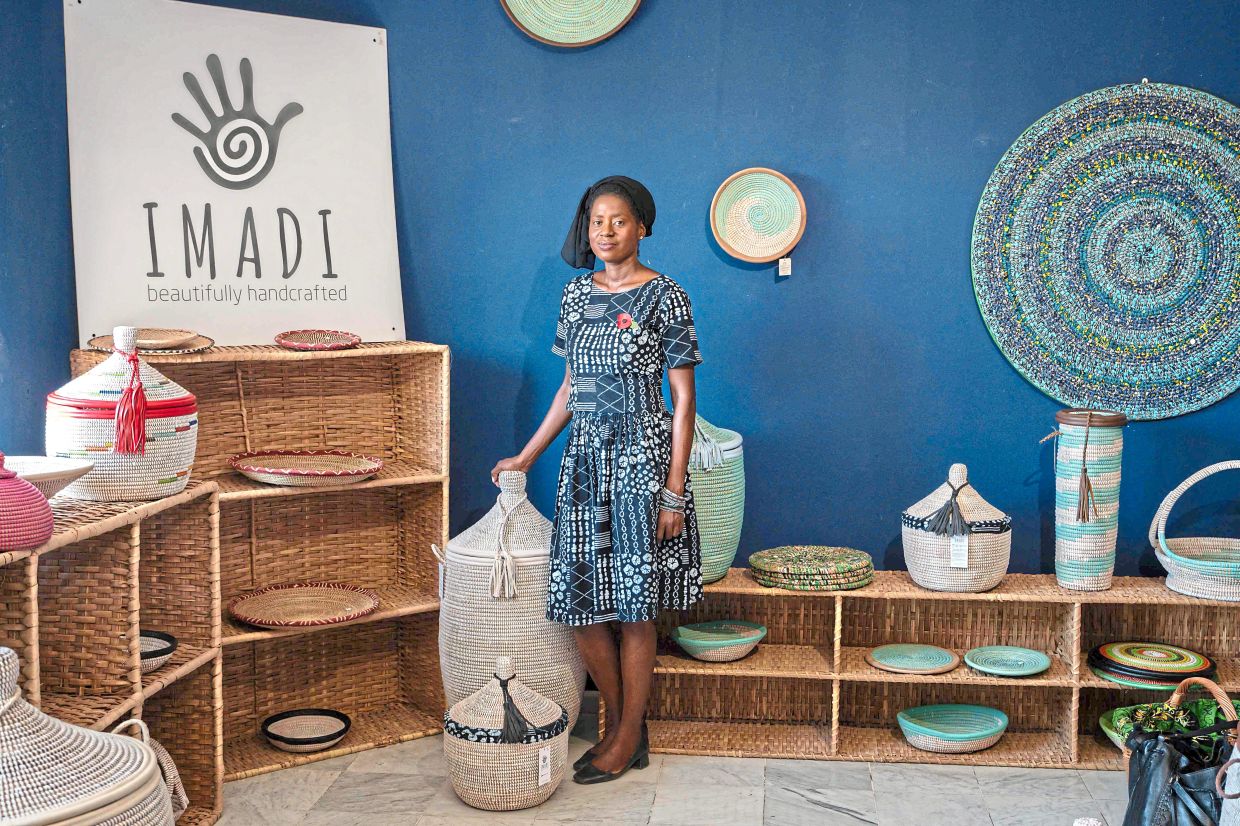
Fast-forward several years and Jobe is the owner of Imadi, a well-known Dakar basket shop that works with more than 260 women, including Sene, across 15 villages.
The baskets in her store are largely her designs: often in subdued colours and trimmed in leather. Some are traditional, such as the winnowing basket, or layu, while others are new innovations.
Jobe currently takes no salary from Imadi, working a day job instead. But her aim is one day to do so.
She has set up a higher pay structure, bans children from working, and has used profits to benefit village schools. She delivers raw materials directly to the women, then transports the baskets away, cutting the need for them to waste time at markets.
Those like Jobe "who pays us fairly for our efforts" are "rare", Sene said.
A testament to the baskets' popularity, US retailer Anthropologie began selling one of Jobe's several years ago, which she later spotted on an episode of popular US reality show Selling Sunset.
"I just was screaming in my living room forever," Jobe said.
Despite her baskets' mass-market appeal, Jobe said Senegal lacks the infrastructure and support to compete with major exporters in Vietnam.
Low prices
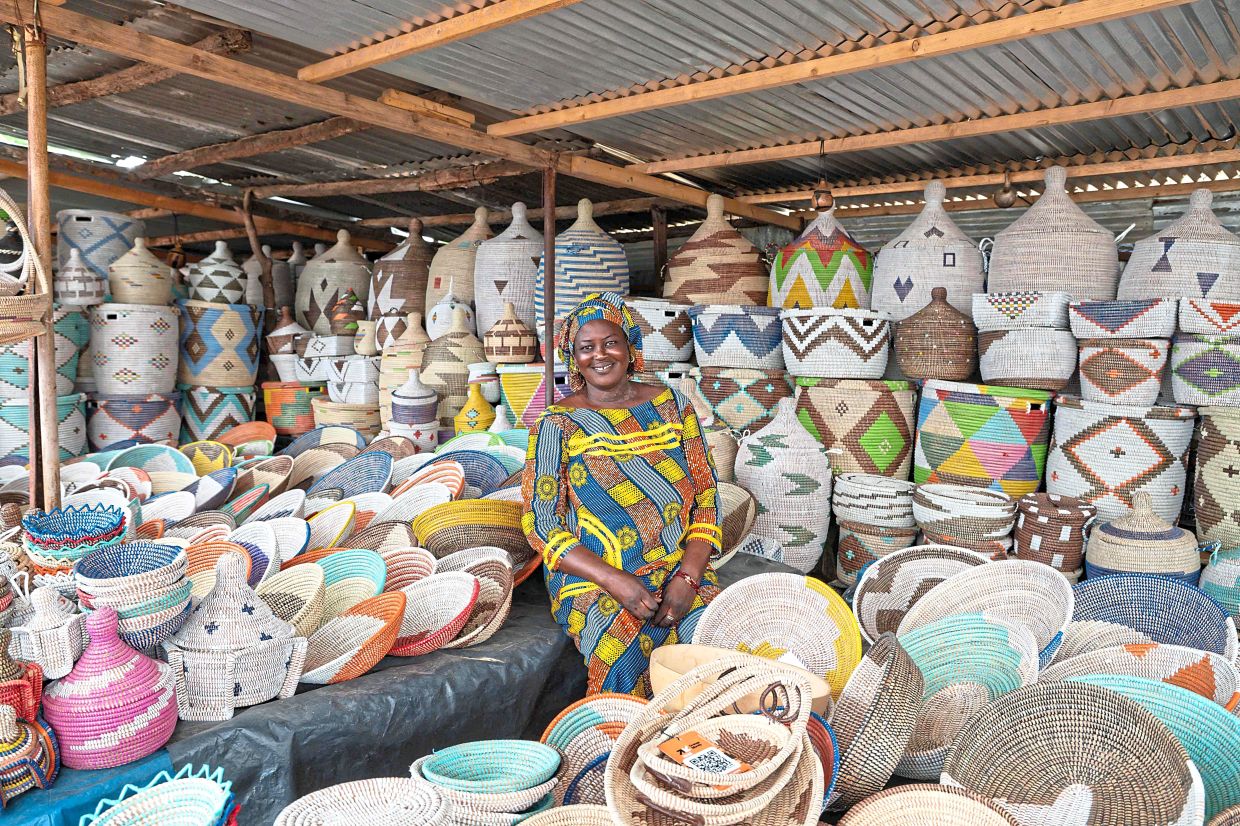
In a stall along a dusty two-lane highway outside the town of Ndiakhate Ndiassane, some 30km from Mborine, Fatim Ndoye sells baskets in a kaleidoscope of colours and sizes, often to tourists.
She purchases the baskets at a Monday market from local women: "In my opinion, baskets sell for ridiculously low prices in Senegal," she said, explaining she might only sell 3,000 CFA francs (RM22) worth of baskets on a weekday and 10,000 CFA francs (RM73) on the weekend.
Despite small margins, the mere ability to earn counts for something, with many having fled Senegal in recent years due to economic insecurity.
In the village of Thiembe, 49-year-old widow Adama Fall supports her family working as a coordinator for Imadi and weaver of the largest type of baskets, which she can make three of per week.
She does not take the employment for granted: Several young men from Thiembe have left Senegal in pirogue canoes via the perilous Atlantic route, including four "whom we haven't heard from in five years".
Nearby in her courtyard, her youngest daughter plays with a group of children.
Rattling around in their midst are a few coarsely woven baskets they have fabricated: stitching off, bits of plastic splayed, but containing the knowledge of generations before them. – AFP