What makes a creature a good pet? Roger Matthews likes that he can go to Europe for two months without worrying about feeding the ones in his backyard.
Chris Horne is tickled by the adrenaline of having a ferocious predator in his garden. Trevor Sullivan is transfixed by the immemorial existence his companions evoke. “When you look into their eyes, you’re looking back 200 million years,” Sullivan said.
All three are proud, unapologetic owners of pet crocodiles in Australia’s Northern Territory.
Marrakai Sullivan, 23, Sullivan’s daughter, grew up with pet crocodiles and got her first as an adult last year. She picked out Flint and Donk from the hatchlings born to her father’s crocodiles. Only Flint survived past his first birthday.
Living with and raising crocodiles requires an appreciation of their power and their place in the ecosystem, she said.
“It’s a great part of being a Territorian,” she said. “Where else are you gonna get that?”
Trevor Sullivan has 13 of the creatures on his sprawling property. Matthews has four freshwater crocodiles named Gloopy, Jazzy, Destin and Cyclops, who is missing an eye from a fight.
Horne cohabitates with Zeus, a saltwater native, who he says has tried to kill him twice.
But when undisturbed, “they are the most relaxed pet, they do what reptiles do – not too much,” said Nigel Palmer, who has had Rocko, 21, since he was a hatchling.
Hatchlings, which go for about A$300 (RM825) to A$400 (RM1,101) apiece, feed on pinky-fingernail-sized bits of meat. They require delicate care in the early stages, when they are sensitive to small temperature changes.
Little effort
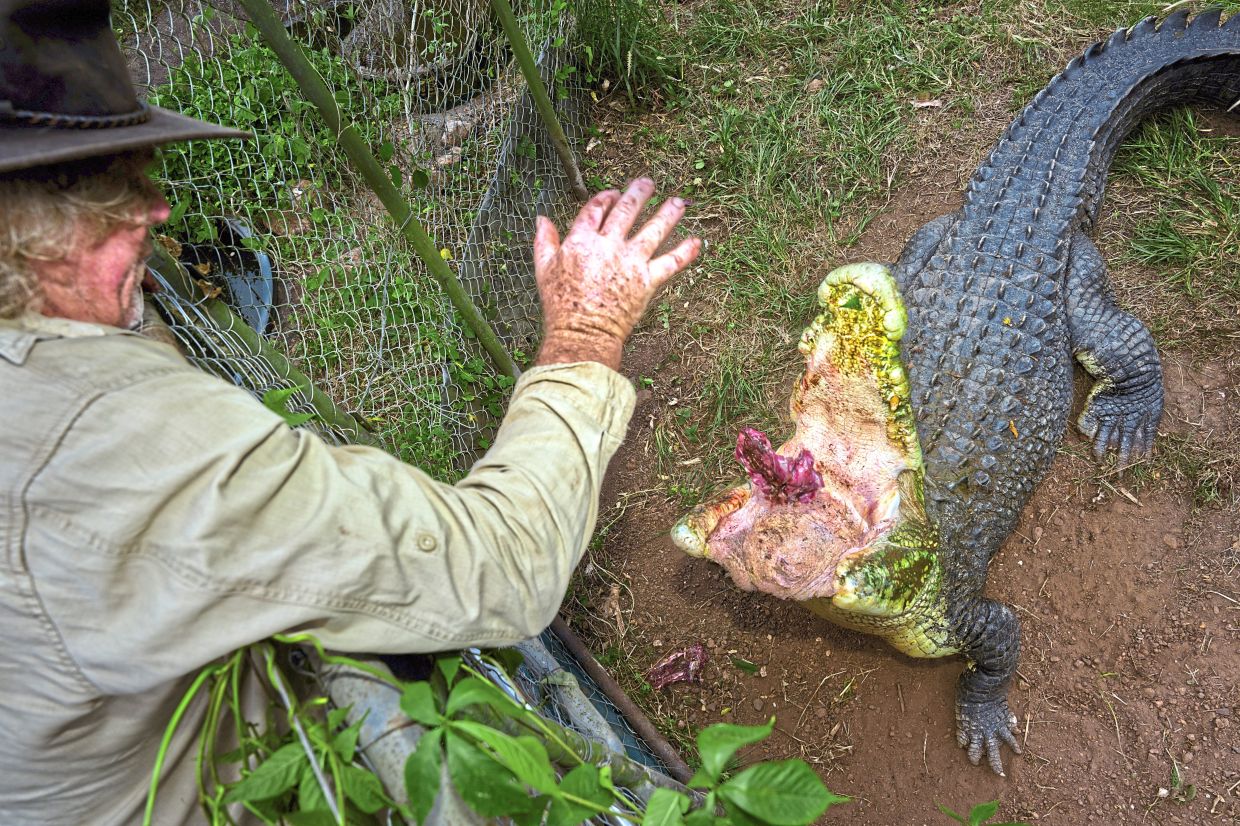
As adults, crocodiles take little effort. They eat once every couple of weeks during the wet season and can go months without food in the dry.
Pet crocodiles are also allowed in Victoria state. But in the Territory, they are an ever-lurking danger, a major tourist draw and a part of the region’s identity.They embody the mix of tolerance for risk, healthy scorn for authority and propensity for solitude that residents relish.
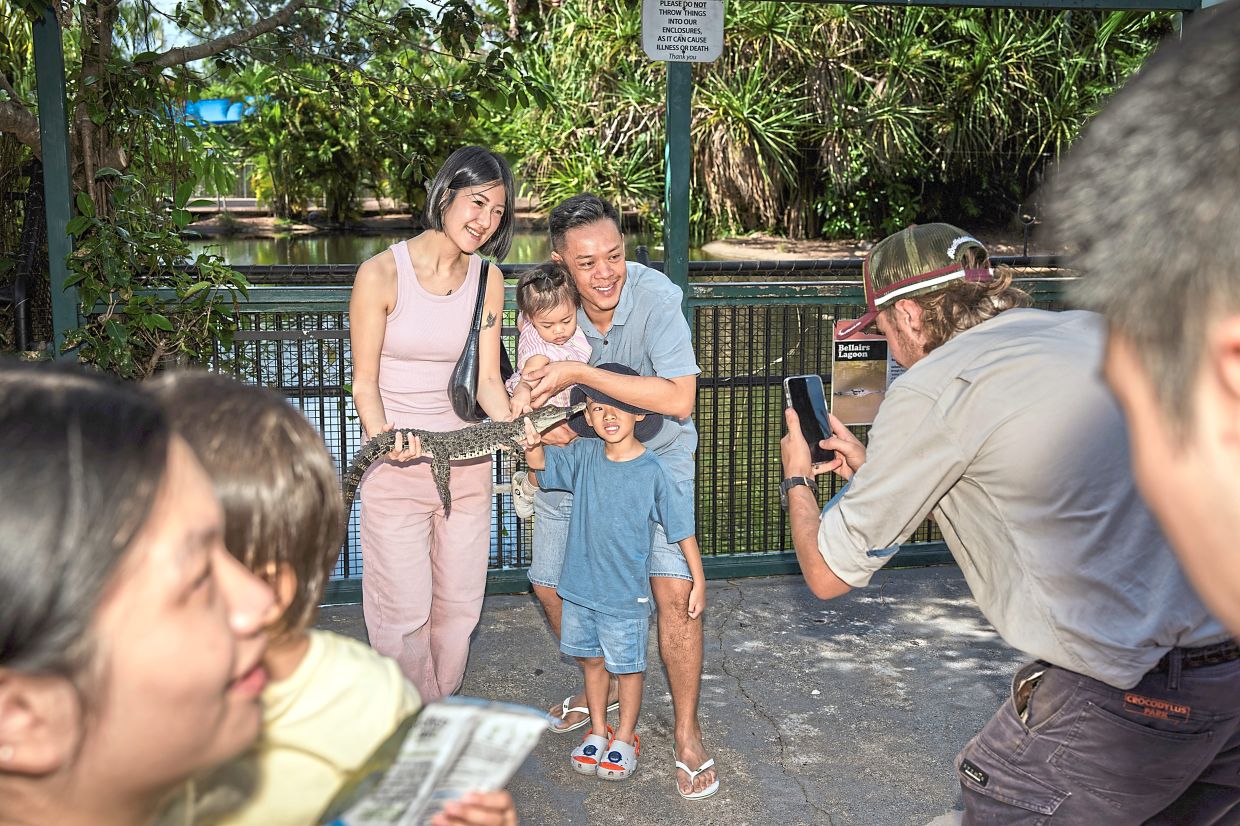
“With Territorians, it’s not that they want one, but they believe they should be able to have one,” said Emily Moyes, the general manager at Crocodylus Park, a popular zoo and research center in Darwin, the regional capital.
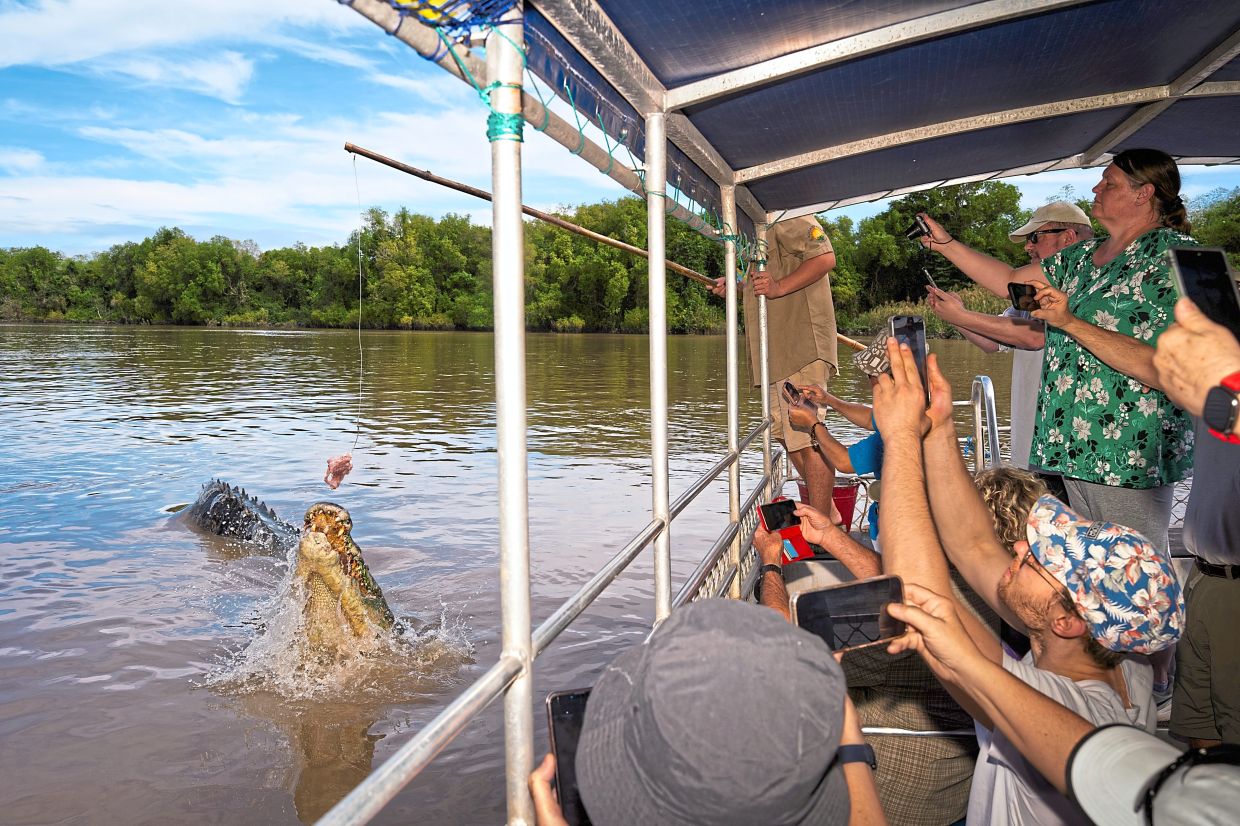
Tourists are greeted with ads for crocodile experiences of all kinds as soon as they arrive at the Darwin airport.Visitors can dive among crocodiles, cruise down a river in their midst and watch them leap several feet out of the water.
Or gaze into their eyes while having a pint – whether it’s a real live one, or one made of concrete.
“Every pub here has a crocodile. It’s iconic,” Moyes said.
In April 2024, the Northern Territory government announced that it would stop issuing licenses for pet crocodiles, setting off an uproar. The opposition campaigned partly on overturning the ban – and won.
“Crocodiles are synonymous with the Territory,” the Liberal Party said in a statement in December, reinstating the provision. Since then, the local wildlife commission has received six applications for permits, which require that pet crocodiles be kept in enclosures that meet strict specifications.
A total of 70 people currently hold licenses. – ©2025 The New York Times Company