There's still a way to reach global goal on climate change


By AGENCY
The world is potentially on track to keep global warming at, or a shade below, 2ºC hotter than pre-industrial times, but that will only happen if countries not only fulfill their specific pledged national targets for curbing carbon emissions by 2030, but also come through on more distant promises of reaching net zero carbon emissions by mid-century. Photo: Nikola Belopitov/Pixabay

The world is potentially on track to keep global warming at, or a shade below, 2ºC hotter than pre-industrial times, a goal that once seemed out of reach, according to a study published Apr 13 in the journal Nature.

That will only happen if countries not only fulfill their specific pledged national targets for curbing carbon emissions by 2030, but also come through on more distant promises of reaching net zero carbon emissions by mid-century, the study says.

This two degree warmer world still represents what scientists characterise as a profoundly disrupted climate with fiercer storms, higher seas, animal and plant extinctions, disappearing coral, melting ice and more people dying from heat, smog and infectious disease.

It's not the goal that world leaders say they really want: 1.5ºC since pre-industrial times. The world will blast past that more prominent and promoted goal unless dramatic new emission cuts are promised and achieved this decade and probably within the next three years, study authors said.

Both goals of 1.5 degrees and two degrees are part of the 2015 Paris climate pact and the 2021 Glasgow follow-up agreement. The two-degree goal goes back years earlier.

"For the first time, we can possibly keep warming below the symbolic two-degree mark with the promises on the table. That assumes of course that countries follow through on promises,” said study lead author Malte Meinshausen, a University of Melbourne climate scientist.

That’s a big if, outside climate scientists and the authors, say. It means political leaders actually doing what they promise.

Cheaper wind and solar have shown that carbon emission cuts can come faster than expected and how some countries will even exceed their promised cuts. Photo: Etienne Girardet/Unsplash

The study "examines only this optimistic scenario. It does not check whether governments are making efforts to implement their long-term targets and whether they are credible”, said Niklas Hohne of Germany, a New Climate Institute scientist who analyses pledges for Climate Action Tracker and wasn’t part of this study.

"We know that governments are far from implementing their long-term targets.”Hohne’s team and others who track pledges have similarly found that limiting warming to two degrees is still possible, as Meinshausen’s team has. The difference is that Meinshausen’s study is the first to be peer-reviewed and published in a scientific journal.

Sure, the two-degree world requires countries to do what they promise. But cheaper wind and solar have shown carbon emission cuts can come faster than thought and some countries will exceed their promised cuts, Meinshausen said.

He also said the way climate action works is starting with promises and then policies, so it’s not unreasonable to take countries at their word.

Mostly, he said, limiting warming to two degrees is still a big improvement compared to just five or 10 years ago, when "everybody laughed like ‘we’ll never see targets on the table that bring us closer to two degrees’,” Meinshausen said.

"Targets and implemented policies actually can turn the needle on future temperatures. I think that optimism is important for countries to see. Yes, there is hope.”

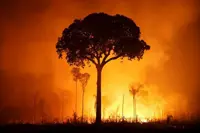
A two-degree warmer world will represent what scientists characterise as a profoundly disrupted climate with fiercer storms, higher seas, animal and plant extinctions, disappearing coral, melting ice and more people dying from heat, smog and infectious disease. Photo: 123rf.com

In 2018, the United Nations’ scientific expert team studied the differences between the 1.5- and 2-degree thresholds and found considerably worse and more extensive damages to Earth at two degrees of warming. So the world has recently tried to make the 1.5 degrees goal possible.

Earth has already warmed at least 1.1ºC since pre-industrial times, so two degrees of warming really means another 0.9ºC hotter than now.

Meinshausen’s analysis "looks good and solid, but there are always assumptions that could be important”, said Glen Peters, a climate scientist who tracks emissions with Global Carbon Project.

The biggest assumption is that nations somehow get to promised net zero carbon emissions, most of them by 2050 but a decade or two later for China and India, said Peters, research director of the Cicero Center for International Climate Research in Oslo, Norway.

"Making pledges for 2050 is cheap, backing them up with necessary short-term action is hard,” he said, noting that for most countries, there will be five or six elections between now and 2050. – AP

Get 20% OFF The Star Digital Access

Monthly Plan

RM 13.90/month

RM 11.12/month

Billed as RM 11.12 for the 1st month, RM 13.90 thereafter.

Best Value

Annual Plan

RM 12.33/month

RM 9.87/month

Billed as RM 118.40 for the 1st year, RM 148 thereafter.

Follow us on our official WhatsApp channel for breaking news alerts and key updates!
Next In Living

This mental trick may help you get more exercise
China's bull wrestlers fight to keep the centuries-old tradition alive
How to spot hidden price increases or 'shrinkflation'
Feeling drowsy at your desk? A 5 minute stroll will perk you up
What’s in your dog’s food? How to make sure your pet is getting quality meals
Winemakers on the Greek island of Santorini try to adapt to heat and drought
'Dutch sashimi': Getting the young to swallow herring
Common home cleaning practices that lead to hidden wear and damage
Security education should start early, especially for girls, say experts
Sunny Side Up: None of us can be blank slates

Others Also Read