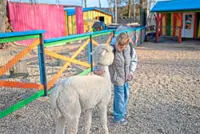
Six alpacas and llamas trot over to the elevator in the small home for the elderly in eastern Germany. It is just another regular day.
Health care staff want to get the herd up on the fourth floor, so they can brighten up the day for residents who are bedridden or suffering from dementia.
But the llamas aren’t used to riding elevators yet so Michelle Dinter decides they will just have to stay in the garden for now.
Dinter breeds alpacas and llamas at her farm nearby. She runs guided tours of the farm and brings the animals to children’s birthday parties. Now, as a trained specialist, she also provides animal-assisted therapy.
Once she has ensured that the alpacas are safely on the upper floor and busy checking out the new space, Dinter can take a moment to explain what’s needed to provide this kind of therapy.
It took a lot of training, she says. The llamas and alpacas had to get used to getting into vehicles, wearing a halter and interacting with people. Not all are suited for this line of work.
But the males she brought today are not shy. Hector, Hardes, Pepe and Oskar wander through the rooms of the care home, poking their heads round some of the doors, curious to see what is going on.
“They’re peeking into my room again,” says a man and laughs. “Back out now, that’s mine,” he jokes, encouraging the herd to head off.
The door of room No.3 stays shut, while Mrs Stiehm, in room 10, is excited to see the fluffy newcomers. “You don’t get visitors like this every day,” she says.
The alpacas and llamas aren’t the first animals to visit the home, as residents have also had fun with cats and rabbits brought in for their enjoyment.
“That was also nice. But this is another level,” says director Tobias Zeilinger. He says larger animals go down particularly well with people suffering from dementia, who may only be familiar with llamas and alpacas from watching television.
Antje Hedwig, the nursing home’s head of social care, says the herd is proving a great success.
She usually books dance troops or brass bands, but the home’s 152 residents were particularly excited about the animals, she says.
“People are buoyed by it for quite a long time,” Hedwig says. “When we tell them that the alpacas will be back soon, they get really excited.”
What works particularly well for the seniors is that they are able to pet the animals who are nice and soft. Being able to touch and interact with them is really special, says Hedwig.
The home has now booked Dinter’s herd to show up two to three times a year.
The alpacas only spend a little time in individual rooms, however. After their brief trip upstairs, they go back down to the ground floor and join the llamas in the garden, where the residents can pet them.
The prospect of brushing one of the animals occasionally draws out some of the residents who often prefer to stay in their rooms.
Dinter takes the chance to explain a few things about the animals and their wool.
Emmi Kreudzer, 82, had seen alpacas and llamas who come from the South American Andes on television documentaries. “It’s all so real when you touch them. It’s so different from just seeing them on TV,” she says. “It isn’t just fun for children! It’s fun for older people, too.”
Interacting with the animals, such as feeding or brushing them, helps seniors to stay agile, with some even getting up out of their wheelchairs in order to stroke an alpaca’s neck.
This form of therapy helps in another way, allowing the elderly to take on a different role and care for another creature instead of being the recipient of care. — dpa/Monia Mersni
Already a subscriber? Log in
Get 20% OFF The Star Digital Access
Cancel anytime. Ad-free. Unlimited access with perks.