Mention bees and most people would be nervous, thinking of bee stings and death from anaphylactic shock. But bees are a vital part of our eco system – their cross pollination is vital for the survival of the agricultural industry.
I would not be exaggerating if I were to say that the extinction of bees will be followed soon after by the extinction of the human race. Bees are dying all over the world for multiple reasons and this has caused consternation especially among farmers. Thus it behooves all of us to contribute our bit to save this legendary industrious insect.
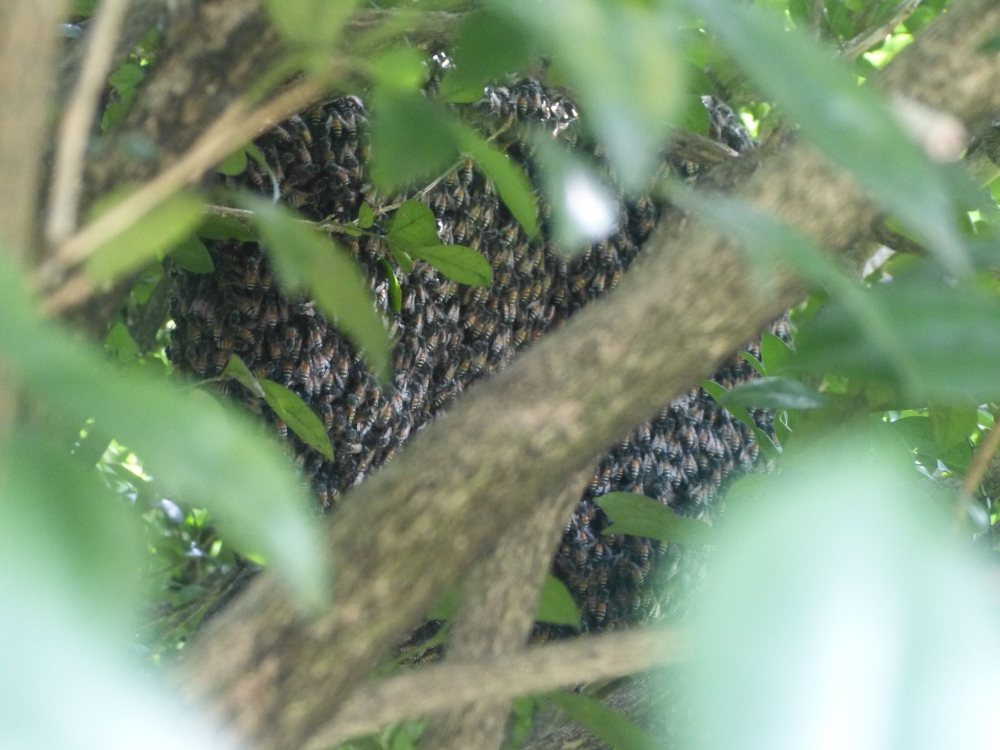
Last week, I climbed up my mango tree to cover the fruits with insect protective nylon mesh. I felt a bite – at first,
I thought it was a mosquito, but it felt more painful than the usual insect bite. Then I heard a low pitch hum near my ear – I looked up and almost fell off the ladder – there was a huge hive crawling with bees!
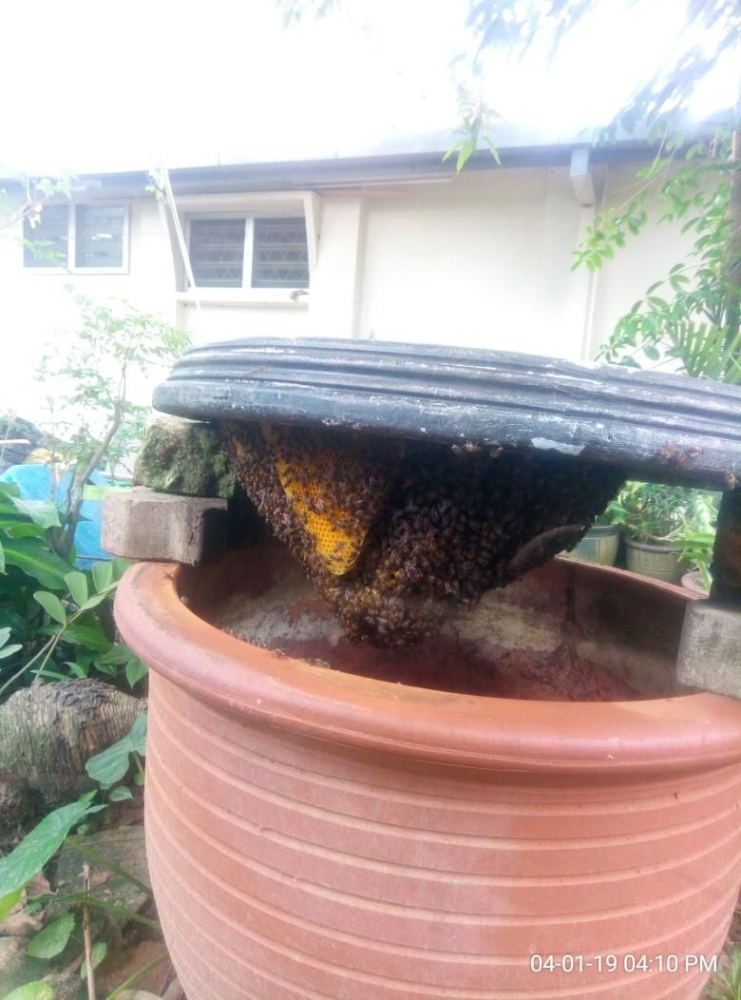
I clambered down the ladder as quickly as I could. Another hive was subsequently found inside my compost pot – the position of the lid had caused the bees to think that this was a hive.
In the old days, I would build a small fire under the hive and the smoke would drive all the bees away the next day. But my daughter Mallini returned from work and was horrified to hear my plans.
One of Mallini’s thesis projects for her undergraduate project involved studying bee behaviour.
She said, “Dad, you will just kill the bees!”

One of her recent projects enabled her to discover the services of My Bee Saviour or Penyelamat Lebah Malaysia.
This is an NGO group initiated by Mardi in 2015, which has volunteers responding to homes or offices where hives are found, to translocate the hives to a one-acre site – Bee Sanctuary – in the Mardi office in Serdang, Selangor. Here, the bees are allowed to thrive, propagate and build more hives – their honey is not harvested. The service is entirely free though donations to the organisation will not be refused.
The first time we called the Bee Saviours, I was dead beat after a busy night call, so I missed out on the experience of watching the bee saviours at work. Then last week, as we were about to trim a hedge at the far end of the house, we chanced upon another large hive. This time, I was all prepared with camera and interview notepad.
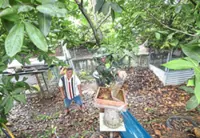
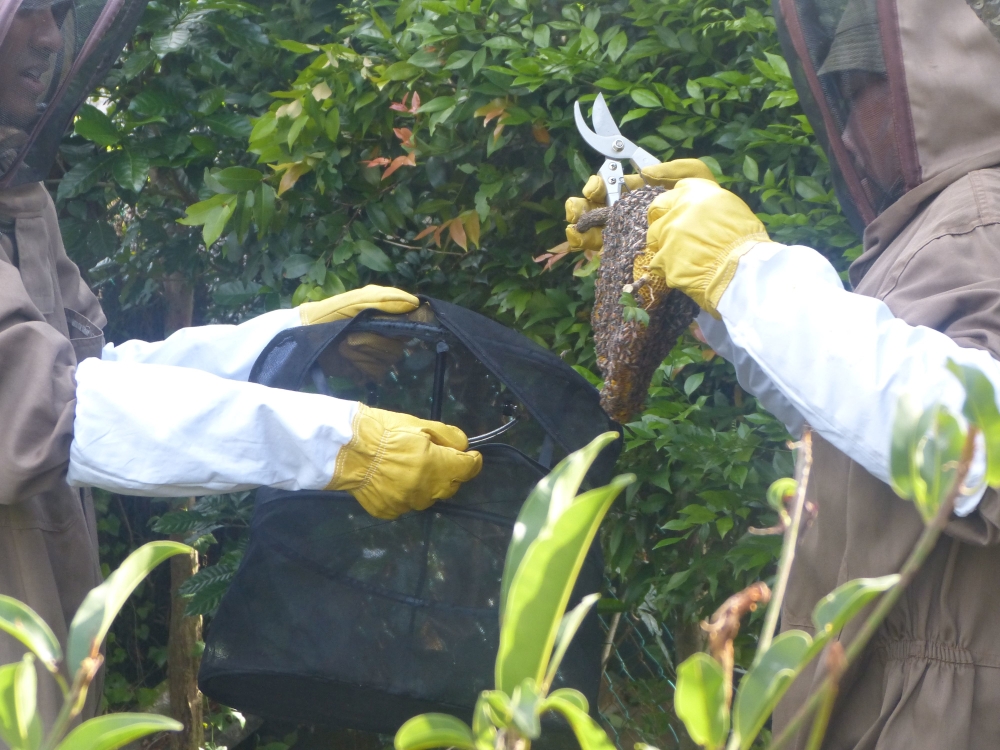
Two pleasant volunteers, Mohd Kharil Izam, 35, and Ahmad Kamil, 23, responded to our call for help. They were very patient, posing for photographs at different stages of harvesting the hive and answering my questions.
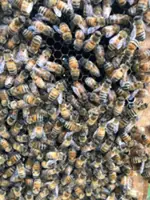
Kharil told me that from 1996 to1997, so few bees were seen in Malaysia that they were considered extinct! He also told me that each bee colony, depending on its size, has 3,000 to 5,000 bees.
Usually the Bomba is called in to clear the hives, and their modes operandi was to burn the hives, which would kill off the bees. My Bee Saviour is currently working with Bomba, so that instead of destroying the bees and hives, they are translocated to the bee sanctuary at Mardi.
Kharil told me that there are about 20,000 bee species in the world and that bees can be found everywhere except in the Antarctica.
Malaysia has four common species: Lebah Tualang (giant honey bee, Apis Dorsata) which usually builds hives high up in trees, Lebah Kampung (eastern honey bee, Apis Cerana), Lebah Lalat (black dwarf honey bee, Apis Andreniformis) – this was the type found in my garden today – and stingless bees, the Lebah Kelulut (Meliponini). With experience, one can identify the species of bees by their colour, size and location.

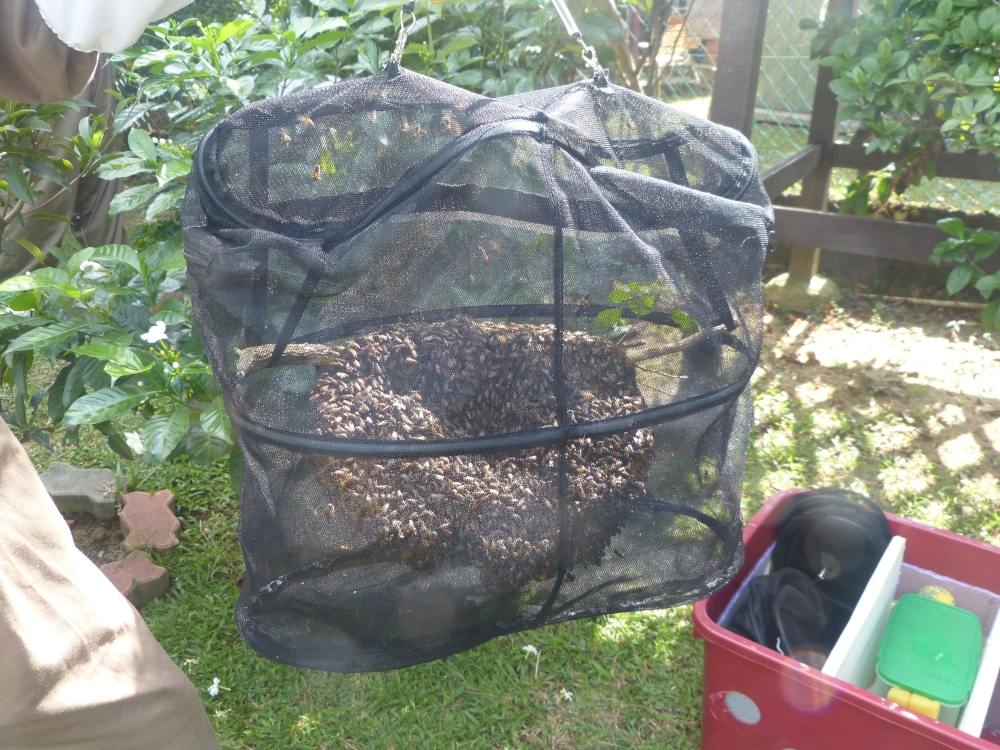
The method of collecting the hives also varies depending on the species. Lebah Lalat builds a single comb – so today Kharil and Kamil donned their protective gear and carefully trimmed back the hedge, isolated the hive, cut the branch holding the hive and placed the whole hive into the transport case.
Lebah Kampung builds multiple hives – this was the species collected by the bee saviours the last time they came to my house. To collect these bees, they first identified and collected the Queen Bee and placed her in the temporary hive (used for transport). Soon, all the worker bees followed their queen into the temporary hive.

Kharil tells me that they get called several times a day to translocate hives. I asked him what was the purpose of using smoke on the hive – he told me that this was to cut off communication between the bees. Apparently, when a worker bee notes the presence of an enemy, it will produce a per hormone which will be the signal for the other bees to gather and attack the intruder.
I also asked Kharil whether it was cruel for humans to collect honey as this was food for the baby bees. He explained that bees stored honey in only one part of the hive and that usually bee keepers would only take part of this hive, leaving the rest of the hive to regenerate with time. Thus sharing the honey with the bees would not harm them.
My Bee Saviour has more than 50 volunteers who come from all walks of life, whose common aim is to ensure the preservation of this insect, which in the long run is vital to human survival. They can be contacted through their secretariat at 019-664 8081.

Already a subscriber? Log in
Get 20% OFF The Star Digital Access
Cancel anytime. Ad-free. Unlimited access with perks.