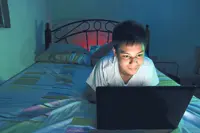
The children of today are a different breed – literally.
Unlike their parents, these children are born in an era where connectivity is the norm and information is readily available at their fingertips.
According to a study published in the Medical Journal of Malaysia in November 2023, about 95.9% of our pre-school children use digital devices.
Their average age of exposure was at about four years old.
The same study looked at parental perception of risks over the use of screens amongst their children.
Ninety percent of parents felt that there was a risk of damaging the eyesight, while 81.3% were concerned about exposure to radiation, and 71.9% felt there was a risk of inactive lifestyle.
The risk of device addiction was a concern amongst 86.3% of parents, while 74% and 71% of parents agreed that there was a risk of undesirable content and overdependence respectively.
Some parents felt that exposure to gadgets had positive effects, particularly in the intellectual domain, where 62.6% of parents agreed that devices promote creative and interactive learning.
Blue light blues
Staring at the screen for long hours, however, is bound to have adverse effects.
This is, in part, related to the artificial blue light emitted by these devices.
While not enough to cause retinal damage, exposure to blue light from screens of devices has been shown to:
- Affect the circadian rhythm
- Delay the onset of sleep
- Decrease sleep quality
- Impair alertness the following day
- Reduce duration of REM (rapid eye movement) sleep, and
- Suppress melatonin, the hormone that regulates the circadian rhythm.
Extended use may also cause dry eyes, blurred vision and headaches.
It is also associated with daytime tiredness.
This will, in turn, affect the child’s ability to pay attention and absorb what is being taught in class, leading to poor school performance and psychological problems.
While the effects are seen in all age groups, melatonin suppression is more profound in children, whose pupil diameters are also significantly larger than adults, both in dim and bright conditions.
Exposure to gadgets at two years of age is associated with lower reading at three years old, which, in turn, results in greater screen exposure at five years of age and increases the risk of obesity.
Learning from real life
Children, particularly those under the age of two years, need real-life examples and interactions to be able to learn something and apply it.
For example, a child can learn their alphabet, words and numbers from apps on the phone or tablet.
However, they are unable to use them in real-life settings.
Basically, this child will just parrot what they learned.
These apps are also unable to teach higher order thinking skills, emotional regulation, task persistence, impulse control, and creative, flexible thinking.
Most of the so-called educational apps have no proven benefits and were developed without input from a developmental paediatrician or educator.
A child who learns from the people around them, on the other hand, will be able to use these words to effectively communicate their needs and demands.
Through direct interaction, they will learn the boundaries and consequences of their actions.
Through trial and error, they will develop creative and flexible thinking, which is best taught through unstructured physical play and parent-child interaction.
Limit screen time

Sleep deprivation and poor sleep quality have a huge impact on a child’s ability to perform, as well as growth and development.
As mentioned above, blue light from the screen has been shown to have several negative effects on sleep.
To ensure a restful night’s sleep, do not allow your child to use any gadgets one hour before bedtime.
Screen exposure is associated with an increased risk of obesity.
Do not allow screen time during meals as your child will not be aware that they are already full as their eyes are glued on the screen.
Ironically, many parents introduce gadgets during meal times for this very reason: so that they can feed their child with minimum fuss.
However, this is a short-term solution and will bring about greater long-term problems.
Children’s eyes tire easily.
Pay close attention to the signs of tired eyes, namely, watery eyes, frequent rubbing or squinting.
Remove gadgets from them after one hour and get them to partake in other activities that do not require them to focus too much.
This can be outdoor play, cycling, swimming or painting, to name a few.
While there are many visual aids in the market to reduce glare and blue light exposure, these are more geared towards people who have to spend long hours looking at the screen.
These devices do not and will not aid the social and mental development of the child.
The solution is not in the blue light glasses, but rather the device itself.
Children between two to five years should only be exposed to the screen for one hour per day.
Limit your own use
Finally, the most important point: children learn through observation.
As parents, we should not be glued to our devices as it limits our interaction with our child.
Keep the phones away during mealtimes and when playing with children.
Only then will they benefit from two-way interactions.
In the 21st century, when information is readily available at our fingertips, it is important that the source of information does not harm us or our children.
It is also important that we monitor and vet through the contents of what our children are watching.
Remember when we were little and how our parents would walk alongside us while we were learning to ride a bicycle or use rollerblades?
We need to do the same for our children; not just with the physical activities, but also online.
Be there for them and guide them so that they can develop in a balanced manner and grow up capable of making the correct decisions.
Dr Yong Junina Fadzil is a consultant paediatrician and paediatric cardiologist. This article is courtesy of the Malaysian Paediatric Association’s Positive Parenting programme in collaboration with expert partners. For further information, please email starhealth@thestar.com.my. The information provided is for educational and communication purposes only, and it should not be construed as personal medical advice. Information published in this article is not intended to replace, supplant or augment a consultation with a health professional regarding the reader’s own medical care. The Star does not give any warranty on accuracy, completeness, functionality, usefulness or other assurances as to the content appearing in this column. The Star disclaims all responsibility for any losses, damage to property or personal injury suffered directly or indirectly from reliance on such information.
Already a subscriber? Log in
Get 20% OFF The Star Digital Access
Cancel anytime. Ad-free. Unlimited access with perks.