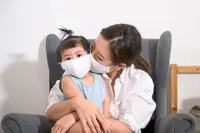
Witnessing your child being admitted to the hospital can be a traumatic experience.
One disease that is commonly associated with hospitalisation is pneumonia, which has a prevalence rate of 28% to 39% among children under five years old in Malaysia.
No parent wants to be in the dark about their child’s well-being, more so in a life-threatening condition such as this. Therefore, there are a few things you should know if your child is hospitalised due to pneumonia.
Diagnosing the infection
Pneumonia is an infection of the lungs by viruses, bacteria or fungi.
Our lungs are made up of millions of tiny air sacs called alveoli, and in cases of pneumonia, these alveoli are filled with fluid and pus from inflammation.
As a result, individuals affected by this disease will become breathless from reduced oxygen uptake.
A child with pneumonia may present with anything from a mild fever and cough to vomiting and trouble breathing.
During consultation, most physicians will come to a diagnosis after taking a full history and physical examination.
Parents can assist by providing information on any changes they notice in their child and when these changes first occured.
Sometimes, investigations like chest X-rays, blood tests, and sputum cultures are requested for confirmation.
Your child’s physician will gather all the findings and form a diagnosis before planning the treatment.
Will my child be admitted?
Once a case of pneumonia is confirmed, the physician will decide if your child requires urgent intervention in the hospital or if treatment can commence at home.
Generally, admission is reserved for children who have rapid breathing, respiratory difficulty, low oxygen saturation, dehydration, poor feeding, constant vomiting, and any comorbidities like asthma, anaemia, or immunodeficiency disorders.
The same goes for children who present with life-threatening complications.
Hospitalisation ensures medications and procedures are initiated in a timely manner for these patients.
How will my child be treated?
In the ward, healthcare providers (HCPs) will manage your child’s pneumonia based on the symptoms and causative agent.
Common treatments include oral or intravenous fluid to restore hydration, antipyretics such as paracetamol to bring down the body temperature, and supplemental oxygen to improve oxygen distribution to all body parts.
Antibiotics may be given if there is a suspicion of bacterial infection.
HCPs will monitor your child’s temperature, respiratory rate, oxygen saturation and fluid intake to chart their progress.
Most pneumonia cases are caused by viruses, so antibiotics will only be administered if the physician is certain the infection is bacterial in origin.
An antibiotic course needs to be completed to prevent the development of resistance.
Hence, the duration of hospitalisation depends on the treatment types and how well your child responds to them.
A typical length of stay is roughly three to seven days.
Potential complications
Some children with pneumonia are prone to developing complications, especially those who are immunocompromised or receive late treatments.
Such complications include:
> Pleural effusion: Excessive fluid accumulation in the pleural cavity, the space between the lungs and chest wall
> Empyema: Collection of pus in the pleural cavity due to infection that spreads from the lungs
> Lung abscess: Formation of pus-filled cavities in the lungs
> Necrotising pneumonia: The death of lung tissue followed by cavity formation
> Sepsis: A life-threatening condition when the immune response goes overboard and damages the child’s vital organs.
Effect on parent and child
Although it cannot be denied that inpatient treatment is lifesaving, most children and their families loathe being in a hospital. Hospital stays can turn your cheerful child into a tearful and gloomy one.
Unfamiliar places and routines are stressful for your little one, as they do not have control over what is happening to them.
For school-age children, hospitalisation also means missing out on school and peer interaction, which eventually will disrupt their learning.
As for parents, their child’s hospitalisation comes with a major schedule adjustment, especially relating to work.
Parents need to apply for leave to focus on their child’s recovery.
This can be challenging for parents who are earning on a day-to-day basis or for single parents who have other children at home to look after.
Moreover, agonising over their child’s prognosis puts a lot of emotional burden on parents throughout the admission period.
Prevention tips
The inconveniences that come with hospital admission can be prevented by taking a few early measures.
First, parents must ensure their child’s vaccination status is up-to-date.
Vaccines against infections that predispose a child to pneumonia like pneumococcus, Haemophilus influenzae type b and pertussis are available as part of the National Immunisation Programme (NIP).
Pneumococcal vaccination is also available at private healthcare facilities for those who are ineligible for the NIP.
Influenza vaccination will help to reduce the risk further.
Additionally, teaching your child to avoid close contact with sick individuals and to wash their hands regularly will also protect them from infection.
Understanding the reasons behind clinical decisions can reduce the anxiety parents have for their hospitalised child.
Pneumonia comes with diverse clinical manifestations and treatment approaches, so parents are encouraged to consult the HCPs for updates on their child’s progress.
Adopting the “prevention is better than cure” mindset by making sure that children get their vaccines on schedule can save parents lots of trouble that comes with hospitalisation.
Datuk Dr Zulkifli Ismail is a consultant paediatrician and paediatric cardiologist. This article is courtesy of the Malaysian Paediatric Association’s Positive Parenting programme in collaboration with expert partners. For further information, please email starhealth@thestar.com.my. The information provided is for educational and communication purposes only, and it should not be construed as personal medical advice. Information published in this article is not intended to replace, supplant or augment a consultation with a health professional regarding the reader’s own medical care. The Star does not give any warranty on accuracy, completeness, functionality, usefulness or other assurances as to the content appearing in this column. The Star disclaims all responsibility for any losses, damage to property or personal injury suffered directly or indirectly from reliance on such information.
Already a subscriber? Log in
Get 20% OFF The Star Digital Access
Cancel anytime. Ad-free. Unlimited access with perks.