
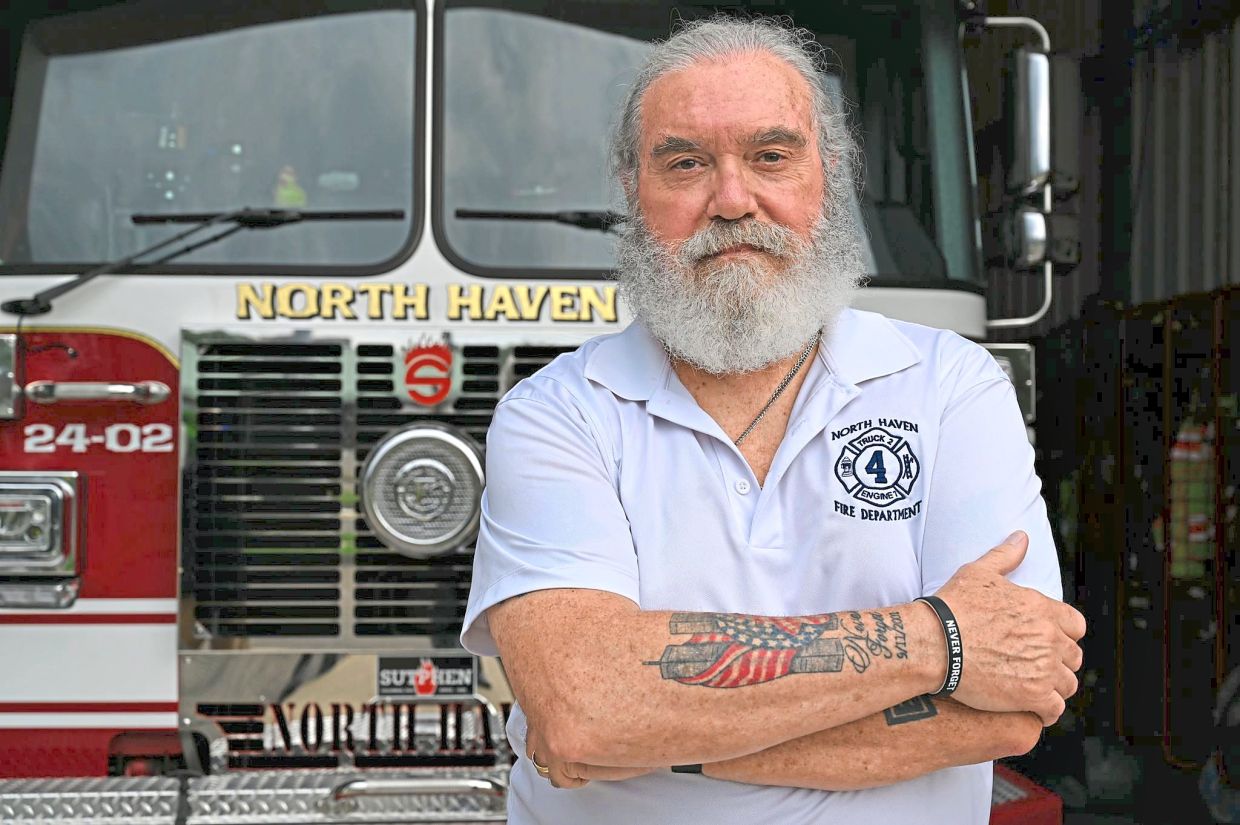
Curt Andrews has had to have skin cancer removed eight times already – from his face, his head and his chest.
Those parts of his body were exposed 25 years ago to the dust released by the attacks on the World Trade Centre in New York, United States.
After the Twin Towers at the site collapsed when two planes hijacked by terrorists crashed into them on Sept 11, 2001, the volunteer firefighter from the US state of Connecticut spent a week at Ground Zero.
What few people realised at the time was that rescuers working in the disaster zone were exposed to a highly toxic cocktail of pulverised concrete, asbestos, glass fibres, plasterboard, burnt plastics and other harmful substances.
“We all knew there were thousands and thousands of people that worked in that area, and so I said, you know, I got to do it,” Andrews says.
After learning about the terrorist attacks, he packed a bag and drove down to New York with other firefighters to help.
The towers had already collapsed when they arrived about 90 minutes later, covering the area in a layer of ash so deep it reached up to his knees.
“It was like walking through snow,” he says.
One lone survivor
Andrews expected to see rescue workers trying to recover people from under the rubble.
But the only thing he heard were pagers beeping.
Before the collapse, firefighters from across the city had been called to the World Trade Center.
More than 300 firefighters died as the towers came crashing down.
Their pagers started to emit an emergency signal, which they are built to do when they haven’t moved for a while.
Eventually, the batteries ran out.
“I guess sometime after about midnight, just before about 11 o’clock, we found somebody – a guy who was alive.
“He had an eye beam impaled in his arm.
“So we brought doctors up who gave him morphine, and then we had to amputate his arm and take him off of the pile.
“He survived,” Andrews says.
The man is the only survivor Andrews located within a week.
Neither he nor his colleagues wore protective masks, as far as he can recall.
His skin felt irritated and he coughed a lot, he recalls.
He was 41 at the time.
Andrews spent his first night in New York on a kerb.
“We didn’t have a chance to take any showers for the time that we were down there.
“So we were covered in all this dust, and we were stinky,” he shares.
Deadly pollution underestimated
Tens of thousands of volunteers helped in the rescue and clearing operations after Sept 11.
Twenty-five years on, the health crisis triggered by the attacks continues to rage.
Alongside the toxic dust, fires that kept on burning beneath the mountains of rubble at Ground Zero right up until December also caused months of air pollution.
The US environment agency declared the pollution as harmless on Sept 18, 2001.
Later, it had to retract the assessment.
But that came too late for hundreds of thousands of New Yorkers, who had since returned to work, school and homes nearby, where they were exposed to the toxic air.
The New York Stock Exchange, just a few minutes away from Ground Zero, reopened on Sept 17, just a week after the attacks.
Lila Nordstrom attended school near the World Trade Center at the time of the attacks.
Her school reopened in early October, when clean-up efforts were still in full swing.
Many students soon began to complain about respiratory problems and Nordstrom realised her asthma was getting worse.
She was at school when the hijacked planes crashed into the towers and she also developed gastro-oesophageal reflux disease (GERD) and post-traumatic stress disorder (PTSD).
The US Centers for Disease Control and Prevention (CDC) has so far registered more than 57,000 cases of cancer related to the attacks.
The most common form is skin cancer, followed by prostate and breast cancer.
In the 12 months leading up to this June alone, over 10,000 additional cancer cases have been recorded.
Other typical illnesses resulting from the attacks include chronic reflux, asthma and PTSD, according to the US CDC.
By this year, more than 150,000 people had registered with a US government health programme for those affected by the attacks.
The scheme assesses whether the illness, the extent of the stress experienced at the time and the timeline meet established scientific criteria.
If they do, the illness is recognised as 9/11-related.
Exact death toll unclear
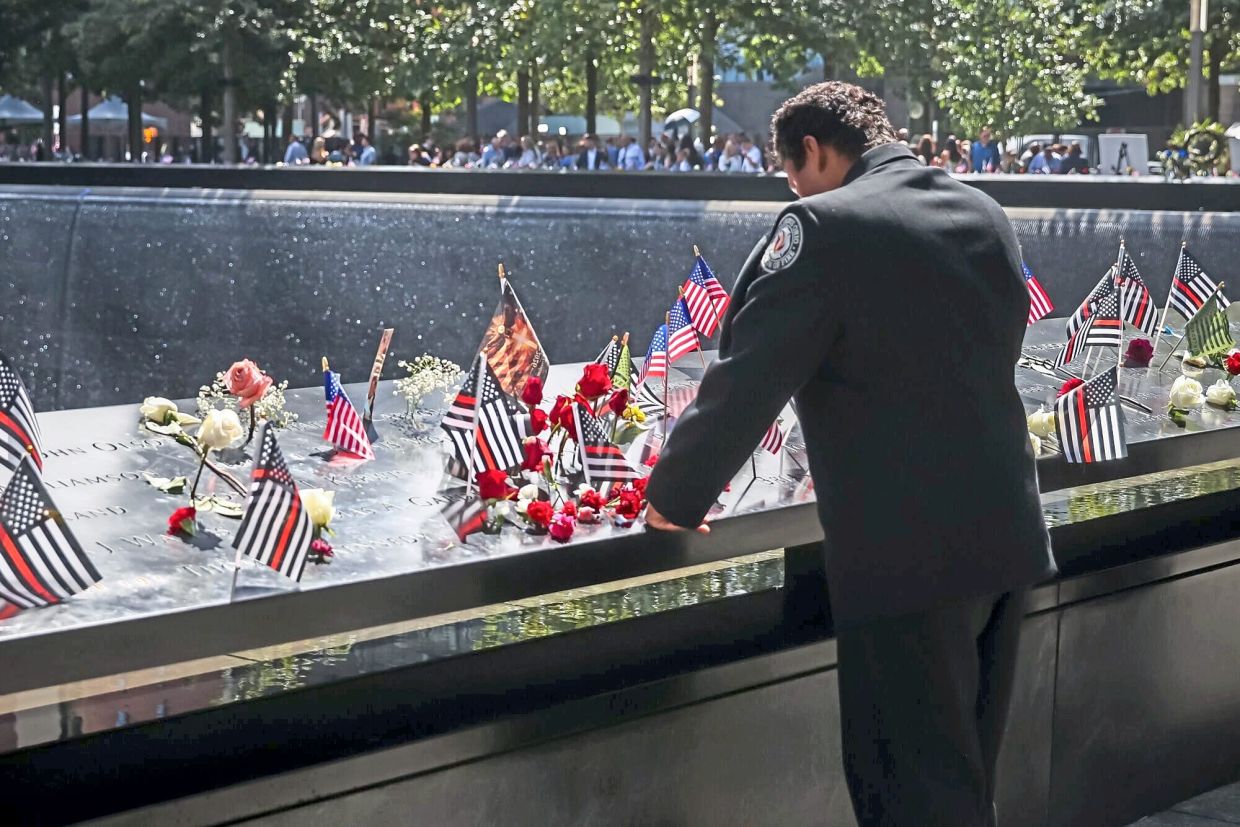
In October 2001, experts identified more than 350 chemical substances in the dust released by the collapse, including pulverised concrete, insulation material, kerosene, electrical appliances and a high concentration of glass particles.
Scientists say the dust directly affects the sinuses and gastrointestinal tract.
The US authorities do not provide exact figures for the number of people who have died from illnesses caused by the disaster since Sept 11, 2001.
However, specialists estimate that the number is higher than the 3,000 people killed directly in the attacks.
Andrews knows many such stories.
One of his colleagues from Connecticut died of liver cancer in 2018, while another was treated for mercury poisoning for years.
Andrews does not regret that he rushed into New York that day, even though he is still paying the price.
“I would do it again 100%. I was blessed with the opportunity to be there and help,” he says.
But he only felt able to return to Ground Zero more than 20 years later.
A friend persuaded him, promising to show him around in 2023, he says.
It was also years later that he decided to get a tattoo of the Twin Towers draped in a US flag.
Beneath the image on his forearm, it says, “Never forget.” – dpa