Check for GMP certification when buying health products


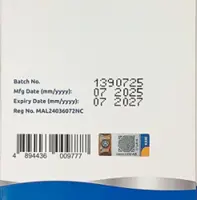
All health products registered with the Health Ministry must have a valid MAL registration number or hologram security label. — REVATHI MURUGAPPAN/The Star

The Malaysian Statistics on Medicines 2018–2022 report revealed a clear trend as more people are turning to modern medicine and recognising the importance of consuming safer, higher-quality health products.

Led by the Health Ministry’s (MOH) Pharmaceutical Services Programme, the report delves into total medicine use in Malaysia, patterns and trends in utilisation.

In 2020, the public sector accounted for over 60% of total medicine utilisation, marking a 9.44% increase compared to 2019.

The private sector also reported steady growth in medicine utilisation over the five-year period, with an increase of more than 21.3% in 2021 compared to 2020.

As demand continues to rise, ensuring quality production has become a top priority for manufacturers.

Good Manufacturing Practice (GMP) certification plays a vital role in achieving this objective.

But what exactly is GMP, and why is it crucial for the production of high-quality health products?

Understanding GMP

GMP refers to a quality assurance system that ensures medicinal products are consistently manufactured and controlled to meet appropriate quality standards for their intended use.

In essence, GMP comprises a set of guidelines and regulatory requirements designed to ensure the consistent quality, safety and efficacy of health products.

These standards cover all aspects of production, including manufacturing facilities, equipment, workforce, documentation and quality control processes.

In practice, GMP ensures that products are manufactured according to the quality standards required for their intended use.

Without proper controls, manufacturing operations may jeopardise consumer health and safety.

Therefore, a GMP certificate assures consumers that a product meets established safety and quality standards, thereby building confidence in the health products marketed.

From a regulatory perspective, the Control of Drugs and Cosmetics Regulations (CDCR) 1984 clearly state that adherence to GMP is a mandatory requirement for obtaining a manufacturer’s licence, as well as for product registration or cosmetic notification.

In Malaysia, the National Pharmaceutical Regulatory Agency (NPRA) acts as the secretariat to the Drug Control Authority (DCA) and is responsible for ensuring that all manufacturers of registered products in Malaysia provide satisfactory evidence that their manufacturing facilities comply with current GMP standards.

The NPRA is the regulatory body responsible for conducting GMP inspections.

GMP standards cover all aspects of production, including manufacturing facilities, equipment, workforce, documentation and quality control processes. — Freepik

Meeting GMP standards

To comply with the requirements, local manufacturers intending to produce registered products within GMP-compliant facilities may either establish their own factories or engage contract manufacturers that meet GMP standards.

The facility must be licensed by the relevant authorities, including the local town council, the Department of Environment and the Fire and Rescue Department.

In addition, a GMP certificate, which is primarily issued to facilitate the export of locally manufactured registered products, serves as proof of compliance with current GMP requirements.

This certification is often required by overseas regulatory bodies for product registration in their respective countries.

To obtain this certificate, applications must be submitted online via the QUEST3+ system, which can be accessed through the official NPRA website at www.npra.gov.my.

A certification fee of RM50 has been set by the NPRA for this purpose.

According to the CDCR 1984, the manufacturing and quality control standards of medicinal products produced outside Malaysia must be evaluated before the products can be registered in the country.

Consequently, overseas manufacturers are required to undergo GMP conformity assessments, either by providing acceptable GMP evidence or through GMP inspections.

The Product Registration Holder (PRH) must provide satisfactory evidence to prove that the manufacturer follows an internationally accepted standard of GMP recognised by the NPRA.

Non-compliance with GMP standards can have serious consequences.

Health product manufacturers that fail to meet GMP requirements may face rejection of new product registration applications, denial of registration renewal, or suspension of currently registered products.

Furthermore, the manufacturer’s licence may be revoked by the Director of Pharmaceutical Services, in accordance with Regulation 17(1) of the CDCR 1984.

Risk of using non-GMP certified products

Despite regulatory safeguards, unregistered health products continue to circulate in Malaysia, posing serious risks to consumers.

Health authorities have seized large quantities of such products from illegal operations.

For example, authorities in Penang and Kedah confiscated unregistered traditional medicines, some suspected of containing prohibited substances such as steroids, penicillin, and allopurinol, which could cause serious harm if consumed.

This is particularly alarming because unregistered products are often associated with non-GMP certified manufacturing facilities.

In fact, products made outside GMP-compliant facilities are at risk of being adulterated, inconsistent in potency and/or contaminated, all of which can compromise safety and lead to serious adverse health outcomes.

Consequently, consumers who use such products face significant health risks, underscoring the importance of choosing only registered products from GMP-compliant manufacturers.

Online platforms, especially social media networks, have now birthed a new online marketplace of drugs, especially counterfeit pills. — DEA/Flickr

Advice to public

Given the serious risks posed by unregistered products, it is crucial to adopt careful practices when selecting health products.

To ensure safety, consumers should ensure that the products they purchase are registered with the NPRA.

Registered health products have undergone a stringent evaluation process to confirm that they meet safety standards, including the GMP certification of the manufacturing facility.

Choosing registered products significantly reduces the risk of exposure to adulterated or contaminated items, ensuring that medicines are both safe and effective for consumption.

Consumers should verify that health products have a valid MAL registration number or hologram security label, which indicates that the products are registered with MOH.

The registration status can be checked via the NPRA’s official website.

Meanwhile, the authenticity of the hologram security label can be verified using the MyUBAT or FarmaChecker mobile application, depending on the version of the hologram security label.

Consumers should also be wary and avoid being misled by advertisements from suspicious sellers, particularly those promoted online.

Health products obtained from unverified sources, such as street vendors or unregulated online marketplaces, may be dangerous or of substandard quality.

In summary, GMP is essential to ensure the consistent production of high-quality health products.

By adhering to GMP standards, manufacturers safeguard the quality, safety and efficacy of their products, thereby protecting consumers and strengthening public trust.

Ultimately, consumers are encouraged to choose only health products that are properly registered and meet regulatory requirements, including those manufactured in GMP-certified facilities, to ensure the products used are safe, effective and of high quality.

Najwa Syahirah Safian is a pharmacist with the National Pharmaceutical Regulatory Agency (NPRA). This article is courtesy of the Health Ministry’s Pharmacy Practice and Development Division. For more information, email starhealth@thestar.com.my. The information provided is for educational and communication purposes only, and should not be considered as medical advice. The Star does not give any warranty on accuracy, completeness, functionality, usefulness or other assurances as to the content appearing in this article. The Star disclaims all responsibility for any losses, damage to property or personal injury suffered directly or indirectly from reliance on such information.


Follow us on our official WhatsApp channel for breaking news alerts and key updates!

Next In Health

Try these golf exercises to enhance your game
What you could be eating in future is changing rapidly
Oncologist: ‘There was no space to feel’
Don't believe everything chatbots�tell you
The trigger behind gut scarring in Crohn’s disease
Daily habits to help prevent dementia�
Cultivating resilience in our children�
We need to remove barriers to physical activity�
Mental health check�for the family
Sugar to soothe the pain�for hospitalised newborns

Others Also Read