
Regular exercise provides a wide range of benefits, including weight management, improved cardiovascular (heart) health and sleep quality.
But for many people, common forms of exercise, such as walking, running and weight training, are a struggle due to pain, weakness, mobility issues or fear of falling.
Aquatic exercise is an excellent way to focus on fitness in a gravity-reduced environment.
Here’s why:
> Buoyancy
When standing waist-deep in water, buoyancy reduces your body weight by half, making this form of exercise very low impact.
This significantly reduces the stress on your weight-bearing joints and bones.
> Support
Water provides support for people with balance problems.
The constant movement of water during a workout also challenges a person’s balance.
The more waves there are, the harder it is to balance and exercise.
> Resistance
Water’s viscosity slows movement and provides resistance, making aquatic exercise a great, resistance-training workout.
With less joint stress, people find they can work out longer and do more repetitions.
All these benefits make water exercise an effective option for anyone recovering from a sports injury to regain range of motion, strength and endurance.
It also means that you can get a good, overall workout that improves strength, cardio and flexibility.
As with any exercise, check with your healthcare team before starting a new routine.
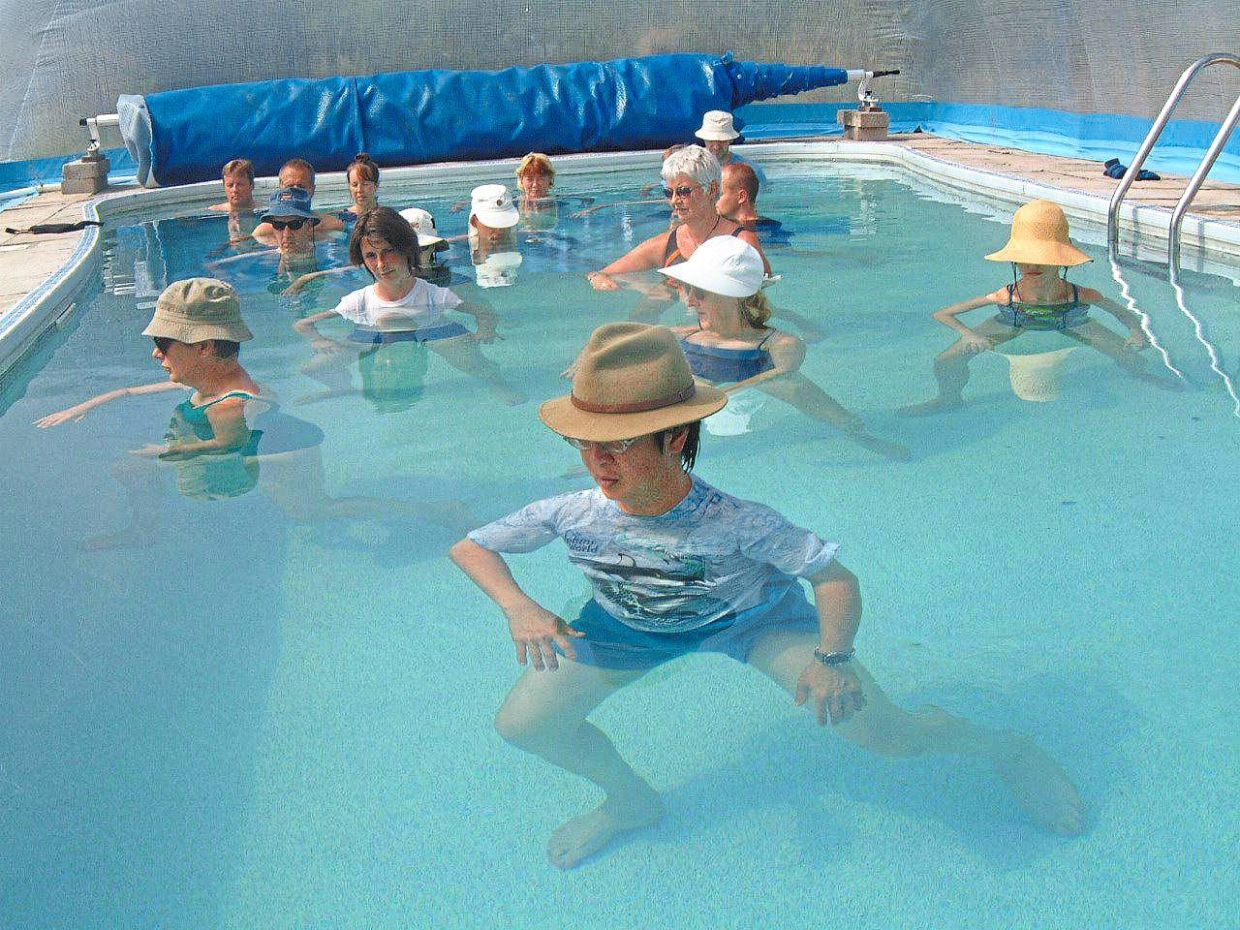
Here are five things you should know before jumping into the pool:
1. Aquatic exercise is versatile
Aquatic exercise offers a variety of options and techniques for almost all levels of physical ability.
These range from basic, such as walking in the water, to more high-level aerobic activities, such as deep-water running or swimming.
Standing exercises are often performed in water that’s waist to chest deep, and they typically focus on improving range of motion/flexibility, balance and strength.
Resistance training can be amplified by simply increasing the speed and range of movement, or adding equipment that increases drag, such as webbed mitts, paddles, noodles or bands.
2. You don’t need to know how to swim
Having a basic knowledge of swimming or water safety is a good idea for anyone who’s around water, but aquatic exercise doesn’t necessarily involve swimming.
The shallow end of any pool or lake will do, since for many of the movements, you only need to be able to stand in the water.
3. Water temperature is important
Aquatic exercise in lower water temperatures (27.8-31.1°C) is generally best for higher-level intensity exercise or people who are prone to overheating.
The latter include those who are pregnant, obese or have multiple sclerosis.
Aquatic exercise in warmer temperatures (28.9-33.3°C) is better for people with arthritis, fibromyalgia or pain, as well as those who are frail.
4. Be aware of your abilities
With the increased ease of exercise in water, people can often tolerate longer exercise sessions.
As a result, these sessions can be more intense, with larger ranges of motion, which creates the potential of overstressing your body.
You may be more fatigued than expected following an aquatic exercise session.
5. Consider group exercises to mix it up
Group aquatic exercise classes are a great way to socialise, build connections, find support, increase accountability and stay motivated to continue exercising.
Classes are often led by instructors who have special training in exercising in an aquatic environment.
The instructors should be able to offer suggestions for adjusting exercises for individual participants, if needed.
Amping up your water workout on your own or in a class may include resistance equipment such as:
- Foam dumbbells – lightweight on land, they provide resistance underwater through flotation and come in a variety of resistance options.
- Water weights – strap-on ankle or wrist weights increase resistance during arm and leg exercises.
- Hand paddles and resistance gloves – these enhance strength training.
- Buoyancy belt – helps keep your head above water in the deep end while leaving your hands free.
You can run, lift weights and do other workouts using your hands without having to tread water.
People often enjoy working out more in water than on land.
When they’re not in pain or afraid of falling, and are having fun, it encourages them to exercise more consistently.
You can even get in a good workout without getting your hair wet. – By Kimberly Olsen
Kimberly Olsen is a physical therapist in Minnesota, United States.