
Chiropractic care is commonly associated with spinal adjustments.
Cracks, pops and a loud sigh of relief – these sounds can often be heard coming out of a chiropractor’s clinic.
But these noises are nothing to be alarmed about.
Depending on the technique used, certain adjustments release gases from the synovial fluid within the joints, creating a “pop” sound.
During a spinal adjustment, tiny spaces or gaps open up in between the vertebrae, encouraging a temporary release of pressure, thus allowing enough space for the gas to escape.
In general, chiropractors feel your bones and joints to identify a lack of movement.
They then make adjustments to generate movement in those areas.
Whether or not you hear a “pop” does not correlate with the creation of joint movement.
Unbeknownst to many, there is also a branch of chiropractic called sports chiropractic, which focuses on the treatment and prevention of injuries related to sports and exercise.
While general chiropractors primarily address musculoskeletal issues like back pain, neck pain and headaches, sports chiropractors specialise in treating and preventing sports-related injuries, enhancing athletic performance and optimising movement.
Common in sports teams
Sports chiropractors do extremity adjustments, i.e. to joints other than the spine, such as the shoulders, wrists, hips, elbows, knees and ankles.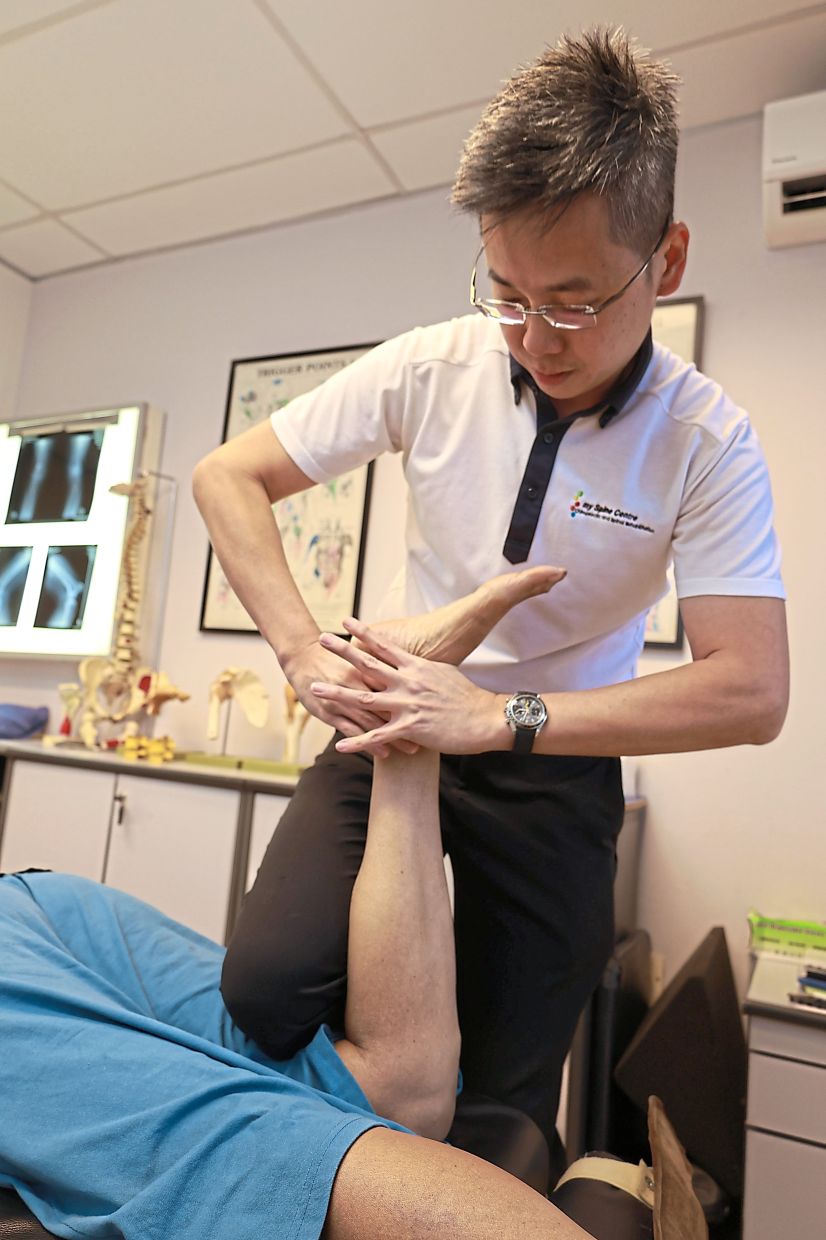
“It’s a lesser known aspect of our practice,” says chiropractor Eugene Yang.
“These extremity adjustments involve manipulating the joints of the arms and legs to restore proper alignment, improve range of motion, and reduce pain or dysfunction.
“We can treat conditions such as shoulder impingements or frozen shoulder, tennis or golfer’s elbow, carpal tunnel syndrome, hip or knee misalignments, ankle sprains, plantar fasciitis or foot pain, and other sports injuries.”
Professional athletes, weekend warriors, and even those who exercise regularly, can all experience an injury that limits their ability to participate in the activities they love.
Yang, a qualified sports chiropractor, says: “The goal is to get them to return to play as soon as possible.
“Actually, extremities are more straightforward to treat as there are not as many nerves involved in these areas, compared to the spine.”
Historically, sports chiropractic has been recognised since 1980 when practitioners accompanied the American team at the summer Olympic Games in Moscow in the then Soviet Union.
The chiropractors offered therapeutic support for athletes in the areas of prevention, performance improvement, injury treatment and rehabilitation.
Since then, many sporting professionals and teams, including the US National Basketball Association (NBA) and English Premier League football teams, have included chiropractors as part of their medical staff.
A number of national contingents also have sports chiropractors integrated into their medical teams, with some even having them as permanent members.
Addressing knee problems
There is this common assumption that if someone, especially the elderly, has a knee problem, it must be due to osteoarthritis or wearing out of the cartilage in the knee joint.
“In a lot of cases, it’s not osteoarthritis – the pain is related to lifestyle habits, weight, footwear or patellar (kneecap) tracking dysfunction, whereby the patellar is not sitting in the groove of the thigh bone, but is displaced to the outer side.
“With this dysfunction, there are sounds and pain in front of the knee and around the kneecap.
“What we can do is use manipulation techniques to balance out the leg muscles so that the patellar moves optimally to solve the problem,” says Yang.
More and more emerging research is proving that the benefits of sports chiropractic for ankle sprains include faster recovery time, improved joint stability, reduced risk of reinjury and enhanced athletic performance.
He says: “We combine traditional chiropractic techniques with sports-specific rehabilitation to support performance, recovery and injury prevention.
“We don’t only treat the ankle, but address the whole kinetic chain, which includes the knee, hip and back, so it’s holistic care.”
During the acute phase (immediate injury) of an ankle sprain, chiropractors will evaluate the severity of the sprain (Grade I to III), range of motion, swelling and ligament stability.
An X-ray or more imaging reports may be necessary.
Treatment usually includes:
- P.O.L.I.C.E. (protect, optimal loading, ice, compression, elevation)
- Laser therapy or ultrasound for inflammation and healing
- Gentle mobilisation to maintain joint function (depending on severity).
Practitioners not only use their hands to manipulate the joints, but also employ instrument-assisted soft tissue mobilisation (IASTM).
This is a therapeutic technique that uses specialised tools to detect and treat soft tissue restrictions.
Another popular device used is an activator that delivers a gentle low-force impulse to stimulate the nervous system, revascularise the area and restore proper joint function.
Some chiropractors also use dry needling techniques.
These techniques have their roots in acupuncture, but instead of targeting meridian points, they target trigger points.
“Chiropractors may perform manual or instrument-assisted adjustments to the talus, fibula or other foot bones to restore alignment and biomechanics.
“Then we’ll engage in some soft tissue techniques to reduce scar tissue and promote muscle balance, after which we will recommend some rehabilitation exercises before the patient can return to sports,” shares Yang.
If necessary, sports chiropractors may also suggest wearing orthotics if foot biomechanics are contributing to recurrent sprains.
Part practitioner, part self-care
Although there is greater awareness about chiropractic care nowadays, some people are still afraid to seek help from these complementary medicine practitioners, with misconceptions abounding.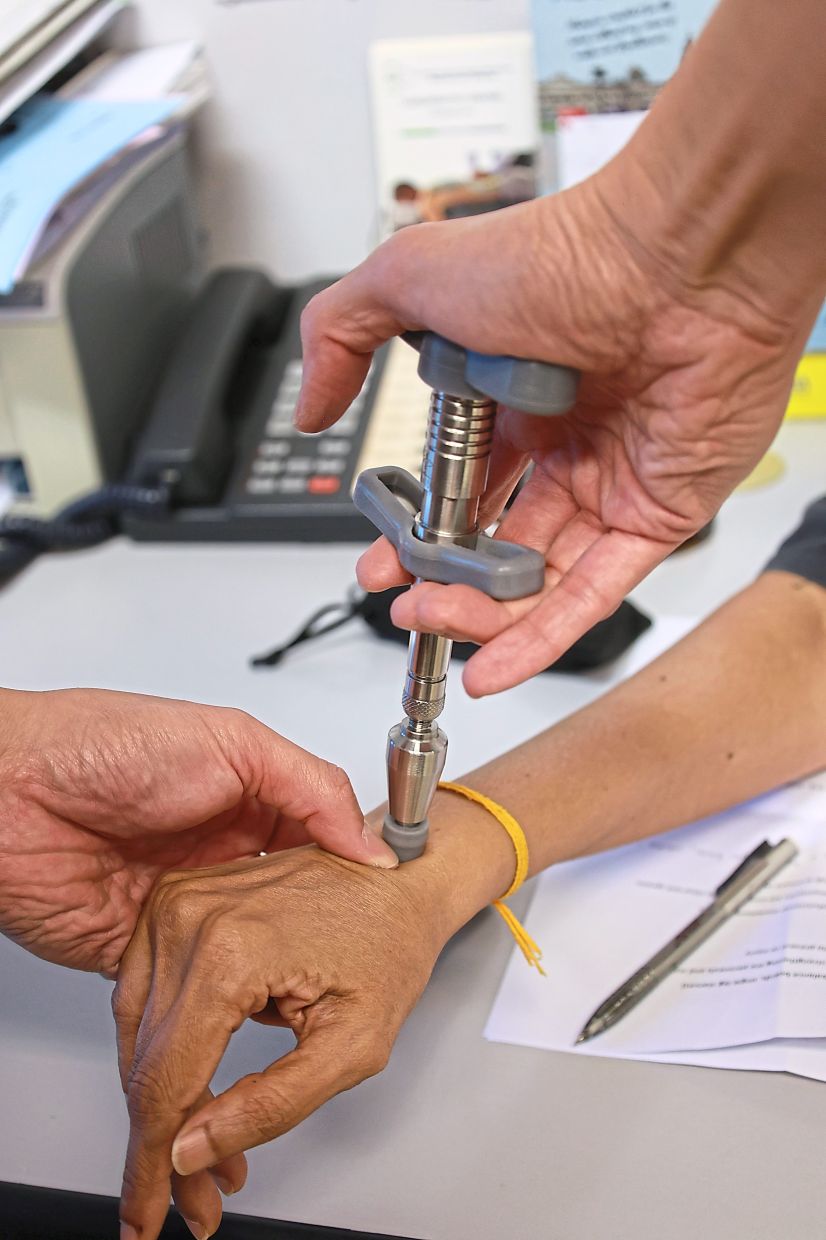
People believe that adjusting the spine will cause the bones to become weaker.
“It’s not about cracking the bones, but creating gaps between the joints so that they can move smoother,” Yang points out.
Another false belief is that once you have your spine adjusted, you need to consult a chiropractor for the rest of your life.
Yes and no, says Yang.
He explains: “It’s like having a car: you can drive it, but you should change the engine oil at a certain point to ensure the car is running smoothly.
“I tell my patients, I can only jumpstart your engine, but you have to do the gotong-royong by driving/maintaining the car yourself, i.e. perform the exercises at home.”
With some patients, they may only see a chiropractor once every few years as they have been diligently working on their bodies.
Of course, there are patients who insist on regular adjustments, as they don’t want to do the recommended exercises at home.
They “leave” their bodies in the hands of a chiropractor, hoping for a quick fix.
“I try to advise them that exercise and stretching is important, and push their appointments further to minimise their reliance on us.
“But if they have a problem and it is in the acute phase, then we see them more often to address the issue.
“At the end of the day, we have to manage their expectations,” says Yang.
Check for certification
Chiropractic adjustments are safe when someone trained and licensed to do chiropractic care does them.
Serious complications linked to chiropractic adjustments are rare, although common side effects include temporary soreness, stiffness or pain in the treated area, similar to what someone might experience after a good workout.
Yang, who has been in practice for almost two decades, urges the public to exercise caution when seeking treatment from traditional healers and bonesetters (tit tar).
“I am not implying that they are not good, but most are not formally trained in a recognised institution, perhaps not properly qualified and most likely practising without a valid professional indemnity coverage.
“Try to avoid those without proper certifications.
“Their prices are also at cutthroat levels if they are famous on social media.
“Chiropractors spend four to five years obtaining a university degree and are registered with the Health Ministry under the Traditional and Complementary Medicine (TCM) Act 2016, but bonesetters don’t come under this act so this is a grey area.
“Don’t take the risk of going to an unlicensed practitioner because if any mishaps occur, you can’t complain to the Health Ministry as it does not come under their jurisdiction,” he warns.
Already a subscriber? Log in
Get 20% OFF The Star Digital Access
Cancel anytime. Ad-free. Unlimited access with perks.