There are many ways to tackle obesity, and achieving a realistic goal works best if treatment plans are individually tailored.
Mild obesity can be overcome through behavioural changes, diet, exercise, and sometimes, medication.
But these methods often don’t work for severe obesity and such patients require invasive interventions such as bariatric surgery.
However, the word “surgery” itself can be frightening because no one wants to be cut open.
Now there is a groundbreaking weight-loss solution that provides patients with a non-surgical alternative.
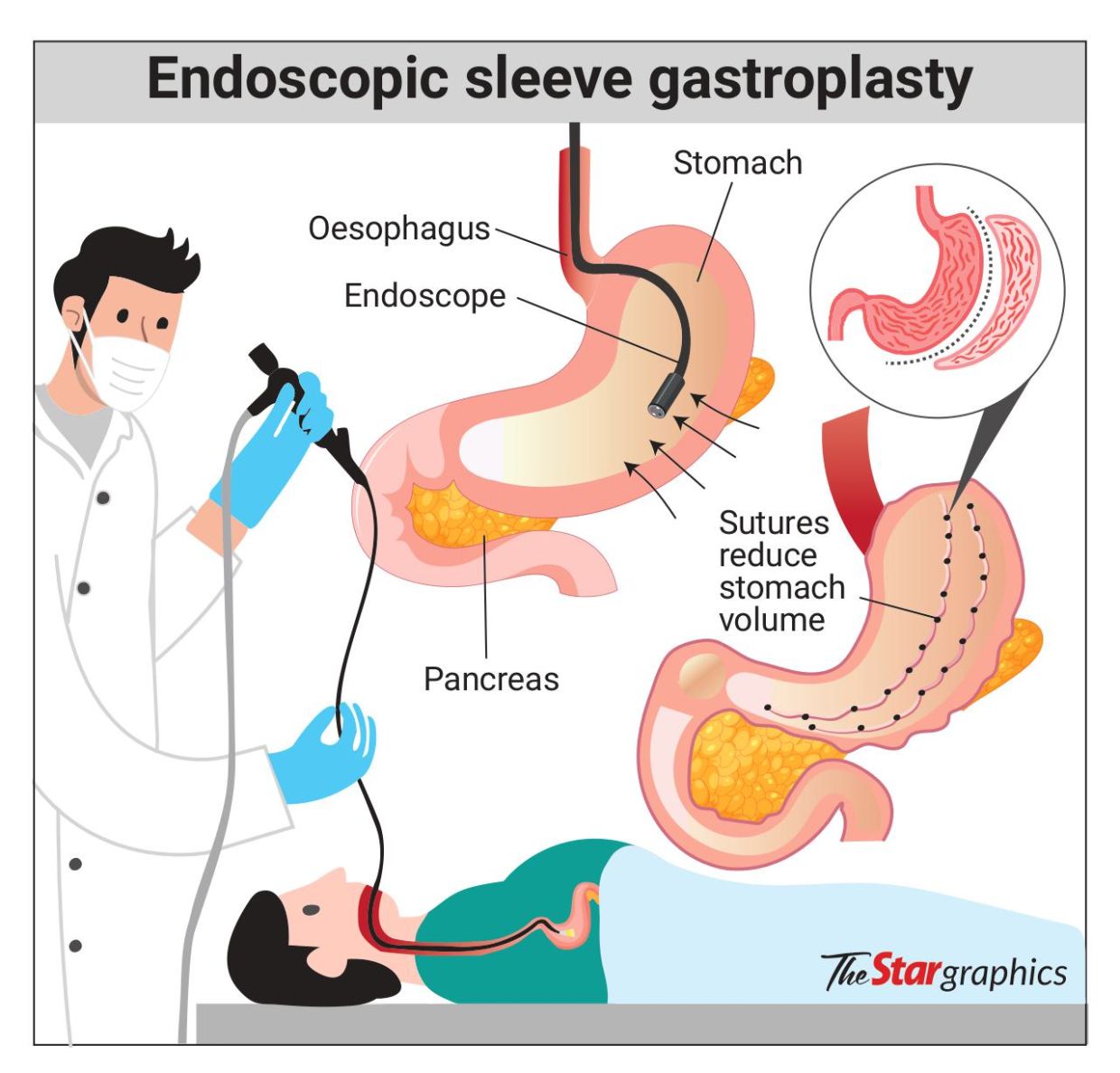
The endoscopic sleeve gastroplasty (ESG) is a minimally-invasive procedure that uses an endoscope to reshape the stomach and reduce its size with internal sutures.
This technique eliminates the need for external incisions, ensuring quicker recovery and minimal discomfort.
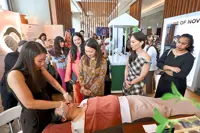
Part of the medical team from a private hospital that recently carried out the ESG – the first in Malaysia – are consultant general surgeon Dr Lim Shu Yu and consultant gastroenterologist Dr Mandeep Singh Awtar Singh.
“There is a large group of patients who can’t lose weight through lifestyle, diet and medications alone, but don’t want surgery, so the ESG is intended to fill this gap.
“It carries a lower risk compared to bariatric surgery and the recovery is also significantly faster as patients can get back on their feet the next day,” says Dr Lim.
But ESG is not intended to replace diet, lifestyle and medicines, or bariatric surgery, as patients only lose up to 20% of their weight over a year as a result of this procedure.
Dr Lim explains: “In ESG, we fold part of the greater curvature of the stomach and stitch 60-70% of it so that the amount you can eat is perhaps [the size of] a chicken drumstick and you are full.
“Over time, the sutures will loosen and the stomach can expand again, hence ESG is not a long-term solution.
“The ESG can also be used for severe obesity to make the patient lose some weight first before they go in for bariatric surgery to minimise any complications.”
Costly instrument
The ESG actually started a decade ago in Europe and has been well-accepted worldwide as a safe, mid-term solution for weight loss.
Its success rate is 90%.
Although Malaysia is a late adopter of the procedure, we are among the first to get the second-generation equipment.
Locally, fewer than 10 gastroenterologists have been currently trained to use this special device.
Dr Mandeep says: “Technology has advanced and the equipment we’re using is more refined.
“It is the same endoscope, but this one comes with a stitching device attached to it.
“The procedure takes 60-90 minutes, depending on the size of the stomach, and the patient is put under general anaesthesia.
“The patient is not allowed solid food for the first week as the idea is to hold the sutures together so that the stomach doesn’t suddenly expand and cause the sutures to break.”
According to research studies, the youngest patient reported to have undergone this procedure is 15 years old, while the oldest is 75.
“Patients who are not suited include those with gastric tumours, i.e. with altered anatomy of the stomach that we cannot stitch adequately.
“Or if they have an underlying reason for their obesity, such as thyroid problems, so whatever we do is not going to change anything – they need medical therapy to correct their thyroid to resolve obesity and potentially reverse the complications caused by it,” he says.
The gastroenterologist believes ESG is going to change the landscape of things as more than one billion people globally are obese.
“If more people start doing this, we can bring down the rates of hypertension, diabetes and other metabolic disorders,” he opines.
The cost of the ESG procedure, unfortunately, is almost as high as bariatric surgery and starts at RM27,500 at private hospitals.
This is because of the highly-specialised instrument used, which makes up 70% of the cost.
Getting insurance coverage is also an uphill battle, as unlike some countries, obesity is not officially recognised as a disease in Malaysia.
It is instead considered as a lifestyle condition, even though it has been widely established to be the precursor to diabetes, hypertension (high blood pressure), heart disease and cancer.
Hence, patients would have to pay out of pocket if they opt for ESG.
However, government hospitals such as Hospital Canselor Tuanku Muhriz in Kuala Lumpur, have also begun offering ESG services, where the cost will hopefully be more affordable.
First local patient
Looking at Noor Hazieyanni Hamdan, you’d never guess she once represented her university in a number of sporting events.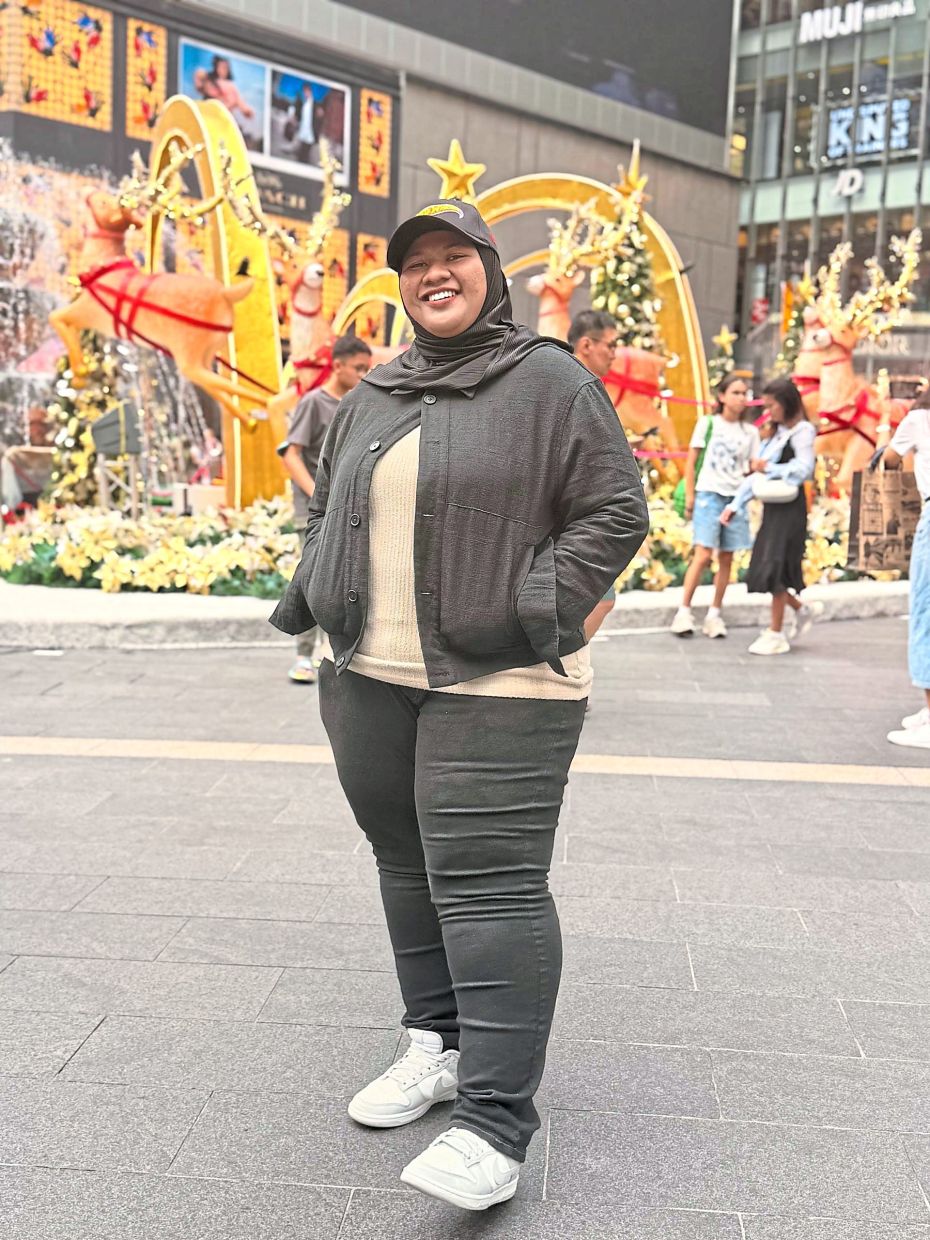
Standing at 159cm and weighing 85kg, she was obese but muscular, and could move speedily on badminton and futsal courts.
All that changed the moment she graduated and started her own business selling toys.
Yanni, as she prefers to be called, shares: “I led a very busy lifestyle as I was trying to build my business, both in physical retail and online, often working up to 18 hours a day.
“I rarely took vacations, neglected my health, didn’t exercise, and although I didn’t snack, every time I sat down to eat, it would be a heavy meal with rice or fast food.
“Before I knew it, the weight piled on.”
Her parents nagged their eldest child to do something about it as they were worried she’d get diabetes, just like all her grandparents, uncles and aunties.
The parents knew the dangers of the chronic disease and raised their six kids in a healthy environment – all are slim except Yanni.
In 2023, she decided to step on the weighing scaIe; the needle moved to the far right and pointed at 155kg.
“I couldn’t believe it – I had gained 70kg and my body mass index was 61.3!” says the 30-year-old.
She kicked into high gear, bought weight-loss supplements, went on a diet and signed up for personal coaching sessions.
She lost 23kg, but she felt tired.
She says: “I even sourced for cosmetic procedures, and when I was researching online, I stumbled upon on a bariatric surgeon at a private hospital and decided to consult him.”
After speaking to the doctor, who ran some investigations, Yanni was diagnosed as having fatty liver disease and pre-diabetes.
“I told him I wanted to recover fast and was not in favour of surgery, so he recommended ESG, but added that I would be the first patient to undergo the procedure in Malaysia.
“Initially, I was scared, but he put me at ease and was confident I would benefit from it,” she says.
And so, on Dec 30, 2024, Yanni did the ESG.
The procedure went smoothly and she was discharged the next day, albeit experiencing a bit of bloating.
Within two months, she lost 15% of her body weight, exceeding the medical team’s expectations.
“With guidance from the dietitian and doctors, I’ve become extremely disciplined.
“I feel much lighter and have more energy.
“Since I’m also a content creator and am in front of the camera daily, people have been complimenting me on my weight loss.
“In my older pictures, I look like an inflated tube!” says Yanni, laughing.
High-protein diet
According to dietitian Mushidah Zakiah Mohad Akran, patients are only allowed clear liquids, such as clear broth and high-protein drinks, for the first few days post-ESG.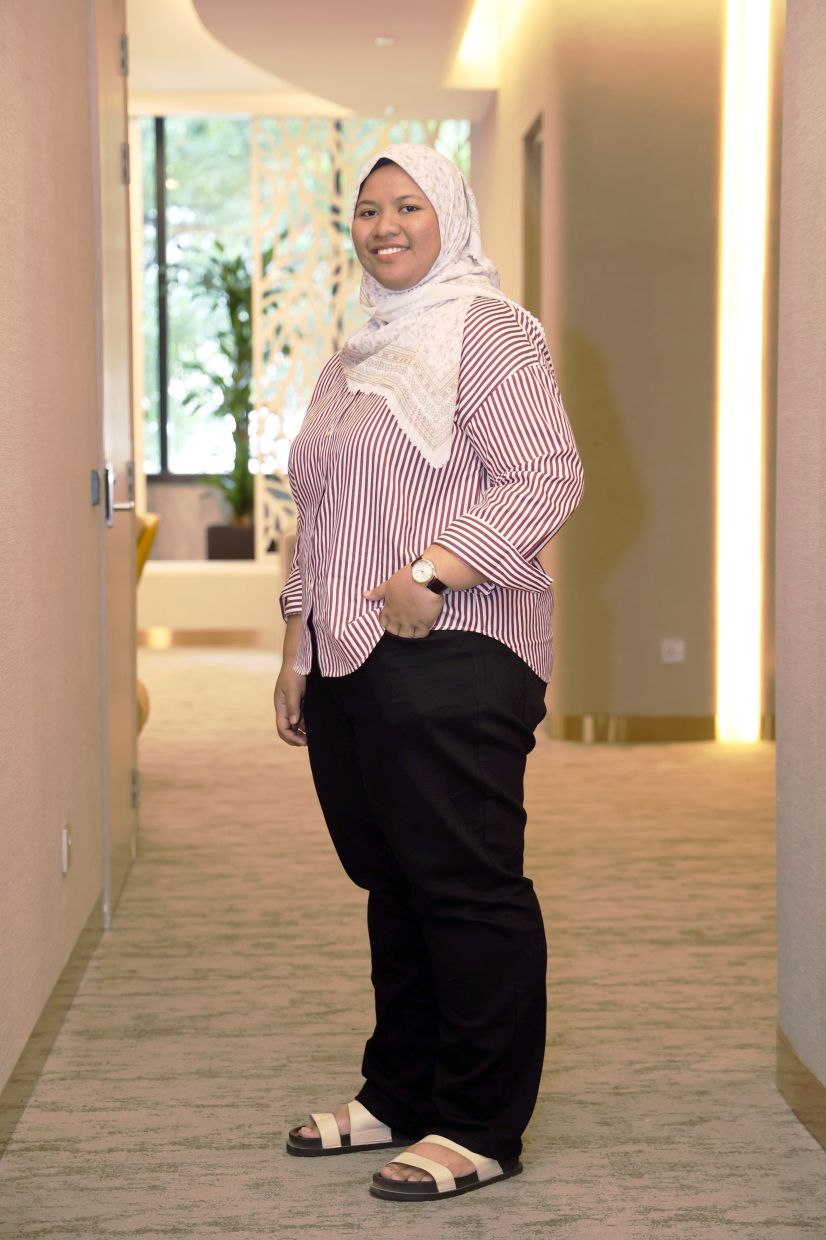
Next, they progress to a full liquid diet comprising high-protein liquids such as low-fat milk, high-protein shakes or dairy alternatives, before transitioning to soft protein, as well as cooked and mashed vegetables.
They can introduce solids in about two months, but are advised to chew slowly.
Mushidah says: “Protein is very important as it helps with healing.
“In the long run, it helps to improve and maintain satiety, while making sure patients do not lose muscles throughout their weight-loss journey.
“Inadequate protein intake poses the risk of hair loss, infections and low immunity.
“It is recommended that patients aim for a minimum of 60g of protein per day, which is equivalent to eight eggs.”
And no, patients do not get constipated, although they will have fewer bowel movements in a week.
As for Yanni, she is strictly eating only fish and chicken daily, along with drinking plain water for hydration.
She weighs 106.5kg at the moment and is determined to reach 70kg by year-end.
Dr Lim concludes: “ESG can be repeated, but like diets, it’s always most effective when you try it for the first time.
“So my suggestion is, if you don’t achieve the results you want the first time, go for bariatric surgery.”
Already a subscriber? Log in
Get 20% OFF The Star Digital Access
Cancel anytime. Ad-free. Unlimited access with perks.