Being shortsighted increases your risk of other eye diseases


High myopia usually begins in childhood and stabilises during puberty or young adulthood, but progresses again during adulthood. — TNS

To most people, myopia or nearsightedness may not seem like a big deal as they assume their vision can be corrected with a pair of spectacles.

What they don’t realise is that myopia, both corrected and uncorrected, can increase the risk of getting other eye issues.

There are two types of myopia: simple or high.

With simple myopia, the power is usually less than -5.00 dioptres and the eye develops within normal limits.

But high myopia can lead to complications such as retinal detachment, myopic degeneration, glaucoma and cataracts at a younger age.

Myopia occurs when the shape of your eyeball is too long, causing the light rays to bend (refract) and focus at a point in front of the retina instead of on it as is needed for normal vision.

“You wear your glasses and the myopia seems to ‘go away’, i.e. it is corrected.

“But it cannot fully be treated as the eye remains abnormal,” says Hospital Canselor Tuanku Muhriz senior consultant ophthalmologist Professor Dr Mae-Lynn Catherine Bastion.

High myopia can become progressive as you age, i.e. your eyeball gets further elongated.

The progression usually begins in childhood and stabilises during puberty or young adulthood.

But in high myopia, it may start to progress again in adulthood.

“So the back part of the eye (retina) continues to stretch, and as it stretches, the nerves get thinner and thinner, and parts of it can snap (resulting in retinal detachment).

“If it is not treated immediately, you could go blind.

“We can try to surgically reattach it and the success rate is between 80-90%.

“A small portion of people (one in 10) would need multiple surgeries,” she explains.

If only a small part of your retina has detached, you may not have any symptoms.

But if more of your retina is detached, your vision may become blurry.

You may also notice other sudden symptoms such as an increase in floaters (small dark spots or lines that float across your eyes); flashes of light in one or both eyes; or a dark shadow on the sides or in the middle of your field of vision.

Corrected, but not cured

The layers of the retina are stretched in this highly-myopic patient, which can eventually result in retinal detachment and blindness.— Photos: Prof Dr MAE-LYNN CATHERINE BASTION


The other complication of myopia is glaucoma (damage to the optic nerves), and the risk is higher in those who have a family history of this condition.

Some people may correct their nearsightedness via Lasik surgery, but Prof Bastion cautions that this doesn’t fix the problem of the retina – it only reshapes the cornea.

She says, “If you go for Lasik, you’ve got to be careful, especially if you have a family history of glaucoma, as once the cornea is treated, we will not be able to measure your eye pressure reliably, so we could be missing the glaucoma.”

She also points out that uncorrected or undetected myopia in children below the age of 10 can lead to a condition called lazy eye.

“In this condition, the eye with the high power is ignored by the brain because it doesn’t like to be confused.

“So, in the eye that is not seeing well, the eyeball starts to elongate.

“We have to use the correct power before this happens to prevent any complications,” she explains.

In children, low doses of atropine eye drops are sometimes used nightly to reduce the elongation of the eyeball and slow down power progression.

However, it is not known if atropine works on adults.

There are also other measures used to treat myopia in children, e.g. orthokeratology.

This is where a specially designed and fitted contact lens is used to temporarily reshape the cornea to improve vision.

It’s akin to orthodontics for your eyes and the treatment is often compared to dental braces.

It’s used before bed and removed the next morning.

“The downside is that children have to be very responsible as it is easy to develop infections,” says Prof Bastion.

Contributing factors

Worldwide, myopia is increasing at an alarming rate, with an estimated 30% of the population being myopic.

Prof Bastion (left) and vitreoretinal fellow (trainee) Dr Ainal Adlin Naffi in their protective gear before entering the operating theatre for surgery on a Covid-19 patient. — Photos: Prof Dr MAE-LYNN CATHERINE BASTION

This number is projected to increase to half the world’s population by 2050.

According to the World Health Organization (WHO), the frequency of myopia is highest in East Asia, with approximately half the populations of China, Japan, South Korea and Singapore being myopic.

The rates are lower in Australia, Europe, and North and South America.

While there is no current local data, a small 2005 study on myopia prevalence conducted in Gombak, Selangor, showed a rate of 9.8% in children seven years of age.

This increased to 34.4% in those aged 15.

More affluent and higher educated societies have a higher prevalence of myopia.

These days, even those with lower power are experiencing complications and a faster progression of myopia.

This may be partly due to the lack of outdoor time, heavy reliance and intense near-work on electronic gadgets, and inadequate rest for the eyes.

The Covid-19 pandemic has also resulted in more time spent indoors, contributing to poor eyesight.

Prof Bastion says: “Perhaps we can change the education system to incorporate more preventative measures and make learning fun, for example, more audio input or outdoor learning.

“Studies show that being outdoors in better for eyesight.

“Looking out of the window is great, but we actually need to be in sunlight as it does something to our hormone secretion.

“If you look at Australia, their myopia rates are low as the population spends a lot of time outdoors.”

You don’t have to be out under the hot sun, just outdoors as the eyes become more relaxed when you look at a distance.

“Like other muscles, our eye muscles contract and relax as we change focus.

“If you use the muscles too much, they get tired, and you end up with red, watery or dry eyes.

“People also don’t blink enough and get dry eyes, so try to sensibly follow the 20-20-20 rule, i.e. take a break every 20 minutes and look 20 feet (6m) away for 20 seconds,” she advises.

A ‘dim’ outlook

It was another ordinary day for lecturer Wan Nur Shazwani, 37.

Shazwani, seen here with her husband and two sons, had no idea myopia came with an increased risk of developing other eye conditions. — WAN NUR SHAZWANI
She returned from work, went grocery shopping and felt the lights were dimmer at the store, but didn’t think too much about it.

“I went home and was watching the news on TV and the words on the bottom right screen became smaller.

“I was also feeling uncomfortable in my left eye, but I waited a few days before going to the hospital,” she recalls.

After a series of tests, Shazwani, whose myopic power was -4.75 dioptres, was told she had retinal detachment that required emergency surgery.

“My last eye check-up was two years ago, and like most people, I thought myopia only meant changing the lens’ power.

“I had no idea it came with risks.

“I went to a boarding school and lights were out at 11pm, so I would sneak into the corridor and study without proper lighting, so my power increased very fast,” says Shazwani, who started wearing glasses at 15, with a power of -1.25 dioptres.

As per the hospital’s standard operation procedure, she had to do a Covid-19 test.

Her results came back positive and her world turned upside down.

Shazwani says, “I have no idea how I contracted it as I was asymptomatic.

“Not only did I have to deal with my vision problem, I was admitted in the Covid-19 ward and saw patients next to me deteriorating.

“I was also worried if I had passed the infection to my two young sons and elderly parents.”

Thankfully, the family tested negative and she is currently recovering from her eye surgery that took place three months ago.

“I was told my power may have increased after surgery, so my advice to everyone is please don’t take your eyes for granted.

“With my children, I limit their screen time and expose them outdoors as much as possible,” she says.

Multiple surgeries

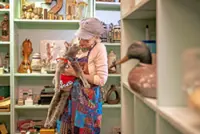
Kong remains positive despite having undergone numerous retinal detachment surgeries to correct her vision.


Retiree Patricia Kong, 68, has a “stormy” story to tell.

She reckons she was born with nearsightedness as she couldn’t see well even at seven years old.

“I was the only girl born into a Chinese Hakka family that didn’t give much value to girls.

“My mother was illiterate and didn’t bother much about me.

“It was only when I was 10 that a neighbour came over and told my father I couldn’t see and asked him to take me to the optician.

“By then, my power was already -10.00 dioptres and I became depressed as I had to wear glasses with ‘endless’ rims at the sides.

“My schoolmates would laugh and ask why my eyes were so small,” she shares.

Kong was in her late 40s when she suffered her first retinal detachment.

She says: “I couldn’t see, but I thought it was probably cataracts.

“Anyway, I got it attached, but a decade later, when I actually went for my cataract surgery, they dis- covered there was another retinal detachment.

“From then, it was a horrible period as I had to go for surgery every six months because I had recurrent retinal detachments!”

Eventually, she had to give up driving and that tore her apart as she lost her independence.

Kong was supposed to go for another surgery a month ago, but like Shazwani, she tested positive for Covid-19.

“I couldn’t accept it,” says Kong in disbelief. “The only place I go to is the hospital!

“I was forced to quarantine at home, and for someone who cannot see well, it’s really depressing to be in a small room.

“But I pass the time by listening to sermons and music.

“I’m taking it one day at a time – when you wrap yourself around the challenges, life is miserable, so I try to look at the brighter side of things.

“I may not be able to see well, but I can still do some housework like ironing.

“Luckily, I have good hearing, so I can recognise voices even if I cannot make out faces.”

At the time of the interview, Kong was serving her last day in quarantine and had been rescheduled for surgery on Oct 23 (2021).

To educate and increase awareness on myopia, Prof Bastion recently spearheaded the setting-up of the Malaysian Advocacy for Myopia Prevention.

This is a non-profit group comprising eye care doctors, ophthalmologists and optometrists from various institutions in public and private practice, under the Paediatric Ophthalmology Special Interest Group of the Malaysia Society of Ophthalmology.

“We’re looking forward to doing some studies and are working with the Health Ministry to see our prevalence rate,” she shares.

Get 20% OFF The Star Digital Access

Monthly Plan

RM 13.90/month

RM 11.12/month

Billed as RM 11.12 for the 1st month, RM 13.90 thereafter.

Best Value

Annual Plan

RM 12.33/month

RM 9.87/month

Billed as RM 118.40 for the 1st year, RM 148 thereafter.

Follow us on our official WhatsApp channel for breaking news alerts and key updates!

Next In Health

Can our bodies adapt to heatwaves?�
When water takes lives�
What is a head spa?
How elections can affect our emotions
Nutrition during the golden years�
When you're trapped by an earthquake
No, creatine won't make you go bald
Doctors, please treat the woman, not just her cancer
Rabies reemerges in Europe due to disruptions in wildlife vaccinations
Pack these essentials when you're working out outdoors

Others Also Read