A global plan to eliminate cervical cancer


By AGENCY
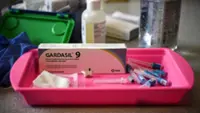
WHO has launched a strategy that could see an end to cervical cancer if everyone quickly works together on it. — Filepic

The World Health Organization (WHO) on Nov 17 (2020) launched a strategy to rid the world of cervical cancer.

It stressed that broad use of vaccines, new tests and treatments could save five million lives by 2050.

“Eliminating any cancer would have once seemed an impossible dream, but we now have the cost-effective, evidence-based tools to make that dream a reality,” WHO chief Tedros Adhanom Ghebreyesus said in a statement.

More than half a million new cases of cervical cancer are diagnosed around the world each year, with hundreds of thousands of women dying from the disease.

WHO warns that, without action, these numbers will rise significantly in the years to come.

The good news is that cervical cancer, which is caused by the human papillomavirus (HPV) – a common sexually-transmitted infection (STI) – is preventable with reliable and safe vaccines.

It is also curable if caught early and adequately treated.

During WHO’s main annual meeting on Nov 9-14 (2020), all 194 member countries agreed to a plan towards eliminating the cancer.

“This is a huge milestone,” WHO assistant director-general Princess Nothemba Simelela told a virtual press briefing.

“For the first time, the world has agreed to eliminate the only cancer we can prevent with a vaccine, and the only cancer which is curable if detected early,” she said.

Urgent action is needed, however.WHO forecasts that if countries do not act swiftly, the number of global cases could jump from 570,000 in 2018 to 700,000 by 2030, while deaths could increase from 311,000 to 400,000 during the same timeframe.

Simelela insisted “decades of neglect” were responsible for the high number of cervical cancer deaths.

This is especially so in low- and middle-income countries, where there are twice as many cases and three times as many deaths from the disease as in wealthy nations.

While most high-income countries have introduced wide-spread vaccination, testing and treatment, access has remained far more difficult elsewhere, in part due to the high cost of vaccine doses.

“If we can improve access for low- and middle-income countries, we can really be on the road to elimination,” she said.

WHO’s strategy calls on countries to ensure that at least 90% of girls are fully vaccinated against HPV before they turn 15 by 2030.

It also calls for at least 70% of women to be tested for cervical cancer by the time they are 35, and again by 45, and for at least 90% of women diagnosed with the disease to receive treatment.

While a range of recent advances promise to simplify testing, push down costs and ease access, WHO acknowledged that its new strategy comes at a challenging time, with the world focused on battling the Covid-19 pandemic.

The pandemic has interrupted vaccination, screening and treatment for cervical cancer, while border closures have reduced availability of supplies.

“We probably lost a sizeable number of women,” Simelela said.

She added though that the testing infrastructure and systems being created for Covid-19 could hopefully be maintained for screening for other diseases, including cervical cancer.

“We can make history to ensure a cervical cancer-free future,” she said. – AFP Relaxnews

Get 20% OFF The Star Digital Access

Monthly Plan

RM 13.90/month

RM 11.12/month

Billed as RM 11.12 for the 1st month, RM 13.90 thereafter.

Best Value

Annual Plan

RM 12.33/month

RM 9.87/month

Billed as RM 118.40 for the 1st year, RM 148 thereafter.

Follow us on our official WhatsApp channel for breaking news alerts and key updates!

Next In Health

When water takes lives�
What is a head spa?
How elections can affect our emotions
Nutrition during the golden years�
When you're trapped by an earthquake
No, creatine won't make you go bald
Doctors, please treat the woman, not just her cancer
Rabies reemerges in Europe due to disruptions in wildlife vaccinations
Pack these essentials when you're working out outdoors
Faking an illness to gain sympathy

Others Also Read