'I ran until my knees gave up on me!': A running addict's rehabilitation journey


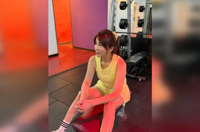
Chan says that while her clients initially need to be coaxed to use the machines, they feel good once they see improvement. — Photos: KAMARUL ARIFFIN/The Star

It wasn’t until she had her first kid that Christina Chan took up running.

She needed something to do while keeping her infant daughter entertained, so she would run with the stroller.

She got hooked, and before long, she was participating in 6km races – without the pram, of course.

Three years later, baby number two came along, and Chan’s husband also joined in the running activities.

Once she got her post-pregnancy fitness back, she started competing again, with hubby next to her.

“It may seem as if we were supporting each other, but there is a competitive spirit in both of us, ” says the 47-year-old with a laugh.

From 6km races, it was on to 10km, 12km and 15km, and eventually, the couple was competing in half marathons.

Come rain or shine, Chan would run as it gave her a high and provided her an outlet to destress from her job in regional sales at a multinational company.

She had became a running addict.

“For 10 years, I ran, until my knees and ankles gave up on me!

“I was always taking painkillers and anti-inflammatory medications, and visiting chiropractors, ” she says.

As running wasn’t good for her, she reduced her running activities and started cycling instead.

“Then I thought, I may as well add on swimming so that I can compete in triathlons!”

Such was her obsession that she was determined not to let injuries prevent her from doing what she loved best, so on she went.

She shares, “After a while, I realised something was not right; I shouldn’t be in pain all the time.

“My husband’s colleague told me about the Gyrotonic method to rehabilitate.

“My hubby signed me up and paid for 30 sessions. I had no clue what the method entailed, but I went because he had already paid!”

Her first lesson was not fun as she thought the machines looked menacing and the exercises did not give her an adrenaline rush like running did.

“Also, I was quite a bad student and didn’t pay much attention to what the instructor was saying, so I didn’t feel any difference, ” she says.

However, one day as she was running, she suddenly recalled her instructor’s words to lengthen and narrow.

“Something clicked. I straightened my back, and immediately, I wasn’t pounding my knees and felt lighter.

“That was the turning point and everything started falling into place. I signed up for another 30 sessions and noticed my alignment was better and the pain was decreasing, ” she shares.

Flowing movements

The Gyrokinesis method was created by Romanian-born ballet dancer Juliu Horvath.

He conceived the idea in the late 1970s after a ruptured Achilles tendon derailed his career as a ballet dancer.

To rehabilitate from his injury, he began studying yoga intensively, and in time, incorporated movement principles from yoga, dance, gymnastics, swimming and tai chi to develop his own system of movement (originally called Yoga for Dancers), which was practised on a mat and chair.

With Gyrotonic exercises, each movement flows into the next, allowing the joints to move through a natural range of motion without jarring or compression, according to Chan.

He later designed a specialised line of equipment around the natural spiralling movements of the body to help users strengthen their muscles using flowing, circular movements, and called it the Gyrotonic method.

“It was based on hours and hours of observations of how the body moves, ” he has been quoted as saying.

When Chan began seeing results, she informed her instructor, who was thrilled that her student was finally showing interest.

Chan says, “She had taken up running and I was giving her tips while she was teaching me Gyrotonic – it was a give-and-take.

“I still ran and suffered the pains, but Gyrotonic allowed me to rehabilitate.

“With the exercises, each movement flows into the next, allowing the joints to move through a natural range of motion without jarring or compression.”

Wanting to learn more, she decided to join the trainer’s course.

That meant juggling between work, running, competing in races, training, and being a mother and wife.

Life was too hectic and something had to give.

“One day, I was working from home and my daughter asked, ‘Mum, can you help me?’ – I just snapped.

“Another time, I looked outside and saw my helper talking to another helper while my son was running on the road unsupervised.

“This can’t be happening, I thought. There must be a better way to raise my kids, ” she says.

A career change

So, after 20 years in the corporate world, Chan opted to take a separation package in 2014 to spend time with her kids.

She shares: “Overnight, I became a nobody. We’d go out and people would ask ‘What do you do?’ and I’d say ‘Nothing’.

“I can’t be a tai-tai (lady of leisure) because how many lunches and teas can you do in a week?

“With no income, I sank into misery.”

Around the same time, her instructor was diagnosed with cancer and asked if Chan could take over teaching.

“I had no intentions to teach. I got certified for my own knowledge.

"But I agreed to try it out, and thankfully, nine out of 10 clients were nice and patient with me.

“Half of them are males who were runners in their younger days, so I could resonate with them.

“When the doctors told my instructor’s family that she wasn’t going to make it, her sister asked if I would take over the studio in Kuala Lumpur.

“I was terrified because I had no experience in running a studio, but I said OK and signed the papers before she died, ” she recollects.

These days, Chan has become a “somebody” and derives much pleasure from seeing her clients get better.

“At first, the clients will fight and say they don’t want to work on the machine, so it takes a bit of coaxing.

“When they see improvement, they feel good, and it’s also rewarding for me to see them getting back on their feet.

“Everybody can be changed and healed if you allow it, ” she says.

As for running and triathlons, Chan is currently using the Covid-19 pandemic as a break to recover from a cycling fall.

But once the physical races resume, you can bet she will be the first one to register.

And this time, her 16-year-old daughter may join in.

Get 20% OFF The Star Digital Access

Monthly Plan

RM 13.90/month

RM 11.12/month

Billed as RM 11.12 for the 1st month, RM 13.90 thereafter.

Best Value

Annual Plan

RM 12.33/month

RM 9.87/month

Billed as RM 118.40 for the 1st year, RM 148 thereafter.

Follow us on our official WhatsApp channel for breaking news alerts and key updates!
Fitness , joints , sports , injury , rehabilitation

Next In Health

What is a head spa?
How elections can affect our emotions
Nutrition during the golden years�
When you're trapped by an earthquake
No, creatine won't make you go bald
Doctors, please treat the woman, not just her cancer
Rabies reemerges in Europe due to disruptions in wildlife vaccinations
Pack these essentials when you're working out outdoors
Faking an illness to gain sympathy
Why we need to create a blood donation culture

Others Also Read