



I WAS fortunate to have met a master of Sekhem – an Egyptian energy healing art – who was visiting here recently. What is remarkable is that she is of Indian origin, was born and raised in Hong Kong, studied in the US, and now resides in the UK. That typically sums up the background of the modern global citizen. And many people of various nationalities are now becoming masters of healing arts from cultures that are foreign to them, often taking over as guardians of these arts that may be dying in their places of origin.
Reiki, perhaps the most widely practised energy-healing art, is mostly known in the West, with very few practitioners in Japan, where it all began. This is similar with Sekhem. This ancient healing art, attributed to ancient Egyptians, has been salvaged, revised and re-introduced to us by Helen Belot, an Australian who now acts as the “custodian” of this healing system. She claims to be High Priest in the ancient temples of Egypt in her past lives.
Sekhem is a complete energy system that goes beyond simple healing. It has been revived to assist humanity so that both mankind and Mother Earth may ascend to their higher purpose. This is done by changing our vibrational rate, which is possible through Sekhem.
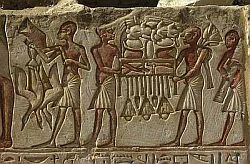 |
Sekhem is a complete energy system that hails from ancient Egypt. |
Sekhem has many similarities to the other energy-healing methods, though it is claimed that: “Sekhem works on a totally different concept and philosophy to other energy healing systems. Although there are some similar sounding systems, Sekhem is a complete energy system that is derived from ancient Egypt. None can compare with this high vibrational energy that works at the level of the soul. It assists you to take responsibility for your life, to heal, to grow both personally and spiritually and to become more of who you really are. Currently it has the highest vibration of all the healing systems.
“Sekhem penetrates all areas of the body, mind and spirit that must be experienced to be believed. There is clarity, purity and gentleness to this energy that is truly amazing. At the same time it is awe-inspiring in the results it brings, for it works instantaneously – body, mind, emotion and spirit. It facilitates empowerment, inspiration, creativity and a joyful thirst for living. It is you who set your intentions for the use of this energy and what you ask for is what you get. It is something to be experienced.” (Abridged from descriptions by Helen Belot.)
The energy is described as balanced and feminine, with a gentle, loving aspect, yet powerful. The assertion is that mankind has lost the balance of male and female energies in the last two-and-a-half thousand years and that balance between the sexes and within each individual can be re-attained through Sekhem.
It is particularly similar to Reiki, but it claims to precede Reiki by many thousands of years. Both use symbols, involve the channelling of divine/universal energy, and have three levels of competency, plus a teaching-mastership level done on a pupil-Master apprenticeship.
Master Lina, whom I met, had also previously learned Reiki, and described Sekhem energy to be more gentle and pleasant, and that during Sekhem healing, the energy that is received through the crown chakra (at the top of the head) easily flows down the whole body, whereas, in her experience, Reiki energy does not flow down as easily. I must stress that this was her personal opinion. Other Reiki practitioners and masters may not agree.
The Sekhem sceptre
In ancient Egyptian government, viziers and other officials of important rank held the Sekhem sceptre. The Sekhem also appeared in the royal names of the pharaohs, queens and princesses. The classic Egyptian funeral statue depicted the deceased with a staff in one hand, and the Sekhem sceptre in the other. As a sceptre of office, a pair of eyes was carved on the upper part of the staff.
The Sekhem was also utilised in temple and mortuary offering rituals. A gilded Sekhem sceptre was found in Tutankhamun’s tomb.
Sekhmet, the mighty goddess
The Sekhem sceptre denotes power and might, and is related to the goddess Sekhmet, the Mighty One. She is regarded as the guardian of this healing energy. The ancient god Osiris was also sometimes called Great Sekhem or the Most Powerful.
Symbols in energy healing
I have often been asked about the use of symbols in some energy-healing methods. Muslims and Christians are particularly sensitive to this matter as we are forbidden from doing anything that implies that healing and healing energy come from anything other than God. Some say that even meditation is forbidden!
My understanding is that the symbols are mere keys that unlock the doors to access the different healing energies. Although we are talking about the same healing energy source (God/universe), there are subtle differences between the different energies referred to by the different healing methods.
Just as visible light is actually a spectrum of colours, so is healing energy – it is actually a spectrum of slightly different energies, with varying characteristics. For example, Master Lina described Reiki energy as being more “dense” than the gentle, feminine, Sekhem energy. Those who have practised multiple healing methods can sense this difference.
That is why, for example, certain methods are particularly helpful for certain problems or diseases. Although I have great respect for all healing arts, whenever anyone has cancer, I tell the patient to learn and practise qigong (that also applies if you want to prevent cancer). Those who have seen the documentary I showed during my talks and courses will recall that this claim is validated by the thousands of cancer survivors who are members of the cancer recovery clubs in China, all of whom practise qigong.
Reiki symbols do not have any divine nor religious meaning and are therefore permissible even for Muslims. However, when the symbols are associated with ancient gods (as in Sekhem), or gods of other religions, then Muslims are forbidden from practising it. I am only sharing my knowledge about this healing art and am not a practitioner. I hope this explanation will appease those Muslims who have expressed their concern that I may be dabbling in forbidden practices.
Already a subscriber? Log in
Get 20% OFF The Star Digital Access
Cancel anytime. Ad-free. Unlimited access with perks.
