



For a child, discovering the joy of music can begin with recognising the distinctive sounds of musical instruments: a violin may sound like birdsong, while a flute can suggest a bird in flight. Which is why, an early experience with live music may inculcate a lifelong love for it.
Such connections were at the heart of the Malaysian Philharmonic Orchestra’s (MPO) performance of Vivaldi’s Ring of Mystery last Saturday. The sold-out show was presented by Classical Kids LIVE!, which is part of Classical Kids Music Education, a not-for-profit organisation dedicated to furthering classical music learning.
Rather than introducing young audiences to the works of Italian composer Antonio Vivaldi through a conventional classical concert, the family-friendly production integrated more than 25 excerpts of his compositions into a story, allowing the music to shape the landscape, action and mood of the narrative.
Central to the tale is Katarina, played by Nicole Hren, whose arrival in Venice leads her to Vivaldi’s orphanage, the Pieta. Vivaldi is played by Chris Petschler, who also takes on the role of Giovanni, a gondolier who becomes Katarina’s ally.
Katarina's adventure in her new place provides a framework for Vivaldi’s music, giving young listeners something to follow as the compositions unfold.
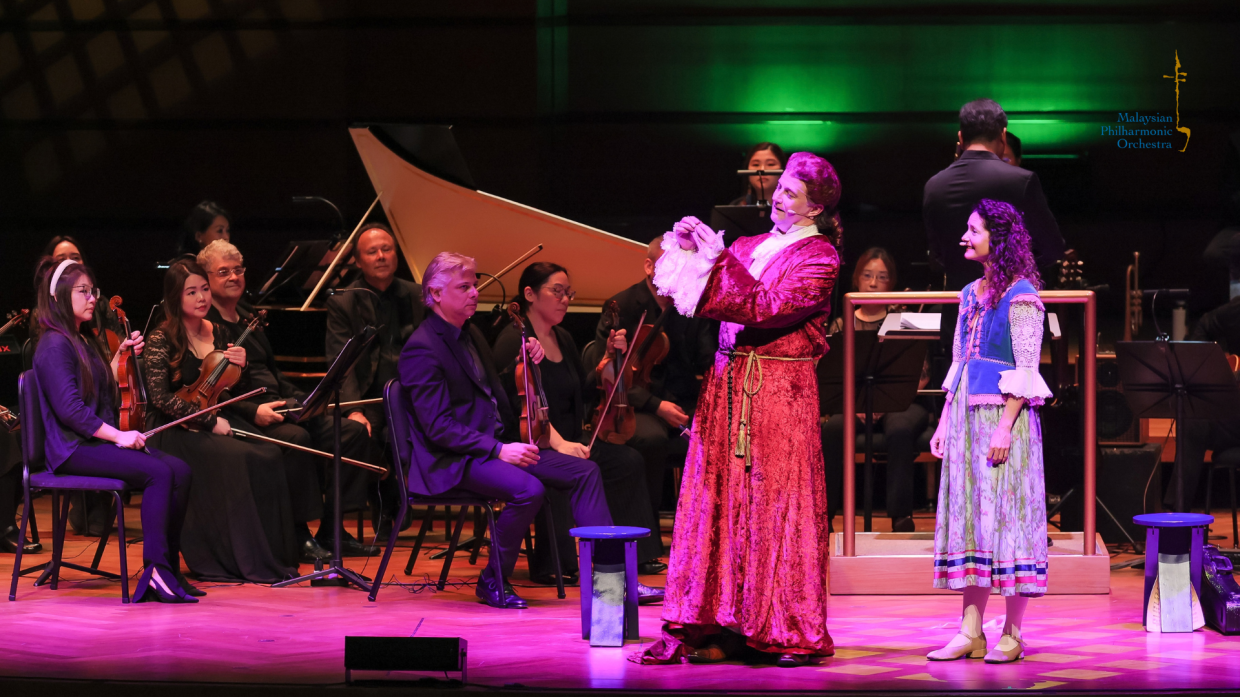
For conductor Gerard Salonga, Vivaldi is a natural introduction to classical music for kids. His own association with the composer goes back to childhood. One of his earliest memories, he says, is listening to The Four Seasons while sitting on his father’s lap.
“The composition seems simple and easy to grasp but it’s not; there’s a lot of complexity but it doesn’t feel too complex on the surface,” he says. That quality is useful in a production aimed at young audiences: they may not know what a Baroque concerto is, but they can respond to the sounds it creates.
A common type of orchestral music from the 1600 to 1750, the Baroque concerto is characterised by the contrast between a small group of soloists and the full orchestra. Spring from The Four Seasons accompanies Katarina’s arrival in Venice with its sounds of birds while Autumn appears as the girls’ orchestra prepares for a performance, establishing the setting without needing a musical explanation.
Vivaldi’s familiarity in daily life also helps, says Salonga. “Its presence in advertisements and movies has taken the fear away from approaching his music. From Little Einstein to Looney Tunes, Vivaldi’s music has penetrated the many facets of popular culture,” Salonga says.
As Katarina’s story develops, the compositions take on different roles. The second movement of Winter, for instance, accompanies the Duke of Cremona’s grief following the loss of his grandchild in a shipwreck. Elsewhere, Il Gardellino accompanies Katarina and Giovanni as they travel through Venice. The flute solo, inspired by the song of a goldfinch, gives the journey its own musical identity.
The mood changes again as the pair travel towards the Island of the Dead. La Notte introduces a sense of uncertainty before Summer brings the storm. For Salonga, performing Summer carries an energy that feels almost like rock ’n’ roll, a testament that Vivaldi’s music can communicate distress and tension too.
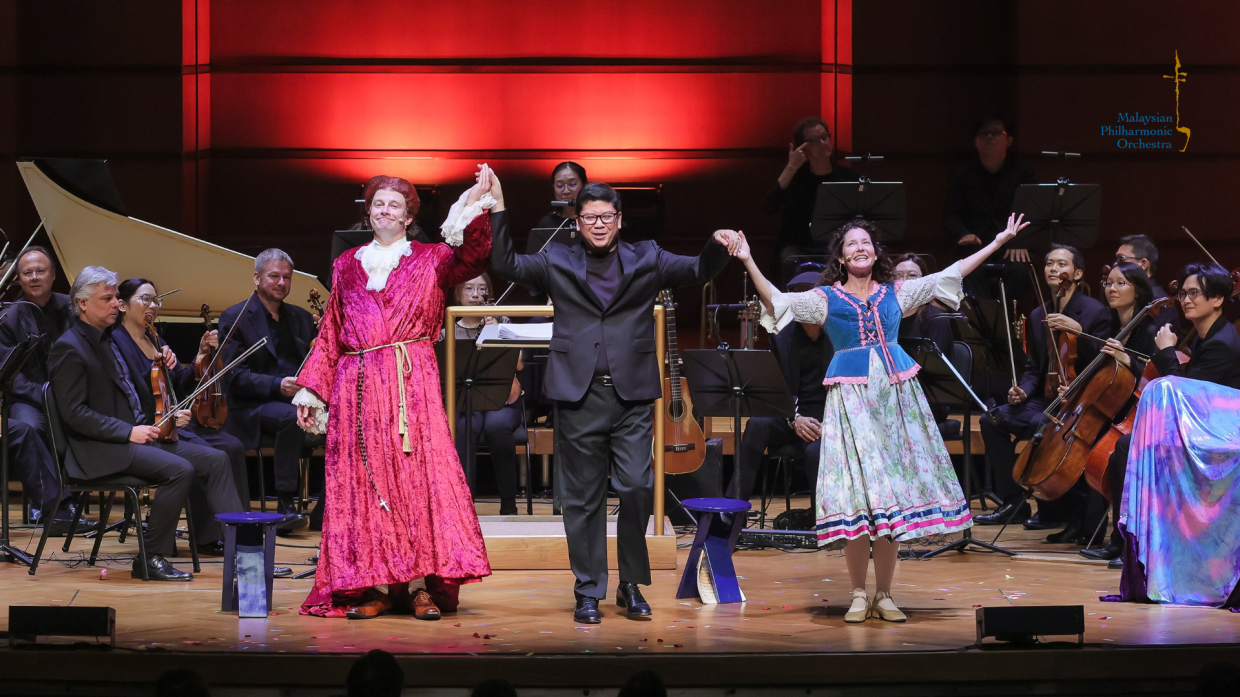
Salonga hopes the concert experience will resonate in young audiences' minds long after the show ends. “Music is meant to be enjoyed. There is no need to overthink or analyse. Enjoy it for what it does to you as a listener; there is never a wrong interpretation,” he says.
He says children should be allowed to find their own stories in music, even when those stories differ from what the composer intended. “Whatever story the music tells to them, their interpretation is right.”

