




Are pets crowding out babies?
As concern grows over the global fertility crisis, people who chose to have dogs or cats but not children have become a popular scapegoat. In many cities, it’s not uncommon to see pets dressed in fancy outfits, pushed around in strollers.
These pampered animals, the theory goes, have become replacements for human children, contributing to plummeting birthrates.
“Young people are not loving each other,” Kim Moon-Soo, then South Korea’s labor minister, said in 2023. “Instead, they love their dogs and carry them around, they don’t get married, and they don’t have children.” In 2022, Pope Francis called people who choose pets over children “selfish,” and warned that childlessness would contribute to a “demographic winter.”
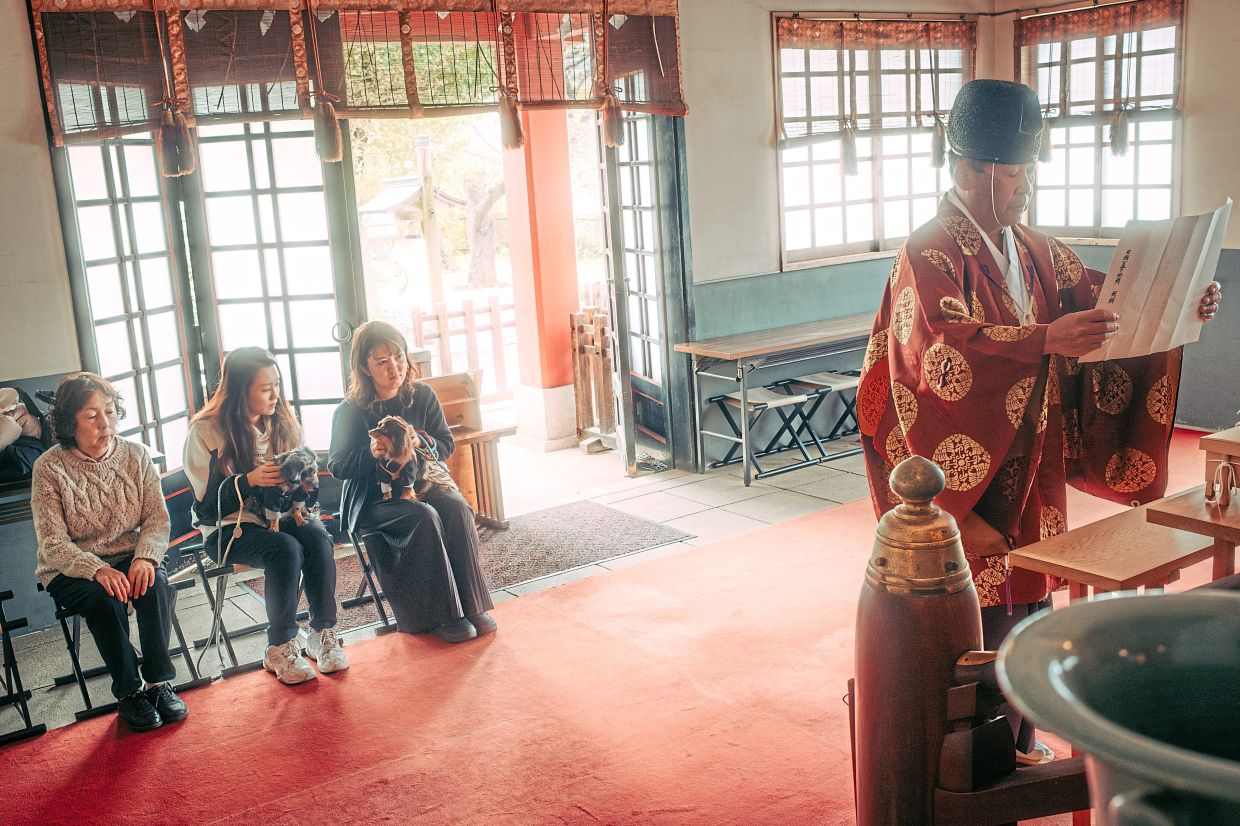
It’s not hard to find evidence of the cultural shift. A festival in Japan that honors children’s birthdays has undergone a “pet-friendly revamp,” allowing dogs to receive blessings as well. At a celebration in Tokyo this year, a shrine honored 350 dogs, many of whom were dressed in elaborate kimonos, and just 50 children.
“People have shifted from having children to having pets,” said Miki Toguchi, 51, who recently visited the shrine with Kotora, her miniature schnauzer. “I don’t have children, but I have a dog.”
But a new working paper suggests that the conventional wisdom is wrong, at least in Taiwan, where the birthrate is one of the lowest in the world. Researchers found that rather than replacing children, pets are actually more likely to be a steppingstone to having them.
The study authors were well aware of the stereotype. “There was this joke that if you go to the biggest park in Taipei City and you see a stroller coming by, the chance that inside the stroller is a pet, either a dog or cat, the probability of that is much higher than there’s an actual kid in it,” said Ming-Jen Lin, one of the authors of the study.
To figure out if people in Taiwan were actually replacing babies with stroller puppies, the researchers drew on government data on pet and birth registrations, tracking the timing and correlation of those life events for millions of households.
They found that pets weren’t replacing babies – they were preceding them. The data showed that people with pets, particularly dogs, were actually more likely than non-pet owners to go on to have children.
To the researchers, this strongly suggested that people who were considering having children wanted to try pet ownership first – perhaps as a lower-risk way of figuring out if they were suited to parenthood.
“It seems like the story is that many people have dogs, they try it out,” said Kuan Ming Chen, one of the authors of the paper. If the dog ownership went well, then they would feel more confident about committing to parenthood.
The takeaway here is not that we should be handing out puppies to boost the birthrate. Nor is one working paper on one country evidence that the same pattern would play out elsewhere.
But the study should give pause to those who are quick to blame falling birthrates on individual decisions.
In reality, falling birthrates have multiple causes, many of them economic. The effective cost of having children has risen steeply as standards of living have increased. At the same time, “intensive parenting” norms mean that parents in most developed countries now spend roughly twice as much time on child care as they did in the 1960s. And as women’s economic opportunities have improved, making it easier for them to support themselves, that has lessened the pressure to marry and have children.
Those massive societal and economic shifts have brought many benefits. But they have also had costs, including a downstream effect on birthrates. Finding solutions may be daunting – but don’t blame the puppies. – © 2026 The New York Times Company
This article originally appears in The New York Times https://www.nytimes.com/2025/12/18/world/birthrates-falling-dont-blame-dogs.html.

