




When darkness came, so did the smoke.
Hamna Silima Nyange, like half of the two million people in Tanzania’s semi-autonomous archipelago of Zanzibar, did not have a house connected to the electricity grid. After sunset, she would turn to smoky oil lamps that provided the only light for her eight children to study.
”The light was too weak,” Nyange said. “And the smoke from the lamp hurt my eyes.”
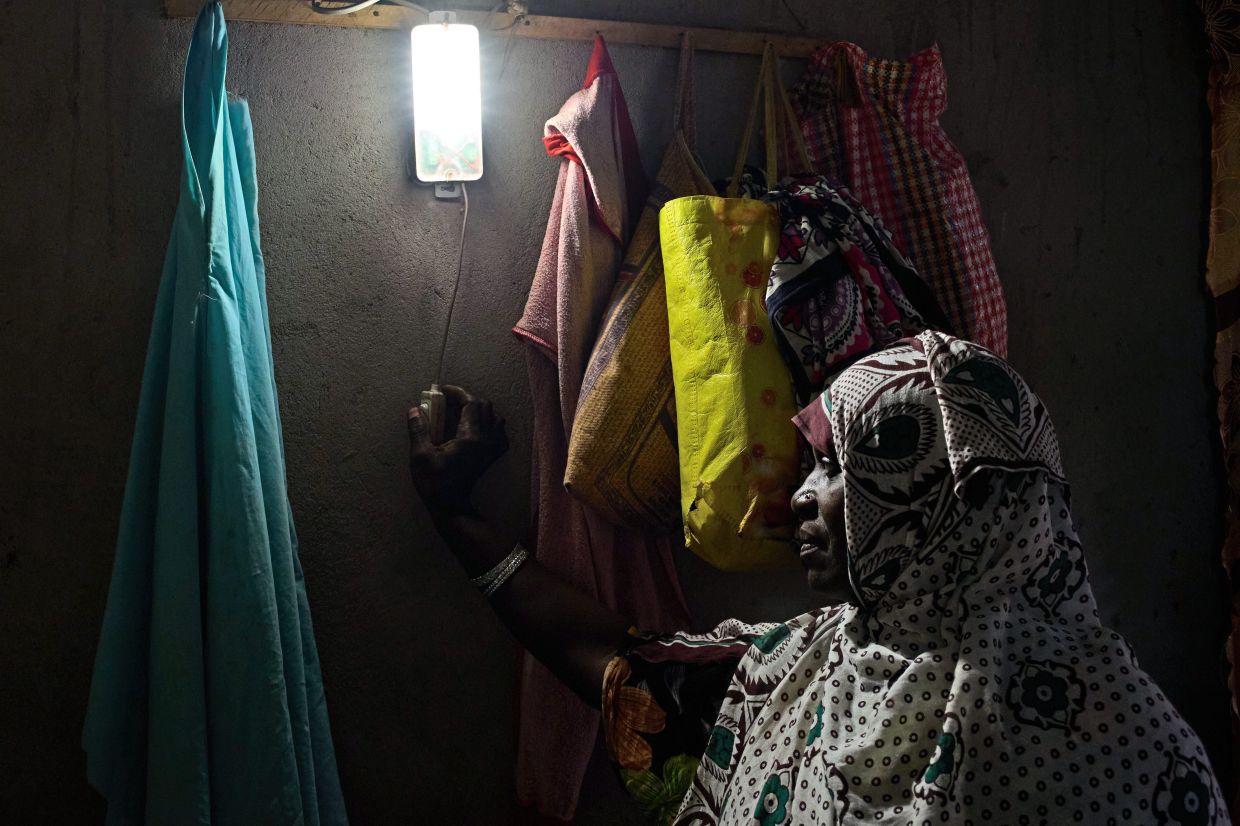
Then one day a neighbour, Tatu Omary Hamad, installed solar panels and bulbs that lit her home with help from the strong sunlight along the Indian Ocean coast. “Today we have enough light,” Nyange said.
Hamad is one of dozens of “solar mamas” trained in Zanzibar by Barefoot College International, a global nonprofit, through a programme that brings light to rural communities and provides jobs for local women. So far in Zanzibar, it has lit 1,845 homes.
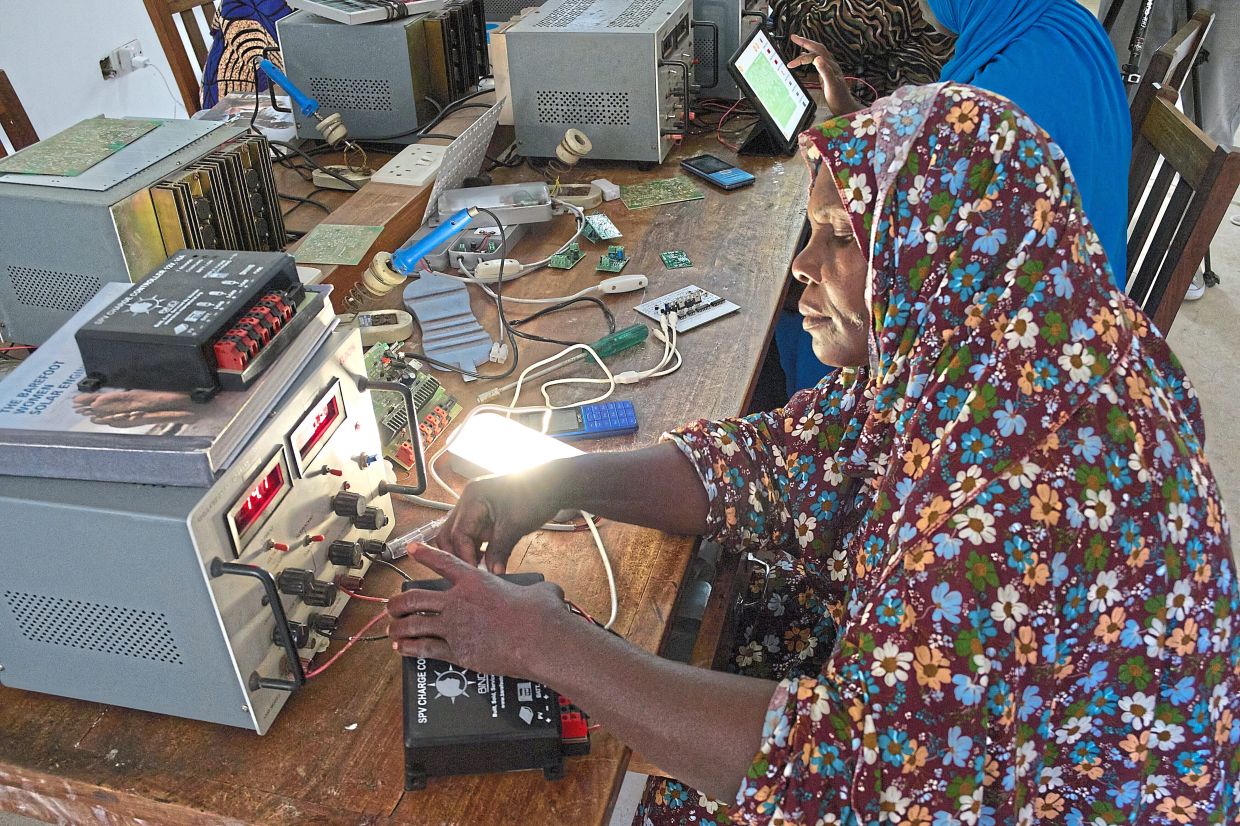
The programme selects middle-aged women, most with little or no formal education, from villages without electricity and trains them over six months to become solar power technicians. It is one of a small number of programmes in Africa including Solar Sister.
The women return to their communities with at least 50 sets of household solar panel kits as well as the skills and equipment to set them up and keep them running.
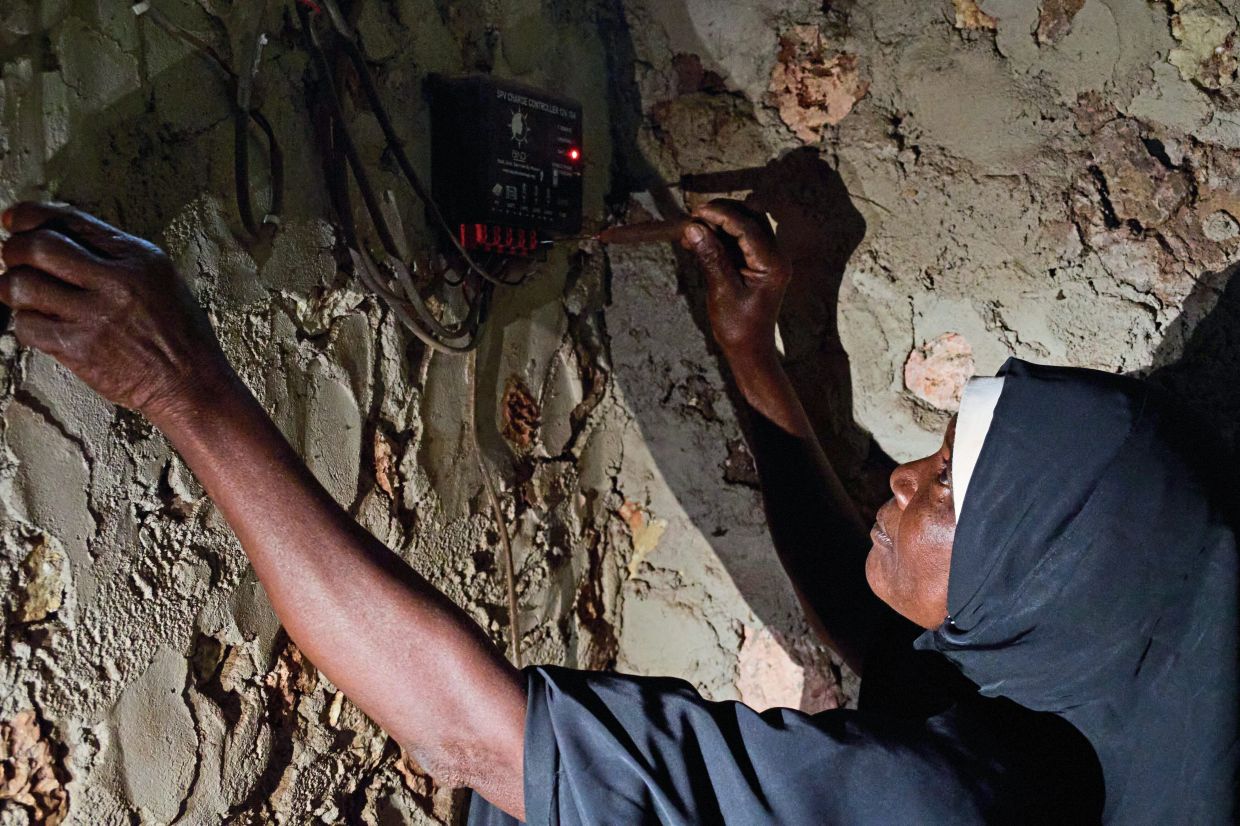
Barefoot College International focuses on middle-aged women because they tend to have the strongest links to their communities while not often involved in intensive child care.
“We want to train women who become change makers,” said Brenda Geofrey, the director of Barefoot College International Zanzibar.
The Zanzibar campus is in its 10th year of teaching local women. Before that, it sent women for training in India, where Barefoot College International was founded.
One was Khazija Gharib Issa, who had been an unemployed widow. Now she is a master trainer.
“I got a job. I got a place to stay. Before, I didn’t have one,” Issa said.
Improving health is at the heart of the programme’s mission.
Offering other skills
Alongside its flagship solar power course, Barefoot College International offers programmes for women in tailoring, beekeeping and sustainable agriculture.
Every woman who completes a programme is trained in general health knowledge that they are expected to take back to their villages.
The “solar mamas” are health catalysts in another way, by replacing harmful light sources like kerosene.
“Using kerosene has many problems,” said Jacob Dianga, a healthcare worker at a local clinic who is familiar with the group’s work.
The fuel can irritate the eyes, while inhaling its smoke can cause long-term lung damage. It’s also a fire hazard in cramped homes and shops, and can poison children who mistake it for a drink.
“Clean energy is very important,” Dianga said. “It helps protect our health.”
Barefoot College International has scaled up across Africa, with other campuses in Madagascar and Senegal. In recent years, women have been brought to Zanzibar from Malawi and Somaliland, and this year some are being recruited from Central African Republic.
Funding remains a challenge as major donors, notably the United States and European ones, cut foreign aid and projects face more competition for money that remains.
Barefoot College International is run with public and private donations and revenue generated by its social enterprises.
Another challenge is resistance in local communities, where some people find it hard to accept the women technicians in a radical new gender role.
While the solar training programme recruits with the approval of village leadership, who put forward candidates, some husbands have stopped their wives from training.
“In most African communities, women are pictured as somebody who is just at home,” Geofrey said.
But the solar mamas say the results often speak for themselves.
“People used to say this work is for men. They were surprised and laughed at me,” Issa said. “But now they see how important my work is. I have become an example.” – AP
