Whenever Wan Shera Fadzlin visited bookstores, she couldn't find a children’s book that featured Asian women for her two young daughters. And over the years, she couldn’t get the absence out of her mind.“There were books celebrating white and Afro-Caribbean women, but almost none that reflected the heritage and values of Asian girls,” she says. “It was as if we didn’t exist on the global stage.”
She quietly held on to that thought, sowing the seeds to one day write the book she couldn’t find.
“That invisibility sparked something in me, as a mother raising daughters in a Western world,” says the 55-year-old Kuala Lumpur native who has lived in Britain since 2015.
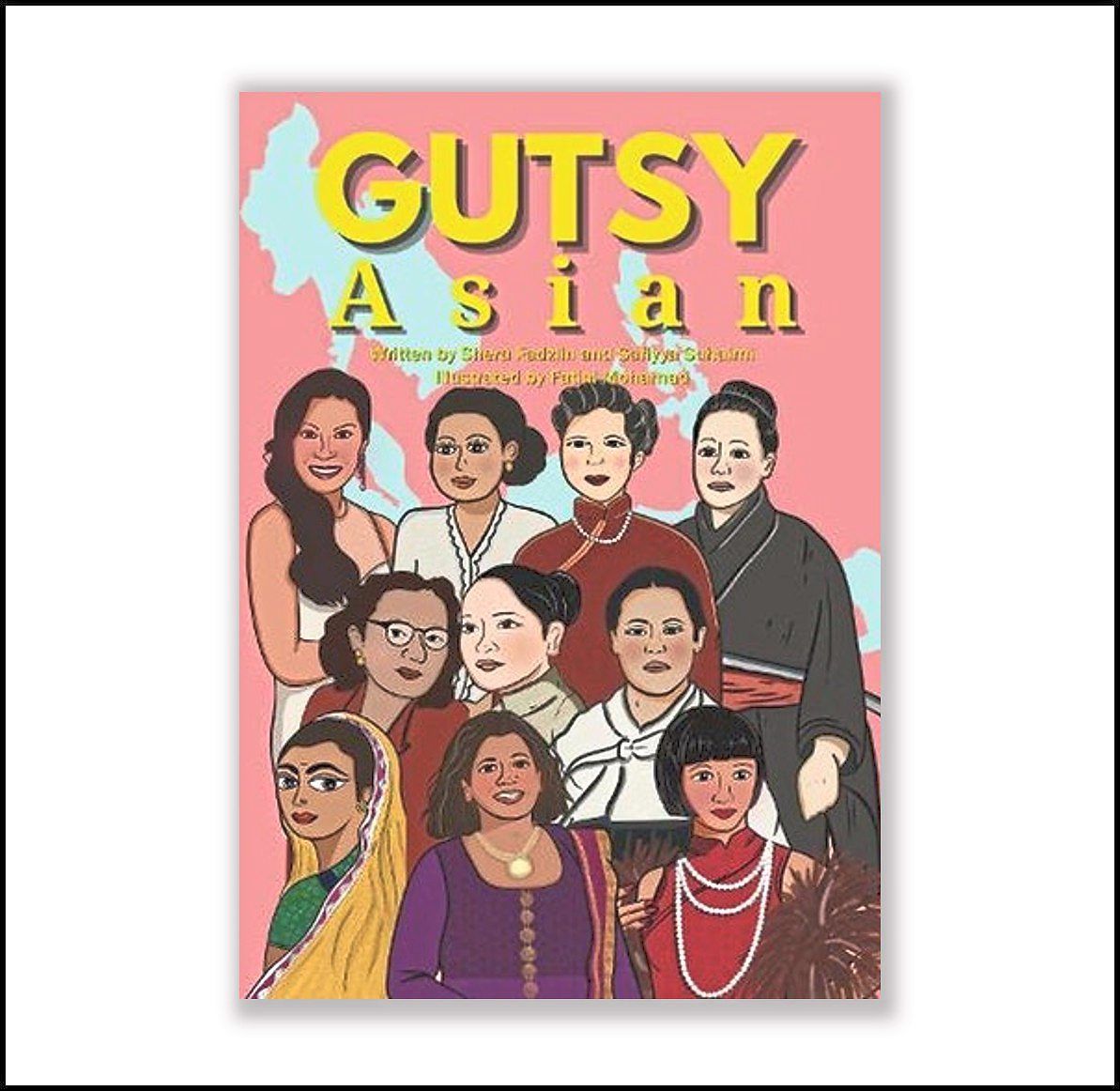
That “one day” eventually came, years later, long after those bedtime reading days. During the quiet period of the Covid-19 pandemic, Wan Shera penned Gutsy Asian, a 32-page book that, with the help of colourful illustrations, about trailblazing Asian women.
She co-authored it with her youngest daughter, Safiyya Suhaimi, a 24-year-old Fine Art graduate from the University of London. The book tells the stories of inspiring Asian women including Indonesia's Raden Adjeng Kartini, a prominent Indonesian advocate of women's rights and female education, Japanese educator Yamamoto Yaeko and Malaysian actress Tan Sri Michelle Yeoh.
Labour of love
With life slowing down in 2021, thanks to remote work and her children away at university, Wan Shera finally had the space to reconnect with the things she loved: cooking, gardening, pottery and writing.
“At one end of my kitchen table were lemongrass and galangal for my Malaysian cooking classes and on the other were my laptop and piles of beautifully illustrated children’s books for inspiration,” says the former corporate communications professional.
“Cooking and writing became intertwined – one fed my creativity, the other grounded me in routine.”
She began by researching remarkable Asian women, imagining herself living their lives and capturing their
courage and resilience in ways children could relate to and feel empowered by.
“I had hoped Safiyya would be the illustrator, given her degree in Fine Art and Art History, but daughters, as many mothers will understand, have their own minds,” Wan Shera says.
Through a friend in Malaysia, Wan Shera was introduced to children’s book illustrator Fatini Mohamad, whose test sketch immediately captured the spirit of the book..
“I gave her a simple brief and asked for one test illustration – and that one piece was enough to know she understood the essence of the book,” she says.
As the project progressed, things continued falling into place. About a year later, Wan Shera discovered a children’s book publisher on Instagram, who lived just 20 minutes away from her in Market Harborough.
By then, Safiyya had graduated from university and joined the project, taking on the writing and editorial work.
“She co-wrote some of the stories, handled the final stages of liaising with the publisher, and wrote the foreword which captured our shared message for young Asian girls navigating identity in a globalised world,” says the mother.
All in all, it took nearly two years for Gutsy Asian to go from concept to publication.
Heart of the book
Wan Shera sees working together with Safiyya on Gutsy Asian – even though it was not unplanned – as the heart of what the book stands for.
“The stories we curated, of brave, resilient Asian women who overcame immense odds, felt even more powerful when we mirrored that spirit in our own mother-daughter journey,” she says.
Stepping in with fresh energy and perspective, Safiyya’s contribution to the book was not just about logistics.
“It was about reclaiming our shared cultural heritage together, as women from two generations who had grown up across three continents,” she adds.
Both mother and daughter had lived different lives. Wan Shera grew up in Malaysia, then went to the Middle East and Britain, while Safiyya grew up in the Middle East, before enrolling in a boarding school in Britain and now works in London as a talent scout.
“What united us was a shared sense of responsibility: to give younger girls, especially those growing up in between cultures, the representation we never had,” says Wan Shera.
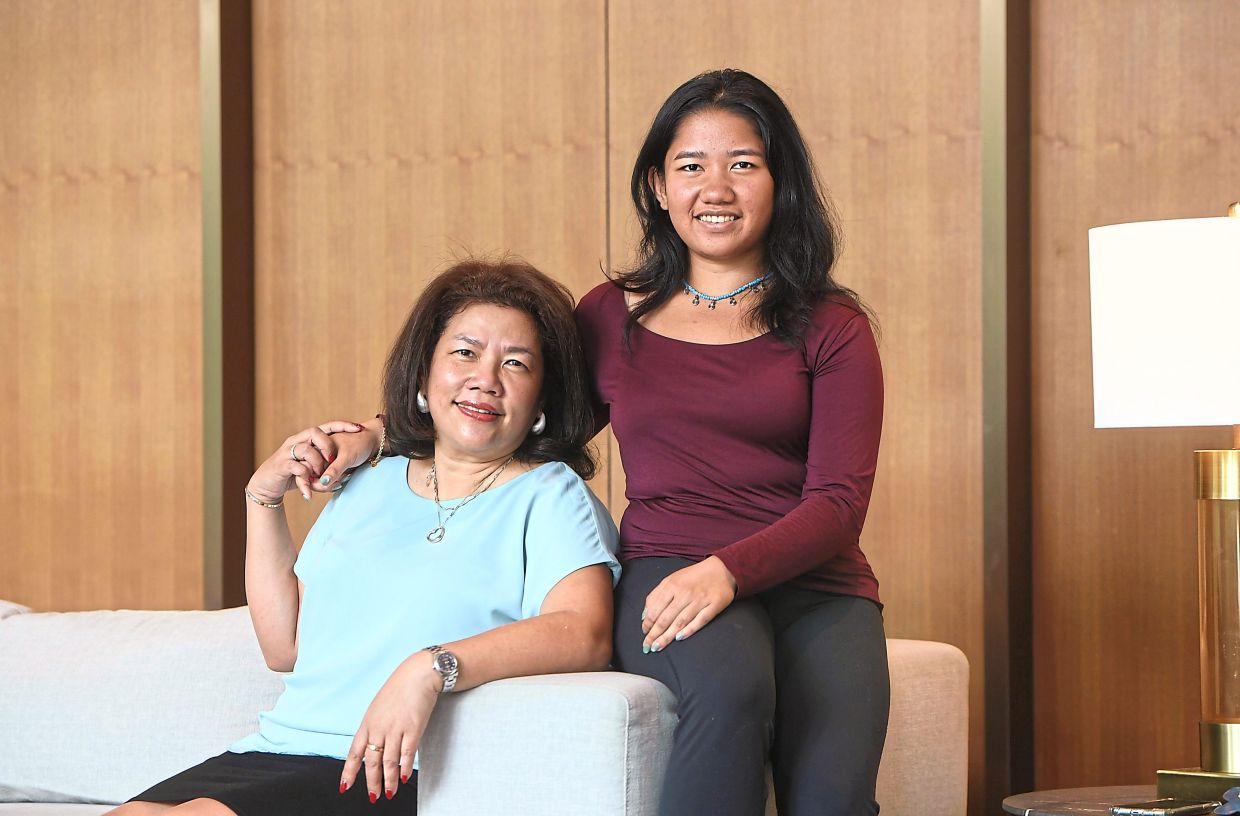
She says working with her daughter gives her hope that empowerment is not just about lifting ourselves; it’s about passing the torch and building something stronger with the next generation.
Safiyya, she adds, brought not only her own voice, but also “her understanding of identity, and her deep connection to being a third-culture kid.”
“She grounded the book in something far deeper than I could have achieved alone – a cross-generational lens on what it means to be proudly Asian, modern and female today.”
The experience also reshapes her understanding of collaboration. “Working with her reminded me that intergenerational collaboration isn’t about compromise. It’s about enhancement,” she says. “She didn’t just complement my perspective; she pushed the stories into new territory.”
“And in doing so,” she adds, “we created a book that speaks across ages. One that honours the past, but looks boldly toward the future.”