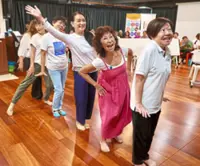
A SERENE calm pervades the ground floor of Petaling Jaya’s Jing Si Book Cafe, where the earthy scent of freshly brewed organic tea mingles with the crisp, inviting aroma of new books.
But upstairs, the spacious, all-wood hall offers a different kind of serenity: One fuelled by human connection. The crisp scent of books is replaced by the warm murmur of voices, as stories are animatedly told and shared.
This is Come Tell Your Story, a unique programme by SeniorsAloud, a multi-ethnic community of seniors aged 60 and above, which was established 17 years ago.
Now into its fourth series, the storytelling programme isn’t just about seniors reminiscing, but reconnecting – with themselves and with one another –through stories, quizzes, and laughter.
It is designed as a safe and welcoming space for members to speak from the heart, give voice to their feelings and frustrations, and share their experiences and joys without fear of judgement.
“The idea is simple: To get seniors to get up, dress up, meet up and interact instead of staying home and feeling isolated. This is one way to help them feel visible and heard again,” says leader of the programme Dr Kuang Ching Hei.
“We want the programme to serve as a platform for the seniors to have an identity and to build their confidence to speak in front of others.”
From taboo topics to childhood nostalgia, the stories shared during the programme are as diverse as the storytellers themselves.
Telling their stories
For Ann Chuah, 70, from Subang Jaya, the programme gave her the courage to speak about something she had kept buried for decades.
“Last session, I talked about my sister who committed suicide,” says Chuah, a mother of three and grandmother of four, admitting that it wasn’t easy for her to open up then.
“I had never talked about her (before) ... it was like a taboo for me. I just refused to speak about it.”
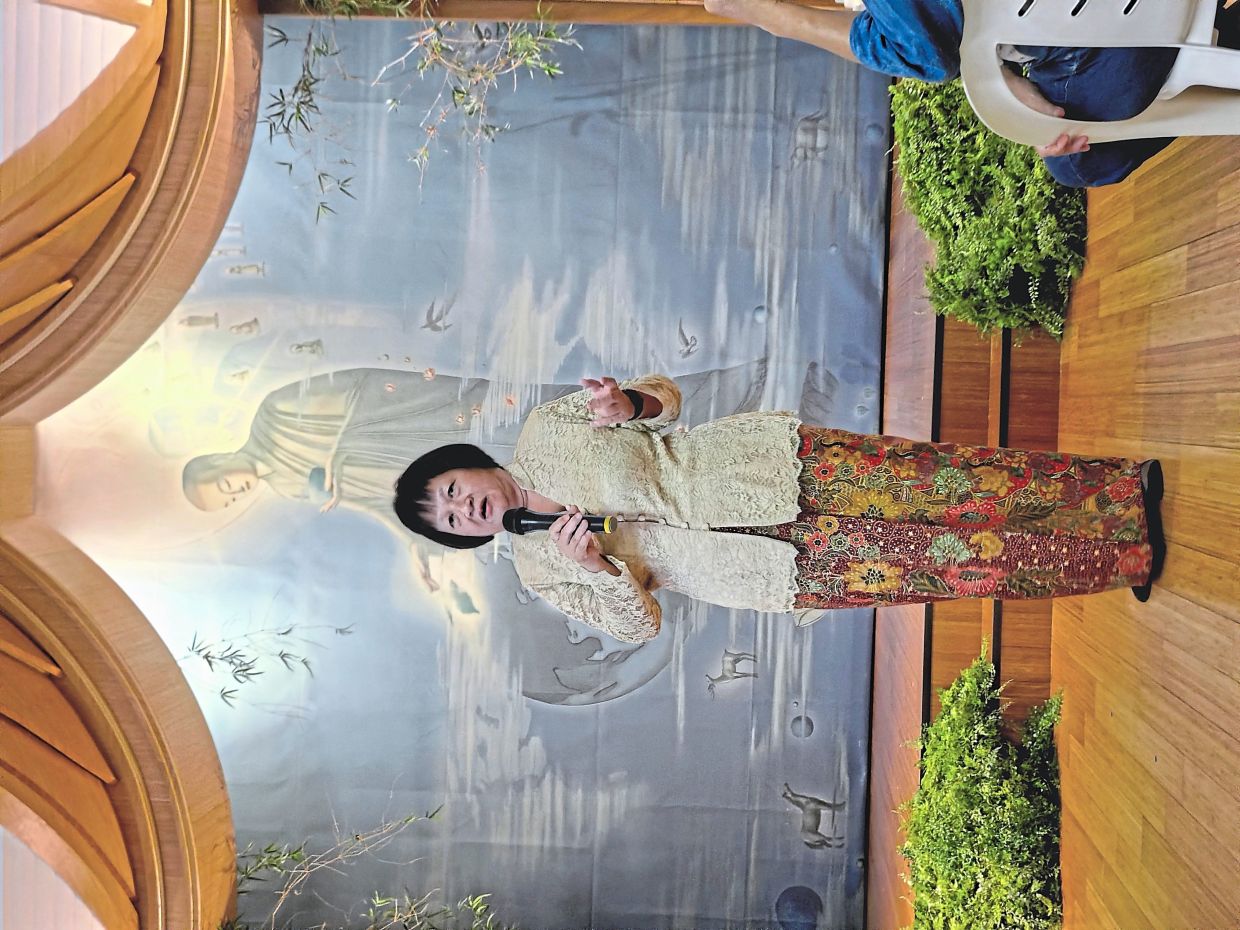
Chuah shares that it took many years, and a certain maturity, for her to finally open up.
“Now, I can accept it better. I have fond memories of her. And if I need to talk about it, I will.”
This time, Chuah chose to share something different: A recurring dream she’d had for decades, where her batik sarong would slip off, leaving her exposed.
“I believe it stopped when I no longer wore the tie-yourself sarong. These days, sarongs come with a waistband. I guess the fear of my sarong dropping disappeared once the waistband was introduced,” she says with a smile.
Calling the programme a “very good platform”, Chuah adds: “When people share their experiences, I learn from them too. It’s healing.”
Seventy-year-old Mabel Koh from Kuala Lumpur agrees.
“The programme also gives us the opportunity to meet new people and broaden our circle. As seniors, we don’t often get to do that.”
Dressed in a vintage Nyonya kebaya inherited from her late mother, Koh, who attended with her British husband of 29 years, shared quirky and animated stories from her childhood days in Melaka.
“I wouldn’t say it was a colourful memory then, but looking back, those days made my life colourful,” she adds, beaming.
Her husband, Iain Wise, 64, also took the microphone to share his experience of living in the Middle East during the Gulf War.
Koh says getting ready for the session brought her joy and mental stimulation.
“I felt like my brain was working again, thinking about what story to tell and how to tell it. Besides, it delights me to revisit old memories.”

Didi Gill, 79, a mother of three and grandmother of three, is no stranger to storytelling. Series Four of the event marked her second time participating, and she has plenty to share with the group.
“If I were to talk about my life experiences – how I was tasked to present a bouquet of flowers to Tun Dr Mahathir (Mohamad), or played golf with a movie star – outside this platform, it might sound like I’m showing off,” she says with a chuckle.
“But here, stories such as those come out naturally. You’re just sharing, and you know the audience won’t judge you. They’ll share their own stories too.”
Her anecdotes are vibrant. In her first session, she recalled welcoming Tun Dr Mahathir and Tun Dr Siti Hasmah to South Korea, where she was living at the time, following her husband’s army posting.
“The bouquet for Tun Dr Siti Hasmah didn’t arrive, so I told her, ‘Let me be your bouquet.’ She loved it and even asked me to take her shopping,” Gill says.
Gill shared snippets of her life in India while accompanying her late husband.
“I’ve travelled a lot thanks to his job, and I’m grateful for the opportunity to tell these stories,” she concludes.
More than just storytelling
But Come Tell Your Story is more than just storytelling, and bigger than just entertainment.
The programme, says Dr Kuang, a retired associate professor, is a carefully structured activity designed to stimulate minds, foster connection, and build confidence.
“We start with a warm-up quiz and tongue twisters to loosen everyone up. Then it’s story time. Each storyteller gets three minutes. There’s no pressure. Some come just to observe. But often, once they hear others speak, they feel inspired to share too.”
The format, she adds, supports Seniors Aloud’s broader mission: Promoting active ageing, lifelong learning, and cognitive health.
“They practise listening, thinking, public speaking, all within a supportive environment. Plus, there’s a sense of camaraderie. We often end the session with a group photo, and sometimes even dinner together.”
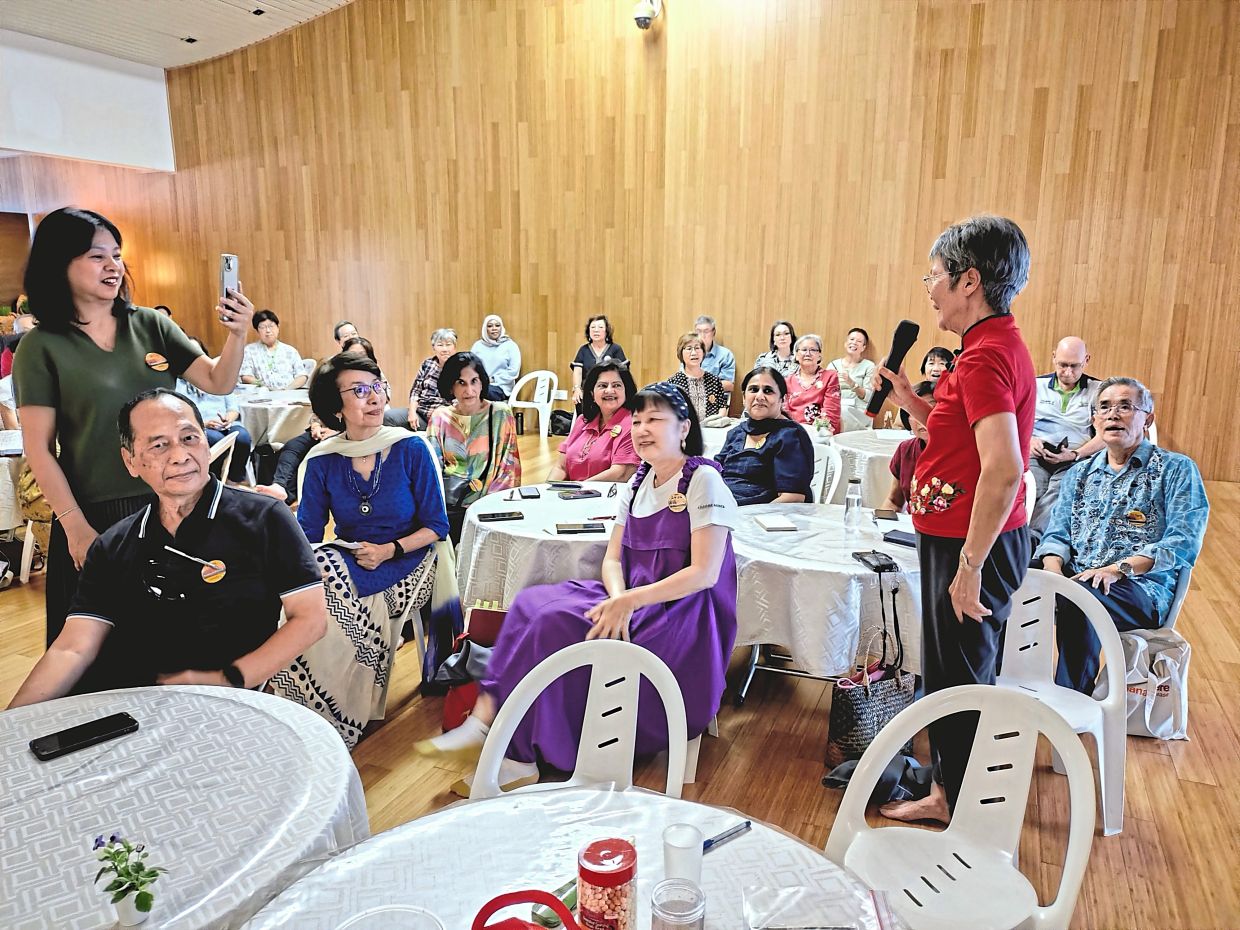
Dr Kuang has been the driving force behind the programme, right down to naming the event, selecting dates, scouting venues, and even designing the posters.
“I promised myself I would do something meaningful for the community. So I just did it. As time progressed, I brought in a co-facilitator to help encourage others to step up and take part in leading,” she says.
But it didn’t take off instantly.
According to Dr Kuang, the early sessions saw lukewarm response. Word of mouth and support from SeniorsAloud members, including founder Lily Fu, have helped build momentum.
“Seniors are often afraid to speak in public. They worry about being judged. That’s why I use games and laughter to help break that fear. Once they relax, the stories flow.”
While not all participants return regularly, Dr Kuang sees small but significant changes: “They leave smiling. And with more confidence – and more friends.”
Looking ahead, she has more plans for Come Tell Your Story – perhaps an annual highlight event or new storytelling formats.
“I won’t go digital. The whole point is to get seniors to come out, to meet. But I do want to explore new venues, new formats – maybe even include intergenerational sessions someday.”
Her only real challenge? Finding suitable venues that are free, accessible, and easy to get to. But with each session, she remains driven by one simple philosophy: “Don’t just sit at home. Come out, share, listen, and be heard.”
Because sometimes, a bond can form in as little as three minutes – when someone truly listens.