For the longest time, the high number of females in institutions of higher learning in Malaysia has been used as a signifier of the progress of women in this country.
An impressive 61% of students enrolled in undergraduate programmes in Malaysian universities and colleges were female (358,000 female students compared to 234,000 males) in 2021.
This reflects a worldwide trend of more women entering higher education institutions than men.
It's laudable, certainly.
However, 2021 Department of Statistics Malaysia (DoSM) statistics also reveal that female graduates make up more than half of the unemployment rate (54.2%) as compared to male graduates (45.8%)
The majority of unemployed female graduates cited unpaid care work which includes housework or family responsibilities as keeping them outside of the labour force. This simply means that qualified women leave the workforce because they primarily bear the burden of child minding, care giving, house work, etc.
This is unpaid work that benefits their families and also society.
UN Women says that women’s unpaid work actually "subsidises the cost of care that sustains families, supports economies". It also fills in for the lack of social services. Yet, these tasks are rarely recognised as 'work'.
"Unpaid care and domestic work is valued to be 10% and 39% of the Gross Domestic Product and can contribute more to the economy than the manufacturing, commerce or transportation sectors," the organisation says on its website, adding that "policies that provide services, social protection and basic infrastructure, promote sharing of domestic and care work between men and women, and create more paid jobs in the care economy, are urgently needed to accelerate progress on women’s economic empowerment."
In Malaysia, the unfair division of unpaid work has led to the country having one of the lowest female Labour Force Participation Rates (LFPR) in the region.
Our overall female LFPR currently stands at 55.6% (as of July 2022) while male LFPR registered at a healthy 82%.
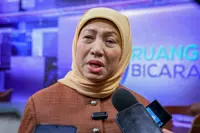
At the Malaysia Women & Girls Forum 2022 organised by the United Nations Populations Fund (UNFPA) Malaysia earlier this month, Women, Family and Community Development Minister Datuk Seri Nancy Shukri addressed the issue with much concern.
"On attracting women to stay or return in the workforce, the Ministry needs to relook into the burden of unpaid care work and (look into) transforming it into the broader care economy. This has the potential to transition women, particularly from B40 backgrounds from informal entrepreneurship into the formal labour force as micro, small and medium entrepreneurs providing quality early childcare and day care for all working mothers.
"Ensuring access to such essential family support services ensures that mothers can go to work without worrying about their babies and children’s well being," she said during her speech.
She added that the country's economic recovery "clearly should be shaped around increasing women’s LFPR"
She cited The World Bank 2019 Malaysia Country Report: Breaking Barriers which stated that if all economic barriers were removed for women in Malaysia, the country’s income per capita could grow by 26.2%.
"Increasing women’s economic participation can treble Malaysia’s economic recovery efforts, which will afford us much needed economic resilience in the challenging post-pandemic years. We must strategically address the main impediments to women’s labour force participation," she said.
Nancy also acknowledged the "room for improvement" in family support policies such as a comprehensive sexuality education and reproductive health services (family planning services and accessibility to feminine care to young girls), as well as a comprehensive childcare plan to attract women to come back to work.
"These are stacked factors that keep women and girls from reaching their full potential," she said adding that the government's commitment to support women have equal opportunities is reflected in "on-going legislative reforms, policies and plans".
An example, she highlighted, is the revised national Reproductive Health and Social Education Policy (PEKERTI) which puts forward a whole-of-nation approach to tackle issues on reproductive health and social education which included public awareness programmes.
It's not just a women's issue
Keeping women in the workforce is not just a women's issue – it has far-reaching implications on society and the economy.
"There have been studies by the World Bank, by (consulting firms) McKinsey (& Company) and Deloitte about the economic gains from investing in women.
In Malaysia in particular, the World Bank study outlined that removing all economic barriers for women in Malaysia could boost the country’s income per capita by 26.2%, translating to an annual income gain of RM9,400 for an individual.
"Gender equality has been acknowledged to be the catalyst and accelerator for economic growth, having a multiplier effect on the economy. What else to we need to put forth to show why half the population matters?" asks Omna Seeni-Ong, founder and managing director of Engender Consultancy, a social enterprise that promotes gender equality and women’s empowerment.
She cites another example: Micro financing.
"Way back when Malaysia introduced micro credit... this was right after the success of (the Grameen Bank, founded in 1976 by Professor Muhammad Yunus), money was put in the hands of women. And it was found that by giving loans to women, families villages and communities were taken care of, by default.
"When Amanah Ikhtiar Malaysia (a non-governmental organisation that gave micro credit loans) started, it gave loans to both men and women and found that about 90% women paid back the loans while only about 50% of men did. So today, AIM's 300,000-over members are all women. Surely this is a good business case for investing in women," says Omna.
She also highlights the need to augment monetary aid with training and upskilling women to get them into the labour force.
Such upskilling programmes, however, have to be accessible to the communities that need them the most.
"We are talking about B40 women primarily as they are the most left behind. Target those who are in the ekasih system and organise life-long upskilling programmes for them at the community-level. If their interest is business, help them with business development, if they want to get jobs, then help them with training and job placements. Cash handouts must be accompanied with empowerment...this will avoid the issue of welfare dependency," she says.
Nancy too alluded to this in her speech at the forum, saying that upskilling of women was necessary for the country's economic growth.
"We must also not forget to address job losses of Malaysia’s women during the pandemic in hard hit industries which have yet to recover, such as the tourism, services and retail sectors. This has also further impacted household incomes and points to a critical need for investment in industries worst impacted by pandemic related factors.
"Additionally, with more women working in sunset industries, there are great opportunities to up-skill or re-skill their existing female labour force, making them more resilient towards future shocks. Increased female LFPR not only helps boost household income, but also guarantees sufficient labour in competitive sectors in emerging economies like Malaysia’s. There is also further opportunity for identifying industries with potential for increasing female LFPR," she said.
First things first
Policy change is necessary in order for social norms regarding gender roles to evolve.
A good place to start is addressing the proverbial "elephant in the room" - unpaid care work. This is especially since these were among the promises in the campaign manifestos of both Pakatan Harapan and Barisan Nasional, two parties that make up the majority of the Unity Government, Omna points out.
Affordable childcare services and policies that encourage men to share the load of unpaid labour are among the many issues that must be tackled, she says.
"We must tackle the persistent issues first. Look at data. DOSM itself cites household responsibility and childcare – this is across the board, not just b40 – as the main reason women leave the workforce. In Barisan Nasional's manifesto, they promise universal child care or free national early education and care systems for those six and below.
"They are part of this unity government so I hope they fulfill this promise. Investment in accessible, affordable and quality childcare that is built on child protection is a must and we need to do it right from the beginning. We have sufficient knowledge and experience to see this through," says Omna.
The training and empowerment of women were also campaign promises by both Pakatan Harapan and BN, she adds.
In their report Time to Care: Gender Inequality, Unpaid Care Work and Time Use Survey, Khazanah Research Institute said that
gender equality cannot be achieved without changes in social norms and that public policy can have significant influence on leading this change.
"Social policies can either expand the capabilities and choices of both women and men, or confine women to traditional roles associated with femininity and motherhood," it said.
Gender inequality and unpaid care work are inextricably intertwined, the report added.
"Despite improvements made by women in labour force participation, job advancement and remuneration, unpaid care work is limiting progress and slowing the pace of gender convergence in the economy."
The report also highlighted gender wage disparities: The salaries of women in their early prime (between 25 and 34) were generally more than men. However, this pattern, was reversed in their "later prime" (age 35 and above), where men earned, on average, more.
"Women who return to the labour force after childbearing years are likely to receive a wage penalty for the loss of time and experience due to reproductive roles and responsibilities outside formal work," the report found.
"The trend reversal in gender wage gaps from the mid-30s onwards underscores the importance of investigating the extent that unpaid care work has a bearing on the gender wage gap."
Inclusive policies
Many women who leave the workforce don't stop working. They can't afford to and instead, enter the informal job sector where there is scant social protection, if any.
"If the women have dropped out, it only means they have gone into the informal sector where there is no social protection and other so on. We need to address this. The government must engage with civil society and academia and address these issues," she said.
Another issue that has to be addressed is keeping work spaces safe so that women don't have to deal with harassment, gender-based violence, discrimination and can see a clear career trajectory, Omna says.
Gender inclusivity, she says, must be applied to all policies, programmes and even bills that are passed by Parliament.
"Above all, there must be monitoring and impact measurement is important. Engender and the Women's Aid Organisation are leading the gender budget group (comprising 21 civil society organisations and 16 academics) to help ministries with gender responsive budgeting. We met the women's Minister on this and it is something she has endorsed. In fact she has done gender responsive budgeting in her own local constituency. We provide a checklist and coach them using their own case studies.
"In fact it was part of the Harapan manifesto... all bills that go to parliament must go through gender impact assessment. Any bills... even one on, say, Padi. The gender focal teams in the respective ministries can do it before bringing it to parliament. Gender inclusion has to be a pre-requisite for everything," she says.
Already a subscriber? Log in
Get 20% OFF The Star Digital Access
Cancel anytime. Ad-free. Unlimited access with perks.