In Malaysia, the conversation around gender equality in the workplace is shaped by the lived realities and daily juggle faced by women – especially single mothers – trying to balance paid work with unpaid caregiving duties.
While the national target is to raise women’s Labour Force Participation Rate (LFPR) to 60% by 2033, current figures show that at 56.4%, women are trailing behind men who are at 83.3%. Behind this gap lies a structural challenge: time, support and opportunity.
For many single mothers, work does not stop when office hours end. They shoulder what researchers describe as the “double burden” – holding down a job while managing childcare, household chores and emotional labour.
A 2019 study by Khazanah Research Institute shows that Malaysian women spend far more time than men on unpaid care work, even while clocking similar hours in paid jobs. These invisible responsibilities often determine whether women can remain in the workforce long-term.
It is within this context that corporate-led social initiatives aimed at women’s economic participation matter. One local laundromat chain has chosen to channel its social responsibility efforts towards supporting single parents, particularly women from the B40 community, through stable employment and targeted welfare support.
Its recently launched Single Parent Welfare Support programme offers monthly incentives of up to RM500 to high-performing single-parent employees.
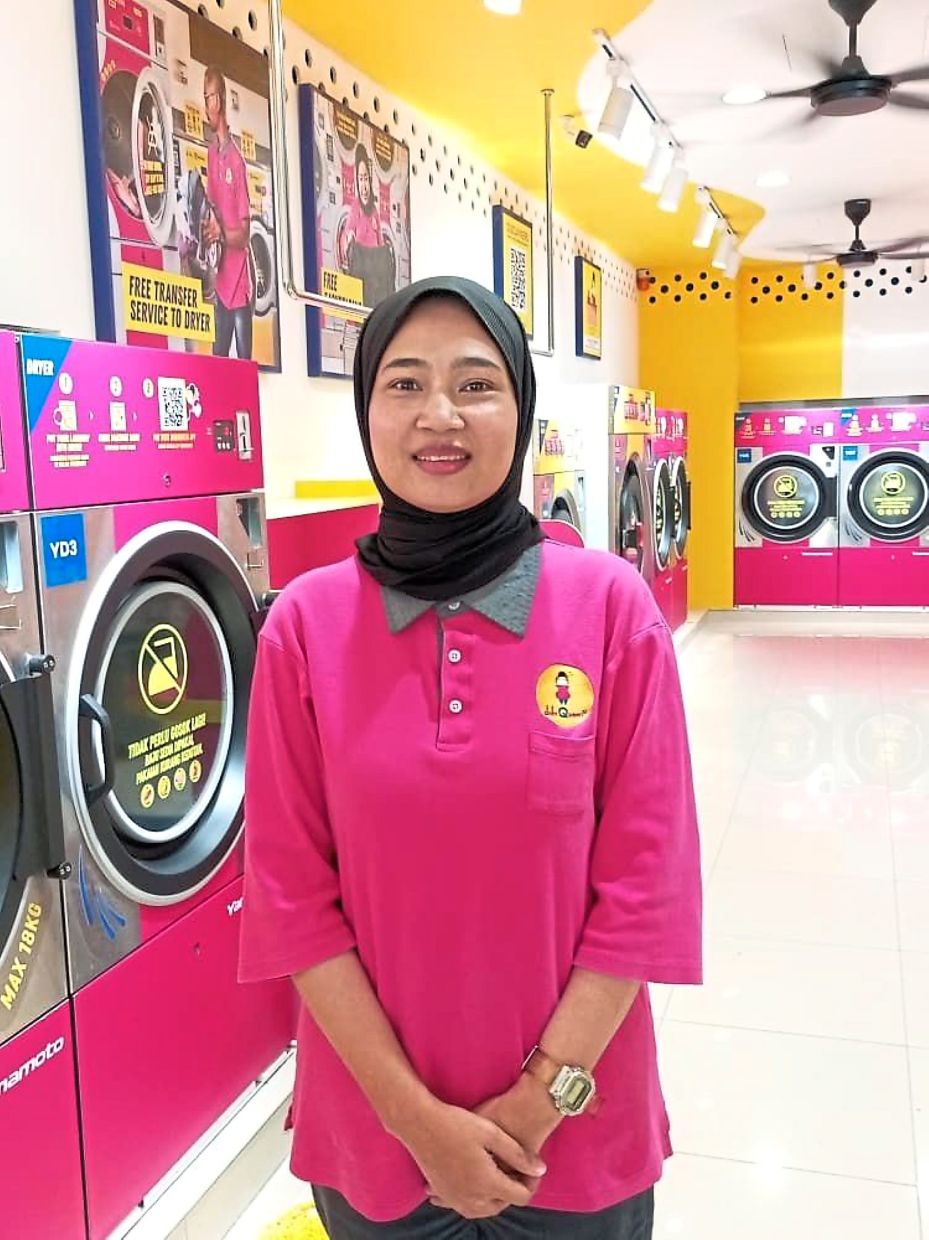
"I'm thankful for the initiative which has helped reduce my daily stress. The cash provided – even though it may not seem like much to others – helps us in meeting our household expenses.
"Instead of worrying about how to earn more money all the time, I can now focus on my work and my child."
Another recipient, 34-year-old Nor Syazwani Abdul Roub from Sungai Buloh, says the initiative helps with her children's school expenses.
"Receiving the funds boosts my motivation to work."
As a single parent of four children aged three, nine, 10 and 13, Nor Syazwani says the incentive has helped her with some of her children's daily necessities and also general household expenses.
The programme recognises the financial strain single parents face and seeks to reduce the pressure that often forces women to choose between work and family.
dobiQueen co-founder and executive director Nini Tan says the move is part of a broader social responsibility by the company, in its bid to "restore confidence and stability" among single parents.
"When they are supported, families benefit and the community as a whole is strengthened," says Tan.
One of the issues this initiative aims to help address is time poverty.
"Time poverty is one of the biggest challenges women face, yet it’s rarely discussed. Household tasks such as laundry – often performed by women – consume many hours each week," Tan notes.
"Data from customer surveys shows that outsourcing this chore can save individuals between 150 and 300 hours a year. For women, especially working mothers, reclaimed time can translate into rest, income generation or meaningful family moments," she says.
"When women regain time, they regain choices, whether it's spending more time with their children, focusing on their careers or caring for their own well-being," she adds.

It is a two-way thing - while helping career women save time from household chores so that they can spend more time with their families, build their career, or engage in self-care, this also helps provide work and income for women from marginalised communities.
Data from UN Women reveals that women and girls do 16 billion hours of unpaid care work daily - powering families, communities, and economies. Yet, this work remains largely invisible, undervalued and unequally distributed.
Such unpaid care work - which includes essential activities like housework (cooking, cleaning), childcare, and caregiving for aged family members or those with special needs - are often performed by women and girls, perpetuating gender inequality and impacting caregivers' well-being.
"Workplaces and communities need to recognise unpaid care labour, offer flexibility and provide meaningful support," Tan concludes.