When listening to Syafiq Yusof talk about filmmaking, it becomes clear that a great deal of thought goes into his work.
While it would be easy to attribute that to the fact that filmmaking runs in his blood, that would be too simple an explanation.
The 33-year-old is the youngest son of legendary filmmaker and producer Datuk Yusof Haslam, and the younger brother of Syamsul Yusof – himself a director with enviable box-office success – but his approach is very much his own.
Actors who have worked with Syafiq are often willing to follow him wherever the story leads, and many return whenever he calls.
Among them are Zizan Razak, Zul Ariffin and Syafiq Kyle.
Singaporean actor Hisyam Hamid, who is working with Syafiq Yusof for the first time in the upcoming action flick Black Ops, describes the filmmaker as a “meticulous director”, something he appreciates.
“He knows what he’s doing; this has been proven by the many box-office hits he’s made. So I place my trust in him completely and just go with whatever he wants,” Hisyam tells StarLifestyle.
Syafiq eloborates why that attention to detail matters.
“It’s very rare for me to shoot just one take and move on. In the cinema, it’s dark – there’s only the audience’s eyes and the film.
“You can do 100 things right in a movie, but most people won’t notice the 99. They’ll focus on the one thing you got wrong, and they’ll talk about it for a month,” he says.
“That’s why I make sure every take is carefully reviewed. Each shot has to be thoughtfully considered before we move on to the next.
“Malaysian audiences are very particular about quality because we also watch Hollywood, Bollywood and Hong Kong films – and the ticket prices are the same. So local films have to meet a certain standard.
“It’s not an easy job, and that’s why I work this way,” he adds.
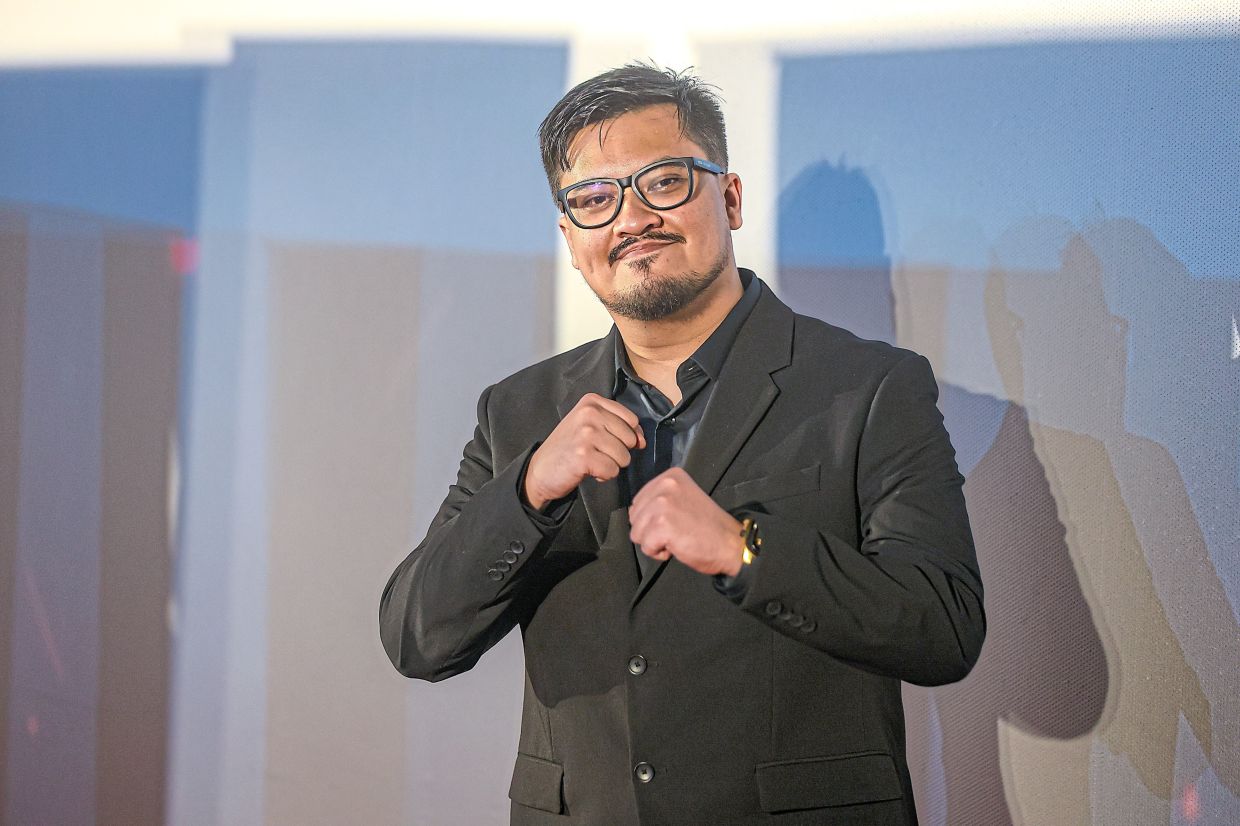
Syafiq’s way of working has clearly paid off.
His box-office successes in the action genre have been consistent, beginning with the Abang Long Fadil films (2014, 2017, 2022), followed by the 2023 hit Polis Evo 3 and Sheriff: Narko Integriti in 2024.
His momentum continued into 2025, when Blood Brothers: Bara Naga emerged as the year’s top-grossing local film, earning RM76mil at the box office.
At the same time, he is also unafraid to step outside the action genre, branching out with Soloz: Game Of Life (2025), inspired by a real-life e-sports player, and Penunggang Agama (2021), a religious horror film.
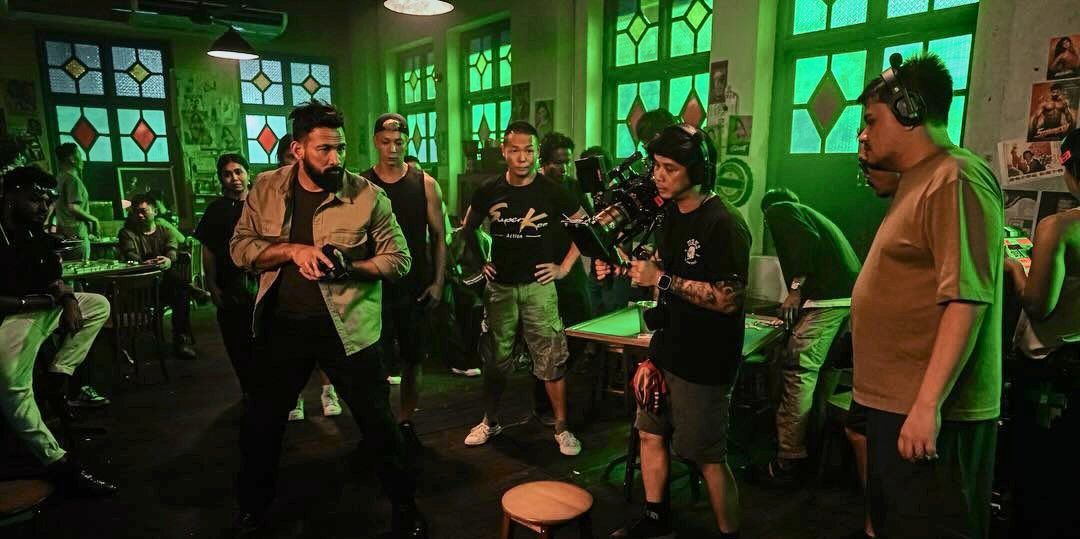
At the time of our meeting, he was 26 days into shooting Black Ops – an action packed film which he’s co-directing with Hong Kong filmmaker, Chui Tze Yiu.
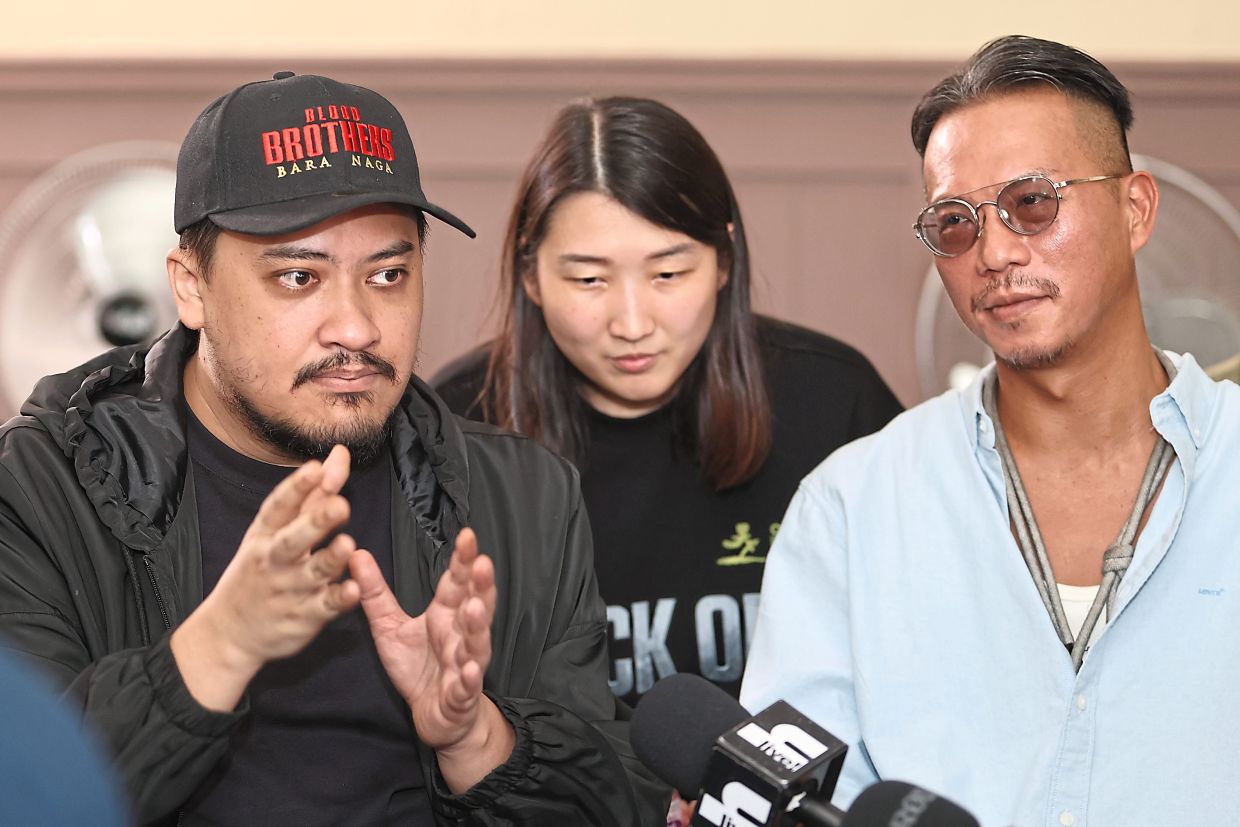
The film also boasts Hong Kong stunt directors Ken Law and Sean Lin, both of whom bring years of experience in the genre.
It is produced by Malaysian studios Skop Productions and Astro Shaw, as well as Hong Kong-based One Cool Films.
Syafiq says he is enjoying the process of working with a co-director, something he has done on previous projects as well.
“I kind of like this co-directing method. My first experience was on the 2016 film Mat Moto, with Pekin Ibrahim, and I found it to be a very good process.
“The second was Blood Brothers with Abhilash Chandra, which was an excellent collaboration,” Syafiq adds.
“Having two minds working together allows us to think more meticulously about a project.
“Now I am co-directing again for Black Ops with Chui, as I really want to make a new kind of action movie in Malaysia,” he says.
Describing it as a rewarding collaboration, Syafiq adds that Black Ops is quite a challenging film, but one he accepted because he didn’t want to repeat the same kind of action from his previous projects.
“We are still shooting the film right now, and we hope for the best.”
Syafiq talks to StarLifetyle about being compared to Syamsul and how he has evolved as a filmmaker along with the Malaysian film industry.
These are edited excerpts from our conversation.

You have had a number of hits. Do you know early on if a film will be a success?
To be honest, it’s very hard to predict the market. But I do believe Malaysian audiences want quality entertainment.
They expect high-quality films – strong cinematography, good storytelling, a solid cast, music, everything.
We’re living in the Internet age now; even TikTok videos are high quality. So when people go to the cinema and pay to watch a movie, they expect a certain standard.
As filmmakers, we have to meet that standard.
You make at least two movies a year. How do you keep up with the pace?
In terms of shooting, it usually takes less than five months to complete two films. The remaining six or seven months are spent on pre-production. I think that’s ample time.
Realistically, the maximum most Malaysian filmmakers can manage is one or two big films a year, especially action movies.
But I believe we need to keep producing consistently. If we don’t, the industry becomes unstable – one year there are very few films, the next year there are too many.
For me, I just want to keep making good movies while I’m still capable.
People often expect a certain type of film from you. Does that ever make you feel boxed in creatively?
Last year, I made Blood Brothers and Soloz, which are two very different films in completely different genres. They’re very distinct. I hope people wouldn’t see me only as an action-movie director.
Audiences often joke that I like blowing up cars in my films, but in Soloz, I didn’t blow up a single car.
Still, it turns out films with cars exploding are much more profitable (laughs).
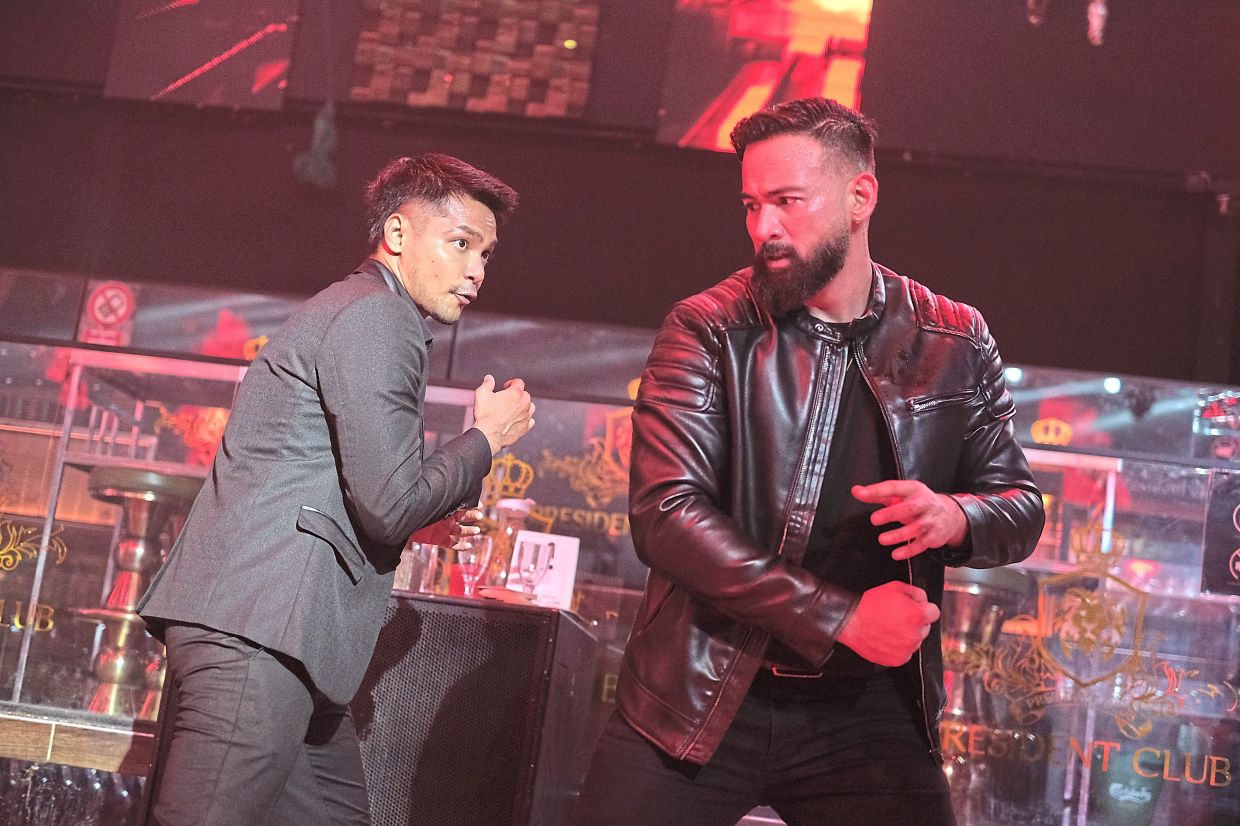
Would you do something like Soloz again?
I will, definitely. I feel that it creates variety in my creative output.
Do you think your style has changed over the years?
Of course. As a director and as I get older, I evolve.
But it’s not just me – the entire industry has evolved as well, especially in terms of technical capabilities, overall quality production and post-production.
I’m very thankful that we’re now seeing more investment coming into the country. It’s good not just for directors, but for everyone in the film industry.
People say it’s expensive to make movies nowadays, but I actually think it’s time for films to be expensive.
In the past, many people were paid peanuts. Now we’re moving towards a better environment with fairer pay.
Yes, filmmaking costs more today, but I believe the market is there, and I hope this momentum continues.
Beyond directing, how involved are you in nurturing the next generation of filmmakers?
I’ve been working with younger filmmakers for the past five or six years.
Just last year, I produced two films under my own company, Viper Studios, both directed by first-time filmmakers.
The first was Baga by Ariff Zulkarnain.
It was made on a modest budget, but I really loved the spirit and passion Ariff brought to the project.
The second film, which is set to be released this year, is Malaikat Malam, directed by Nazifdin Nasrudin.
I’m actively working towards mentoring and developing new voices, because it’s important for the industry to keep growing and to have more filmmakers coming up behind us.
You’re often compared to your brother Syamsul. Does that ever bother you?
In the past, it did bother me.
When I first started out, my films didn’t perform well at the box office, while my brother’s films were doing extremely well. The difference was very stark.
At that point, I told myself that I needed to make films that worked commercially.
After a few box-office successes, I feel more at ease now.
Did he say anything about your recent successes?
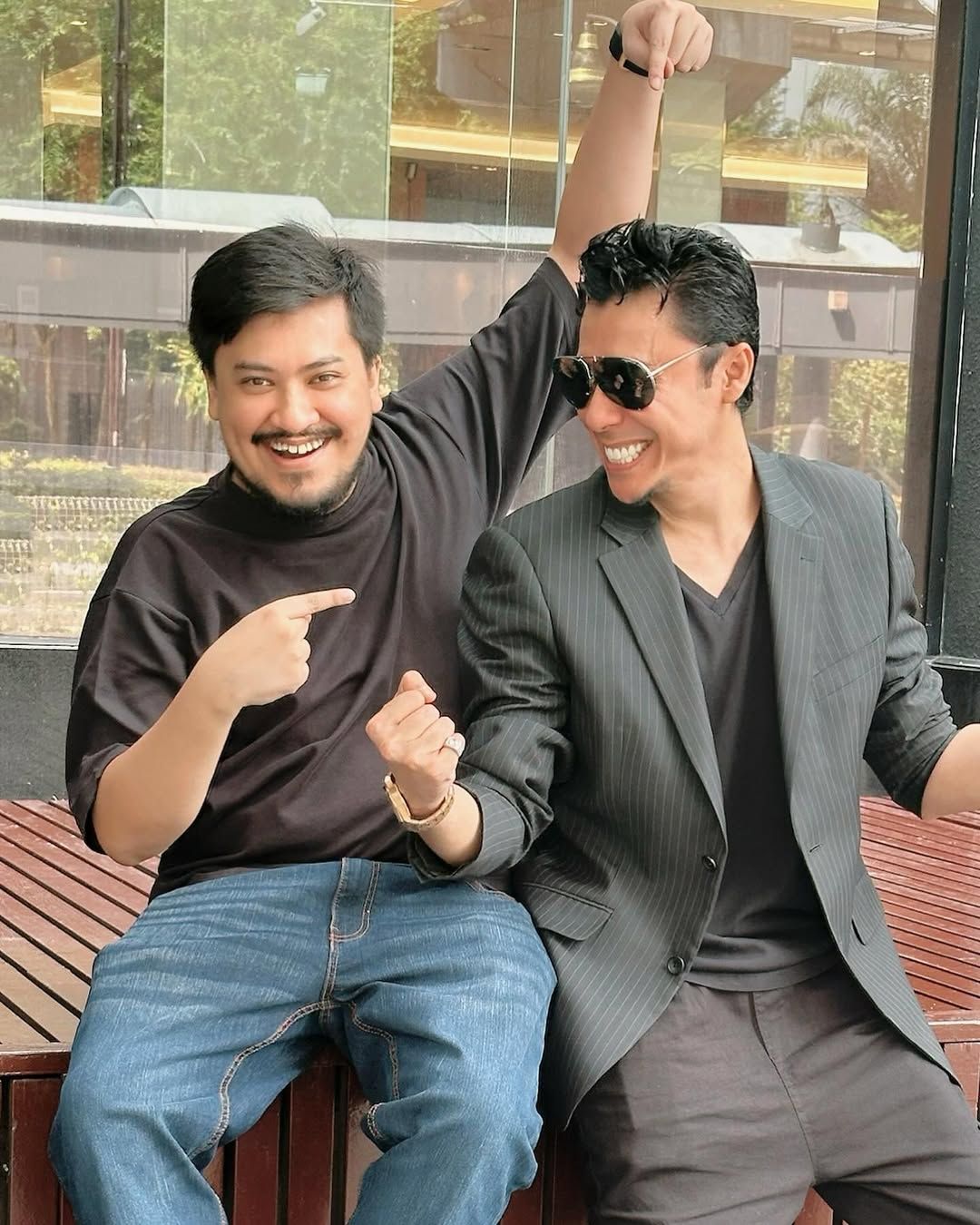
He congratulated me. He’s one of my biggest inspirations, along with my father.
A lot of my filmmaking style is influenced by Syamsul’s approach, so of course I’m very grateful to him.
When you were going through less successful periods, how did you deal with criticism?
I think criticism is necessary, and as a filmmaker, you can’t just turn a blind eye to it.
Maybe 20% or 30% of it is just hate, but 60% to 70% is usually valid.
It’s painful, but we have to take it, swallow it and fix the mistakes we made in previous films.
My way of coping is reminding myself that I want to make movies for as long as I can, as long as I’m given the opportunity.
If a film doesn’t perform as expected, whether critically or at the box office, then I push myself to make the next one better – and then better again.
Your father mentioned that the budget for Black Ops might increase and the schedule could be extended. What’s your prediction – do you think you’ll finish on time?
Honestly, I never finish on time (laughs).
But there’s a good reason for that. This is something I learned from my brother.
He always says nobody cares how long you take to shoot – nobody cares if you finish in 10 days or 100 days.
What people care about is whether the movie is good or not.
If 10 days is enough to make a good movie, then I’ll do it in 10 days. But if it’s not enough, and there are problems, then I have to extend.
I can’t go to the audience or critics and say, “The movie has issues, but it’s not my fault – it was the weather.”
Even if it was the weather, the audience will still blame the director. They don’t want to hear about the problems we faced during filming.
There are always millions of problems on set. Our job is to overcome them and deliver the best film possible.
That’s what I learned from my brother.
At first, I didn’t understand why he was always extending shoots, working late into the night.
I used to think, why can’t it just be 9 to 5? But that’s the difference – he puts the film above everything else.
I may not be as strong as him yet, but I aspire to be like that.
For me, the movie is more important than anything – more important than the director, the actors, or anyone’s ego.
You have to put the film first, above all the problems and above your own ego.
I am just wondering ... do you hear your father’s voice in your head when directing?
Not only do I hear his voice, he will also be on set to question me whenever I want to extend a shoot.
But my father is a filmmaker himself, so he understands the process.
Every time I ask to extend the schedule, I explain my reasons – why it’s necessary and how it’s for the good of the film – and usually, he understands.
There’s always a debate first between us.
But I’m grateful to have my father as a producer as he’s someone who truly understands filmmaking.