

A year ago, a passionate woman of colour found her voice and took on an older, white carnival barker who was stoking bigotries to seize unchecked power.
I’m not talking about Kamala Harris, but Elphaba Thropp from the box-office smash Wicked.
The Democratic nominee for president was unable to defy gravity in the end, but over in Oz, the battle is still raging.
When we last saw Elphaba (Cynthia Erivo) at the cliffhanger ending of Wicked, she was preparing for war.
The not-so-Wicked Witch of the West is back in theatres, and she’s ready to rumble.
Wicked: For Good is not, alas, that good.
As fans of the Broadway musical on which it’s based know, all the best bits are in the first instalment.
And yet this brassy, candycoloured Battle Of Algiers takes one of the clearest stands against authoritarianism and white supremacy you’ll find in theatres.
It couldn’t be more timely.
According to Gallup, people worldwide have more worry, stress, sadness and anger than they did a decade ago.
Its recent surveys in the United States find that only 29% of Americans are satisfied with the direction their country is going, and they strongly dislike their leader: The only president to have had a lower average approval rating than Trump 2.0 (42%) so far was Trump 1.0 (41%).
There’s a reason Republicans were routed in the off-year elections and seven million people marched against the administration in the latest No Kings protest, on Oct 18.
From subtle to sly
Filmmakers the world over are stepping into the breach.
Probably the most notable political movie this year is Paul Thomas Anderson’s raucous, violent takedown of America’s immigration policy: the excellent and polarising One Battle After Another.
The auteur’s latest epic stars Leonardo DiCaprio and Teyana Taylor as scrappy activists facing off against a racist police state embodied by a villainous Sean Penn.
The movie has made a tidy US$200mil (RM822.5mil), and stands to rake in more if its director and stars take home Oscars as expected.
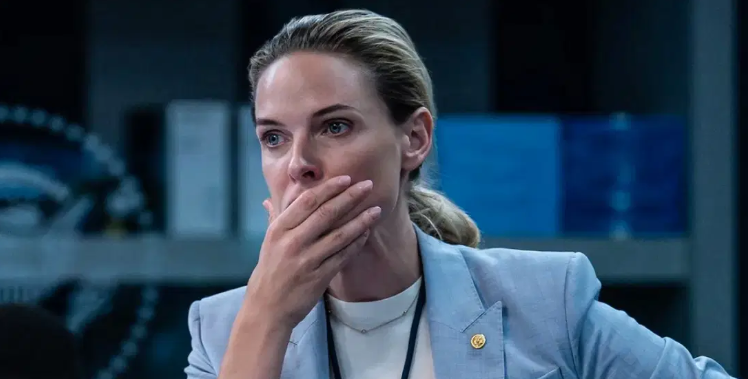
The taut if somewhat cliched political thriller A House Of Dynamite offers a more subtle critique of the government.
By keeping her main actor – the president – off-camera until the conclusion of the film, director Kathryn Bigelow leaves his character, ethics and intellect a mystery.
For most of the movie, we’re engaged in a thought experiment: What would happen if a rogue nuclear missile launched over the Pacific, and our president was, say, the current occupant of the White House?
The Mastermind takes on the spread of shameless self-dealing.
In this marvellously sly film from Kelly Reichardt, a clueless petty thief (Josh O’Connor) gets tripped up in Vietnam War-era social unrest.
You’d almost miss the connection to national politics, except that the director keeps deviously flashing Richard Nixon’s grim mug on the televisions in the background of many scenes.
With headlines on Ukraine, Gaza, Sudan and the Venezuelan boat bombings serving up stories of brutal aggression almost daily, it’s a great time to revisit Nuremberg.
James Vanderbilt’s polished movie about the precedent- setting trials at the end of World War II isn’t great – Russell Crowe is terrific as Hermann Goring, but Rami Malek is painfully hammy as the shrink tasked with figuring him out – but it did manage a respectable US$9mil (RM37mil) in its first week.
Conflict, paranoia and cataclysm
The list goes on: Eddington, Bugonia, Sirat – there’s a reason directors are digging into stories of conflict, paranoia and cataclysm.
Taken together, these films, most of which were conceived and went into production during Donald Trump’s interregnum, between the insurrection of Jan 6, 2021, and MAGA’s triumphant return to power, have coalesced into a troop of cinematic resistance amid the conflicts and crises defining his political era and the rightward, nationalistic turns happening broadly around the globe.
And lest you think this is a strictly art-house phenomenon, edgy political fare has made it to the megaplex too.
In his blockbuster Sinners, a gorgeous revenge fantasy worthy of Quentin Tarantino, Ryan Coogler took a broader view of America’s problems.
This big-budget horror film, which raked in US$368mil (RM1.5bil), imagined a pair of Black brothers in 1932 facing off against the vampires (actual vampires, in this case) of white supremacy.
James Gunn took on the destructive influence of the world’s billionaires with his loopy, overstuffed Superman, which made US$617mil (RM2.5bil) this summer.
Its villain, the erstwhile Lex Luthor (Nicholas Hoult), will sound familiar: He’s a megalomaniac inventor manipulating a corrupt federal government.
Along the way, the movie also looks at xenophobia, foreign misadventures and online disinformation – no wonder our critic called it a pro-immigration, anti-Trump blockbuster.
Superman is also mordantly funny in places, but then, contemporary politics have taken a darkly comic turn.

Did you ever imagine a president would post an AI video showing him dumping excrement on protesters, say, or take a wrecking ball to the East Wing of the White House without warning?
No film last year leaned harder into the almost cartoonish nihilism in Washington than the sci-fi satire Mickey 17.
Its villains, an interstellar CEO (Mark Ruffalo) and his wife (Toni Collette), were so on-the-nose, the movie was hard to watch.
That may explain why the March release, from Parasite director Bong Joon-ho, didn’t break even with its modest US$133mil (RM547mil) haul.
Emboldened filmmakers
Hollywood, of course, has a famously liberal bias; and the best of the year’s resistance films will romp during awards season even if they weren’t box-office juggernauts.
Certainly there have been other recent films about less charged topics: Sentimental Value, Hamnet and Frankenstein are three acclaimed movies that don’t get anywhere near contemporary politics (they describe more intimate family struggles) and ought to win their share of awards.
But more and more filmmakers are responding to the urgency of world events with movies that have an urgent, starkly political point of view.
For my money, the two must-see political films are Kleber Mendonca Filho’s The Secret Agent, about a man on the run from Brazil’s military regime in the 1970s, and It Was Just An Accident, shot in secret in Tehran by Jafar Panahi.
They stand out partly because they don’t take on the corrupt regimes directly. No generals or mullahs appear in these films.
They’re focused instead on how we ourselves change living under authoritarian systems.
Accident is especially devastating. Vahid (Vahid Mobasseri), who spent time in jail, abducts Eghbal (Ebrahim Azizi), whom he suspects tortured him there.
Vahid can’t be 100% sure he’s got the right guy – he was blindfolded in prison – so he searches for other victims to corroborate the man’s ID and help him decide how to repay him.
What does justice look like in such a world? What do we ourselves begin to look like?
From the Yellow Brick Road to a dusty highway outside Tehran, something is going on.
As corporations, universities and news media are criticised for cowering in fear, filmmakers are getting more emboldened.
Their movies share the same insistent message: Wake up, world. – Bloomberg
