Thousands of visitors streamed through the Grand Egyptian Museum on Tuesday as almost the entire collection of King Tutankhamun's treasures - over 4,500 artefacts - was displayed together for the first time since the young pharaoh's tomb was discovered in 1922.
Curated and conserved over nearly two decades, the collection was unveiled to the public two days after the museum's lavish opening ceremony on Saturday.
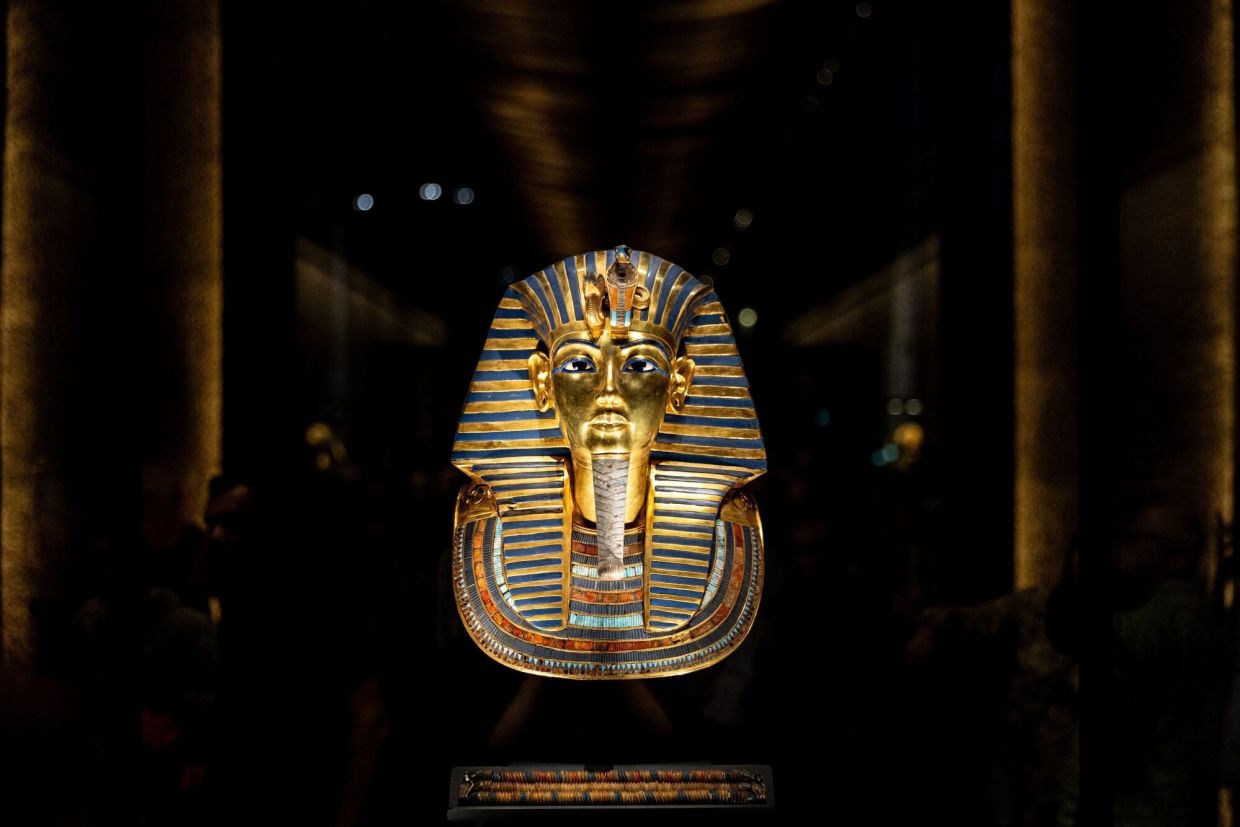
In a vast, dimly lit main hall spanning four levels, visitors gazed at chariots, household items, jewelled ornaments and, at the centre, Tutankhamun's iconic golden mask.
The mask sits surrounded by personal belongings, gilded tools, family heirlooms and funerary statues.
An adjacent room showcases two small mummified princesses - Tutankhamun's daughters who died before birth - also on public display for the first time.

Tutankhamun died aged 18 or 19 between 1323 and 1324 BC, with genetic and radiological studies suggesting malaria combined with a bone disorder as his cause of death.
He was mummified and buried in Luxor's Valley of the Kings inside three nested coffins, the smallest weighing 110kg, all placed within four gilded shrines like matryoshka dolls.
While the coffins are now at the museum, the mummy remains in Luxor.
Visitors can also see the Khufu Sun Boat, described as the oldest and largest wooden artefact in human history, while a second solar boat is being restored.
These 4,600-year-old funerary boats, made of cedar and acacia, were intended to transport the king into the afterlife.
The first, measuring 43.5m, was discovered in 1954 at the base of the Great Pyramid; the second will soon be displayed behind glass in a live restoration lab.
The museum, a monumental structure overlooking the Giza Plateau, contrasts sharply with the colonial-era, cramped Egyptian Museum in central Cairo.
Natural light filters through vast triangular windows, illuminating both colossal statues and delicate jewellery from Egypt's ancient civilisation.
President Abdel Fattah al-Sisi officially opened the US$1bil (RM4.2bil) museum last Saturday in a ceremony attended by kings, queens, heads of state and other dignitaries.
Egypt hopes the museum will revive tourism and bolster its economy.
Egyptian Tourism Minister Sherif Fathy expects five million annual visitors, which would make it among the most visited museums in the world.
So far, he said, it had welcomed 5,000-6,000 visitors each day. - AFP