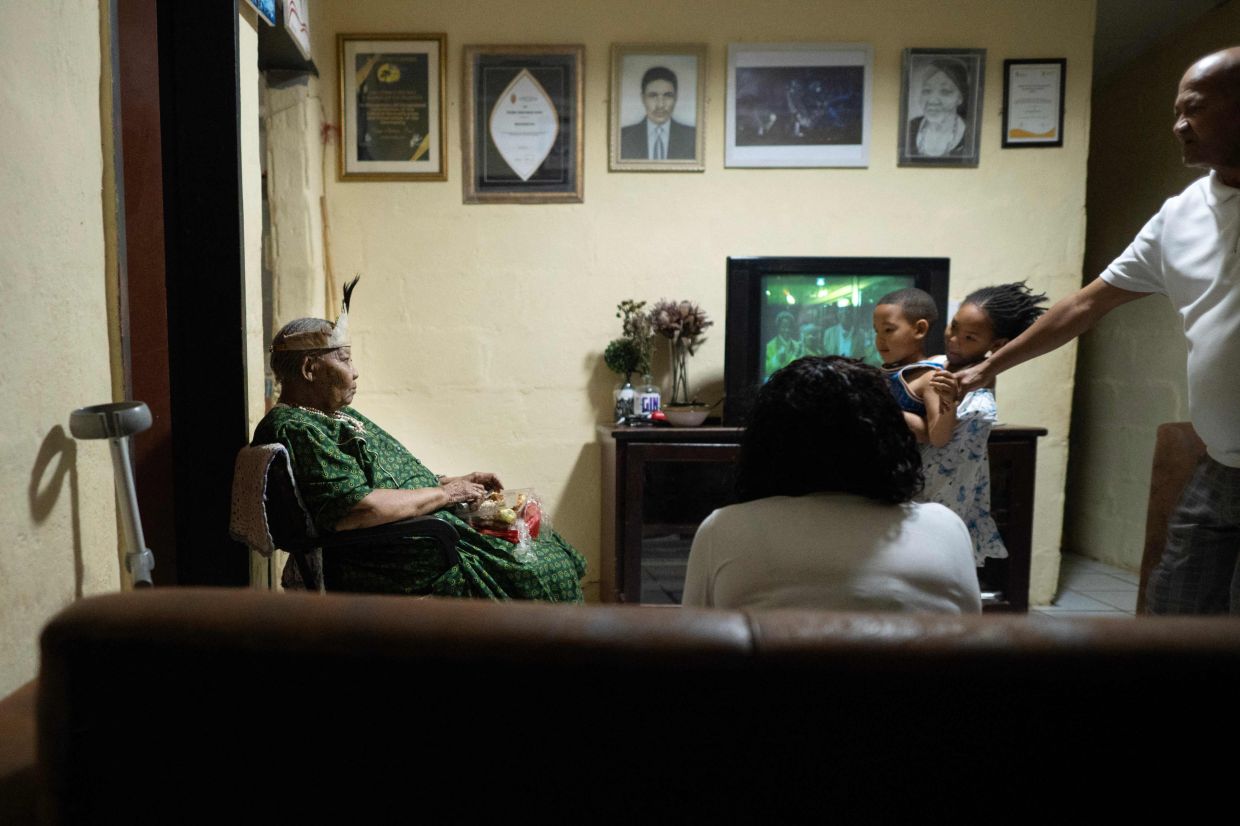
In her humble home on the red soil of the Green Kalahari, 92-year-old Katrina Esau listened intently as her two great-grandchildren practised the ancient N|uu language of South Africa's indigenous San people.
As the young children enthusiastically sang out phrases, Esau interjected occasionally to correct their pronunciation of the distinct sounds and deep clicks of her mother tongue, of which she is the last first-language speaker.
Visitors to the family home near the banks of the Orange River in the Northern Cape province also chipped in, with pride, a few words of N|uu in homage to the matriarch's efforts to keep alive a language that researchers say is 25,000 years old and endangered.
On the walls, photographs of the quietly dignified and graceful Esau wearing a crown and collar of animal hide, feathers and quills denoted her status as a queen in the N|uu's house of the San people, among South Africa's oldest cultures.
Better known as "ouma", or grandmother, Esau is determined to keep N|uu alive.
She was born in 1933 on a farm near Olifantshoek in the southern Kalahari Desert, about 150 kilometres (93 miles) from the border with Botswana.
Her parents worked for a white family that spoke Afrikaans, the language of the Dutch settlers.
"We grew up hard. On the farm, my mother worked in the kitchen, washed laundry, ironed and washed floors," she said.
"I was born into the language, I drank the language. As children, we never spoke Afrikaans; we only spoke N|uu," Esau told AFP.
But if the farm owner ever heard them, he would chase them away, saying: "You're talking an ugly language -- go home!" Esau recalled.
Her father warned the children not to speak N|uu at their employer's home, fearing "they'll kill us", she said.
As they grew up, they dropped N|uu altogether, speaking only Afrikaans.
'A wound'
N|uu is part of the Tuu language family originally spoken in South Africa and Botswana, many dialects of which are already extinct, said Pan South African Language Board representative Bradley van Sitters.
Their loss was a "systematic and deliberate" aspect of the oppression of the San and Khoekhoe peoples who were forced into servitude, he said.
"The languages of these natives were strictly forbidden ... and forced them to operate within an economic system dominated by the colonial languages," van Sitters told AFP.
There are oral history accounts of inhumane punishment of parents who taught their children indigenous languages, he said.
For Esau, not being able to speak her mother tongue was "a wound". She still finds there are words in N|uu for which she cannot find a match in Afrikaans, she said.
"It was bitter and is still bitter when I'm the only one that can speak the language," the soft-spoken woman said.
As part of her quest to revive N|uu, she and her granddaughter, Claudia Snyman, established a school for the language, which uses special characters in script to denote the verbal clicks.
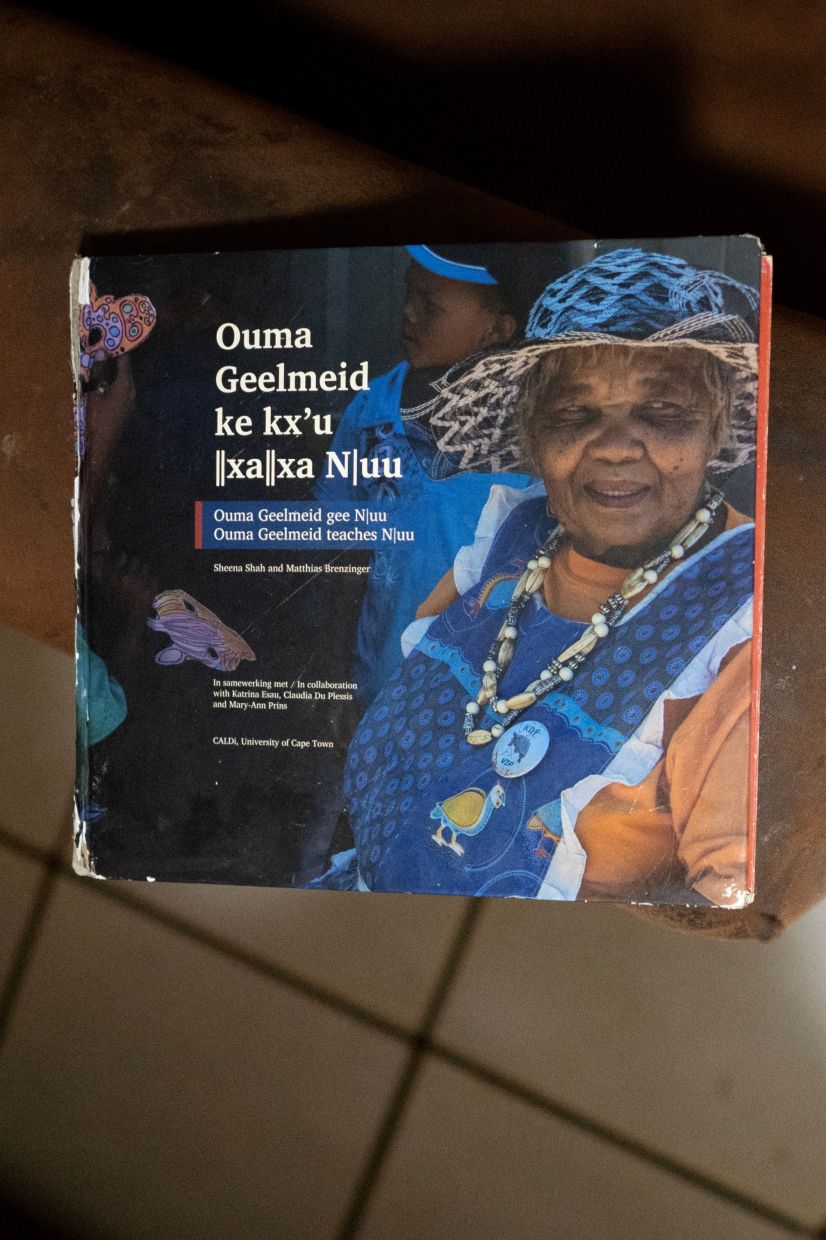
They authored the first N|uu children's book, !Qhoi n|a Tijho (Tortoise And Ostrich) published in 2021, contributed to the first-ever N|uu dictionary and are working on a language app.
"It was difficult to learn the language, but I persisted," said Snyman, 33. "Once I heard it for the first time, I was interested and knew I'd take it further."
"We're trying everything to save the language," she said.
'Living human treasure'
Esau never went to school but in 2023 was awarded an honorary doctorate in literature from the University of Cape Town for her efforts to save N|uu.
Even though the government has honoured her as a "living human treasure" and invites her to celebrations of South African heritage, she struggles financially.
For N|uu to survive, she said, the government would need to pay stipends to those willing to put in the work required to keep it alive.
Esau's son, Prince Charles Tities, is proud.
"I'm glad that she's trying with all her might and energy to take this language forward," he told AFP.
"It makes me feel heartbroken to think that one day, when she is no longer here, what will happen to the language?" - AFP