Star Wars creator George Lucas called his Lucas Museum of Narrative Art a “temple to the people’s art” and a project that “almost broke my will.” Seventeen years after it was first envisioned, it will be opening to the public on Tuesday in Los Angeles.
The US$1bil (RM4.1bil) institution in Exposition Park near his alma mater the University of Southern California has become a life’s work for him and his wife and co-founder, businesswoman Mellody Hobson. Its galaxies of galleries are filled almost entirely with their own collections.
The 82-year-old Lucas has a love of doing things that are supposed to be impossible. The project was first conceived for San Franciso and Chicago and reached the initial design phase in both cities before Lucas was “kicked out,” as he put it. The Los Angeles museum mixes the work of populist painters, commercial illustrators and comic artists with the kind of fine artists more associated with major museums.
Here’s a look at five things to make sure to see on a visit.
Slay, princess
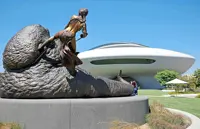
In the considerable green space that surrounds the museum, visitors will see statuary that includes a sculpture of Carrie Fisher’s Princess Leia in her metal bikini choking Jabba the Hutt to death, a scene from 1983’s Return Of The Jedi.
Titled The Hutt Slayer and commissioned for the space, it’s one of a handful of inevitable nods to Star Wars in and around the museum, but that faraway galaxy represents just a small fraction of its holdings and initial exhibits.
The inaugural Star Wars In Motion exhibit shows vehicles used in the original trilogy and the Lucas-directed prequels. A Naboo starfighter hangs in a more permanent spot in the lobby of its library. A stroll on the paths through the grass will also bring views of statues of Yoda, Grogu, and Natalie Portman’s Padme Amidala.
Banksy, high above the street
The museum is full of paintings from artists like Norman Rockwell who have long been considered the opposite of cool. But it has no lack of younger, hipper content.
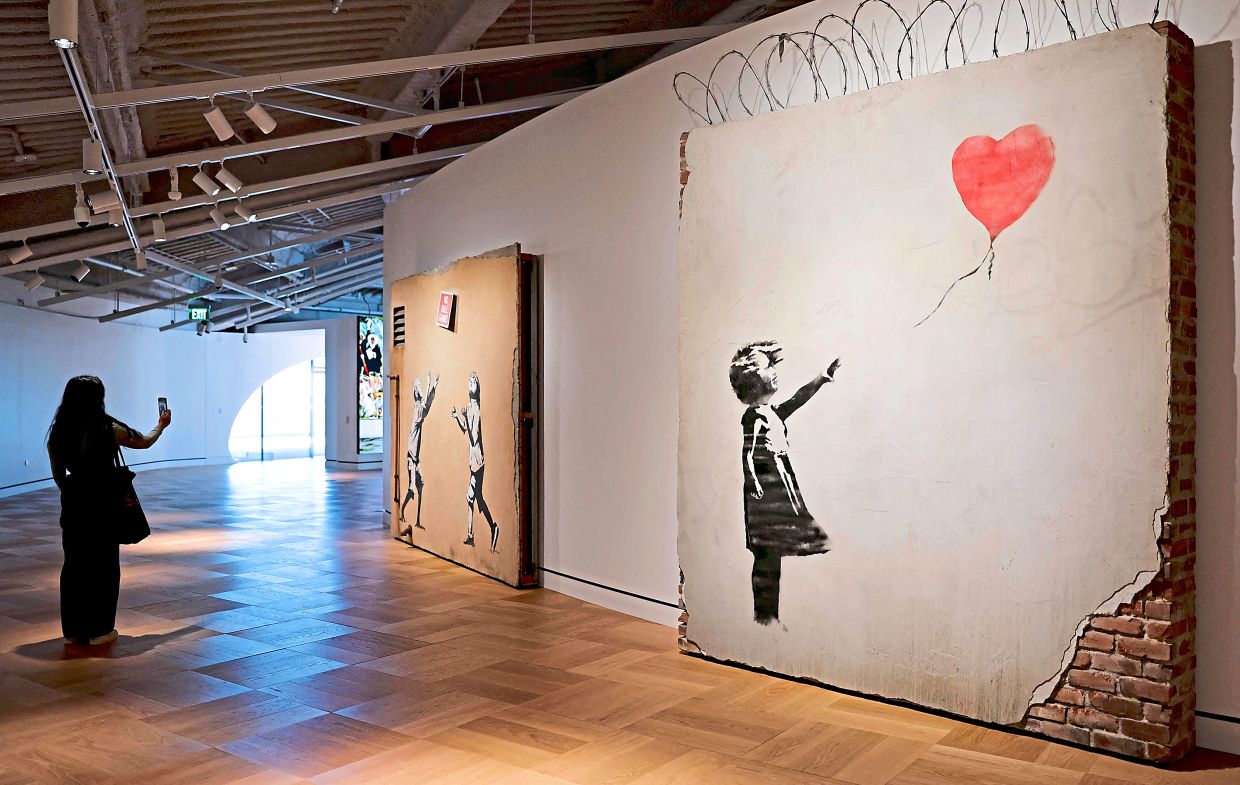
In a not-easy-to-find fifth-floor gallery are two walls of stenciled murals from the elusive and apparently recently “unmasked” British street artist Banksy, who worked personally with Lucas on his contributions to the institution.
The work, whose presence was announced in the final weeks before the museum’s opening, includes the familiar image of a girl releasing a heart-shaped balloon.
Nearby are activist murals from artists including Judith Baca and Diego Rivera.
Don’t forget to look up at the oculus
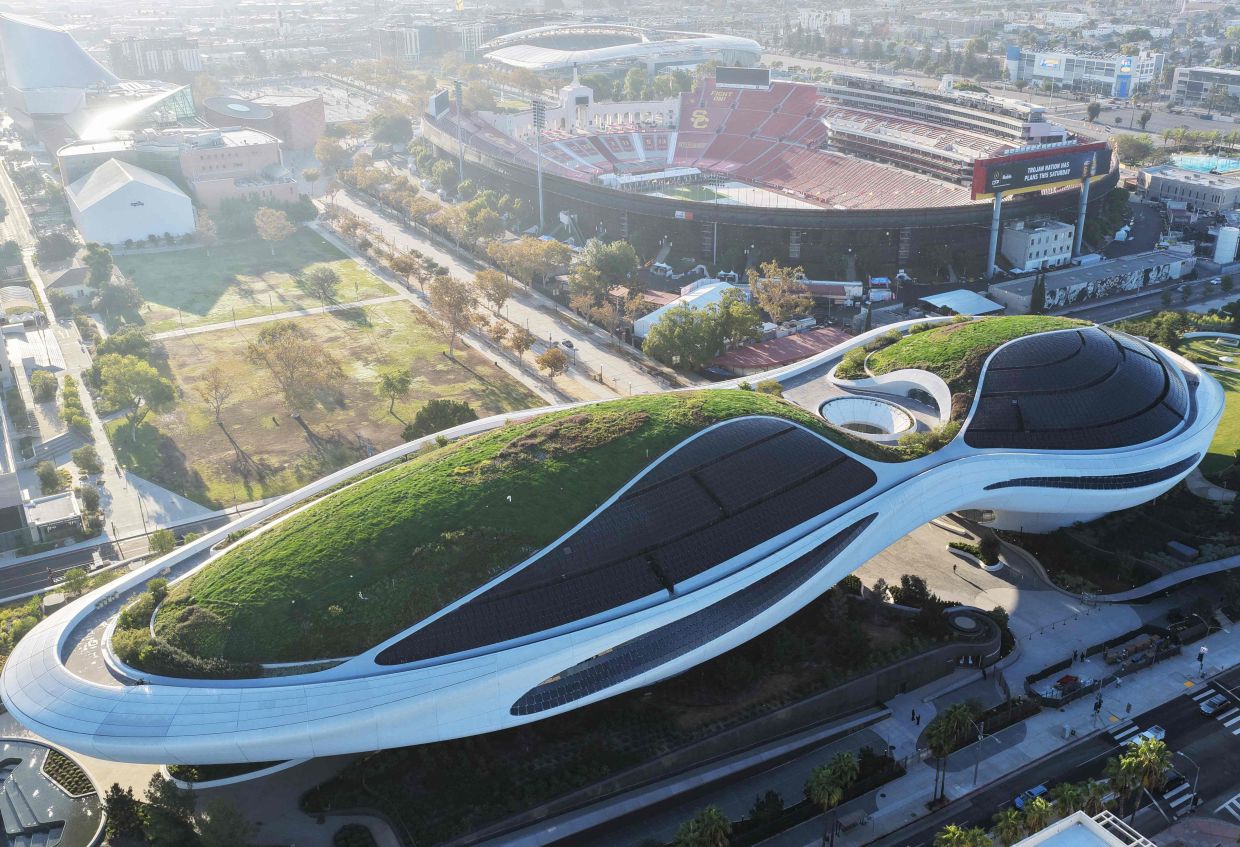
Architect Ma Yansong’s big, billowing building almost seems to hover around and envelop the surrounding structures, including the Los Angeles Memorial Coliseum.
He has likened it to a cloud, and perhaps its signature spot is an opening in that cloud, an oculus in the centre of the dome above the main plaza that looks almost celestial.
Ma said the spot is “almost like a spiritual space.”
“I think architecture is a narrative, is storytelling,” he said.
“The plaza, the oculus, the roof, different atmospheres that we provided, I think it’s very important that the building become an emotional space for people.”
A rare but familiar Frida Kahlo self-portrait
A Frida Kahlo portrait hung in a prominent spot in the museum’s fourth-floor galleries will look as familiar to many visitors as some of the surrounding superhero art. But that belies how special it is. It may alone make a visit worth it for her devotees.
The 1940 Autorretrato Dedicado al Dr Eloesser, or Self Portrait Dedicated To Dr Eloesser, was acquired by the Lucas Museum in 2020, and became one of the few such portraits from the artist held outside her native Mexico.
It shows her with a bloom of flowers in her hair, wearing a thorn necklace with drops of blood, and silver earrings that were a gift from Pablo Picasso, whose work is also in the museum collection.
Soon after the museum acquired it in 2020, the director at the time told the Los Angeles Times she considered it “The Mona Lisa of Mexico.”
The painting is dedicated to Leo Eloesser, a San Francisco Bay Area physician who helped Kahlo with her chronic pain.
A banner across the bottom calls him “mi médico y mi mejor amigo” – my doctor and my best friend.
Dogs playing poker show the museum’s high and low cards
In a perfect encapsulation of the museum’s merger of high and low art, just a few steps from the Kahlo portrait is Cassius Marcellus Coolidge’s 1894 Poker Game, which shows a group of dogs playing cards.
Often considered the height of lowbrow, kitschy barroom art, it’s the first in a series of 18 oil paintings on the theme from the American artist. It gets a new, elevated view in a museum that specialises in it. – AP