



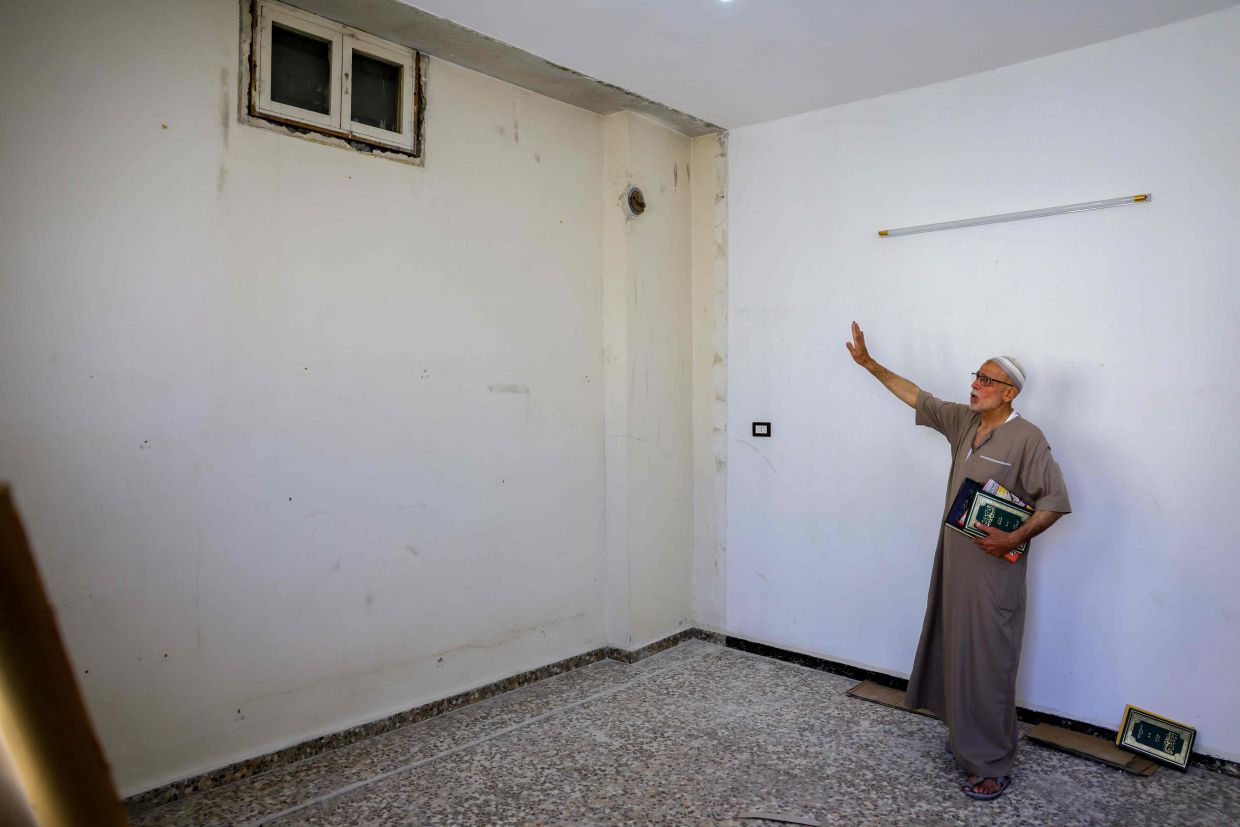
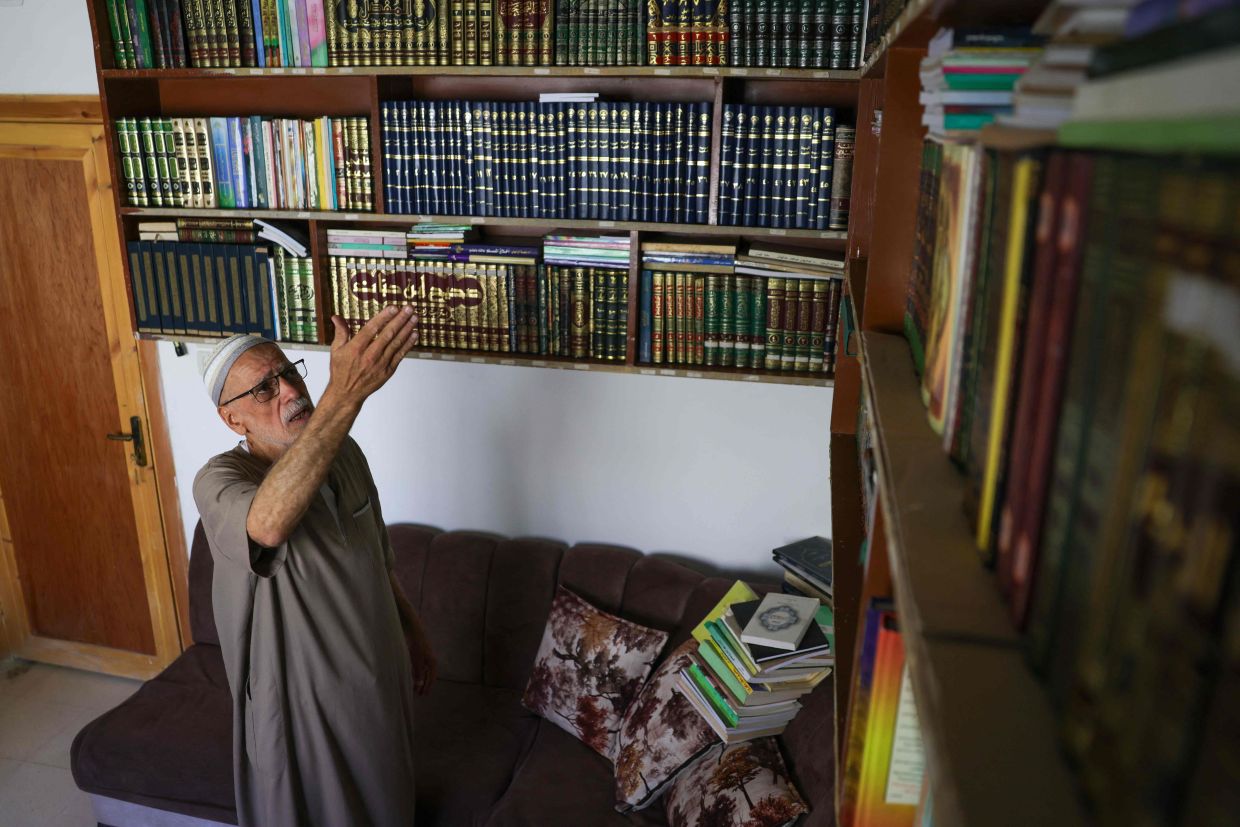
After more than a decade of displacement, a Syrian man finally tore down a wall he had built to conceal a library of mainly Islamist books that would likely have landed in prison, or worse, under Bashar al-Assad's rule.
Like many in Syria, Mustafa Khaled Alwan is a sympathiser of the Muslim Brotherhood, which long opposed the Assad dynasty.
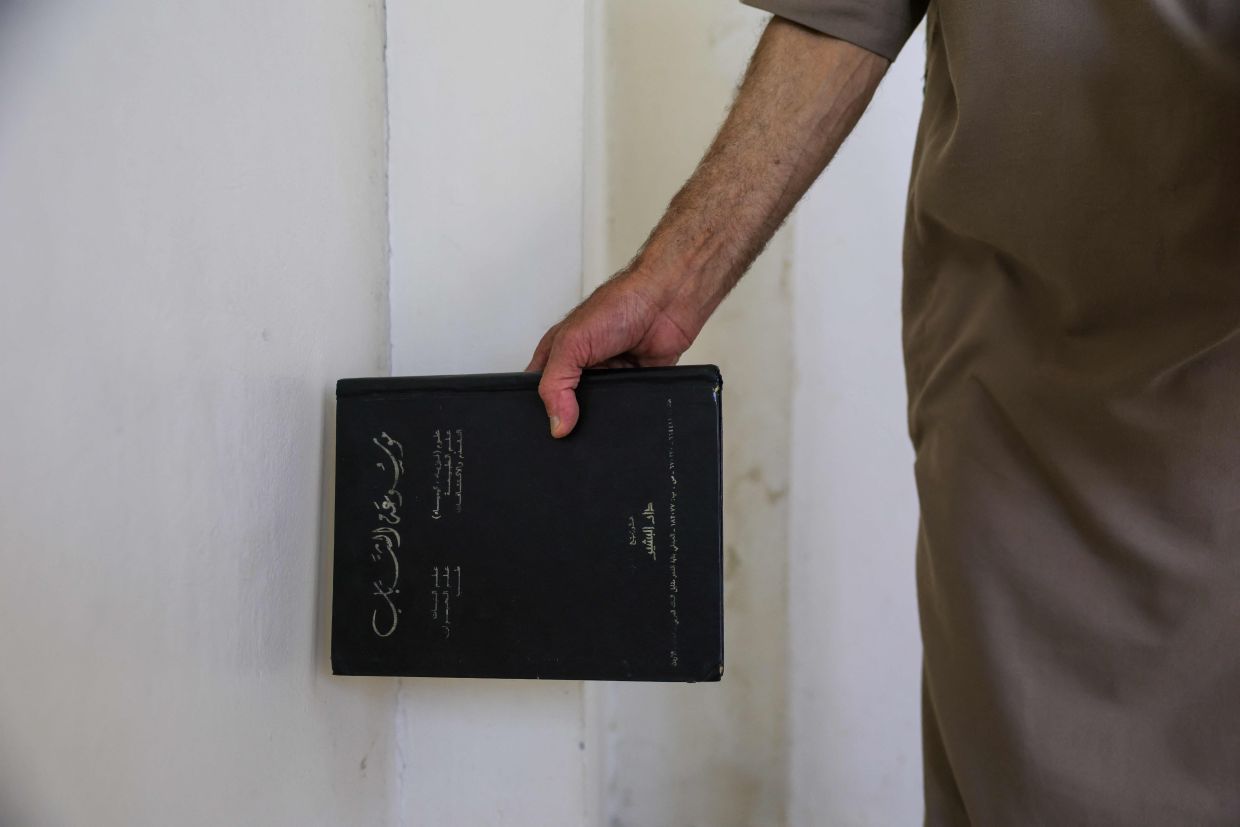
The 72-year-old was elated to find his library mostly intact, allowing him to access texts including the works of Egypt's Hassan al-Banna, founder of the Brotherhood, and Sayyid Qutb, one of the main modern advocates for the implementation of sharia in every domain of life, including in government.
Decades on from his execution in Egypt, Qutb would continue to influence movements across the region, ranging from reformist Islamists to jihadists
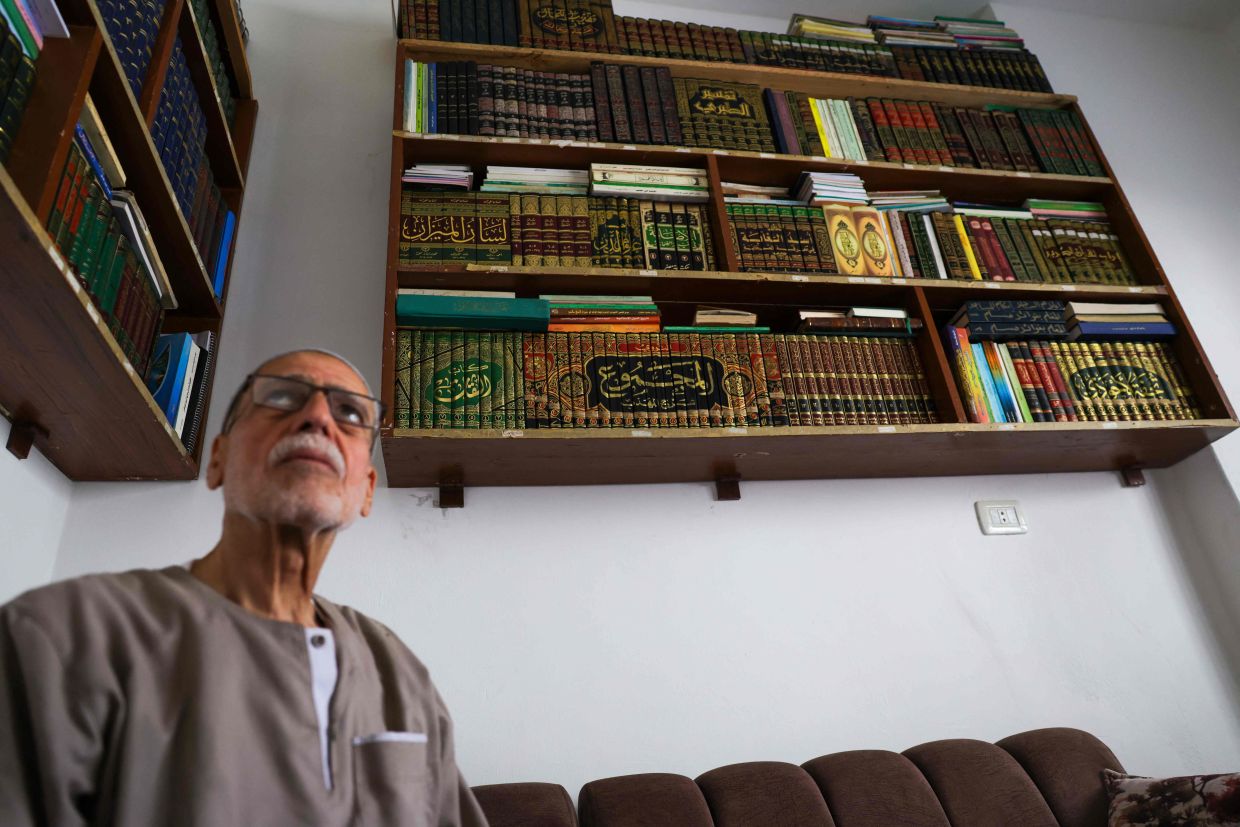
His collection, numbering in the hundreds, also includes Islamic teachings, poems and books on science and social topics.
"This library is very precious to me, I filled it up slowly," he told AFP from central Syria's Homs.
Under Hafez al-Assad, Islamists were violently suppressed, most notably in a 1982 massacre in Hama, whose death toll has never been formally established, though estimates usually range from 10,000 to 40,000.
Alwan said the Hama massacre was a "pivotal point for all Syrians".
"I was upset, but we were afraid to even talk to ourselves."
'We built a wall'
Yet despite the major risk involved, Alwan was undeterred from gathering the books.
As protests erupted against Assad across Syria in 2011, Alwan feared his support for the demonstrators might put his library in jeopardy.
Amid the protests, Homs was dubbed the "capital of the revolution" and was subjected to particularly brutal crackdowns by Assad's forces.
"At the end of 2011, when the situation was difficult, I moved (the library) to the home I recently bought for my son," he said.
"No one knew I owned this home," which encouraged him to move the books there.
"Some revolutionaries came and helped me, and we built a wall" to hide the library.
It was in Homs that armed anti-government factions first took up arms, and it was also among the areas targeted by a brutal siege that left people trapped with no food or medical supplies.
The Bayada neighbourhood, where Alwan and his son's homes are located, was subjected to heavy bombing by Assad's forces.
By the end of 2011, Alwan had left Homs due to the siege, leaving his library behind.
Upon returning after Assad's December 2024 ouster, Alwan found his home severely damaged and burnt from the inside.
He felt "a mixture of hope and fear" over the fate of his library.
When he began dismantling the wall, he found that his collection "was more than 90 percent intact... and I moved it home".
Assad's fall saw many previously-banned works, including books recounting torture in Syrian prisons or texts on radical Islamic theology, sit openly in bookstores.
Syria's new Islamist authorities, whose President Ahmed al-Sharaa is himself a former jihadist, have been faced with the delicate task of attempting to reunify the fractured country.
But around Alwan's home, Homs is still heavily damaged, with Syrians trying to rebuild after more than a decade of war.
Religiously-diverse Homs, which witnessed horrific sectarian violence during the conflict, has also seen several waves of attacks against the Alawite minority since the fall of Assad, who hails from that community.
But like many others, Alwan can breathe a sigh of relief, knowing that he is no longer under threat for his beliefs.
"The sweetest moment of my life was finding the library in excellent condition," he said.
"We hope the (new) government will live up to its responsibility regarding the sacrifices made in Syria." — AFP
