Though born and raised in Queanbeyan, New South Wales – a quiet satellite town near Canberra – author Omar Musa has always carried a sense of Sabah within him.
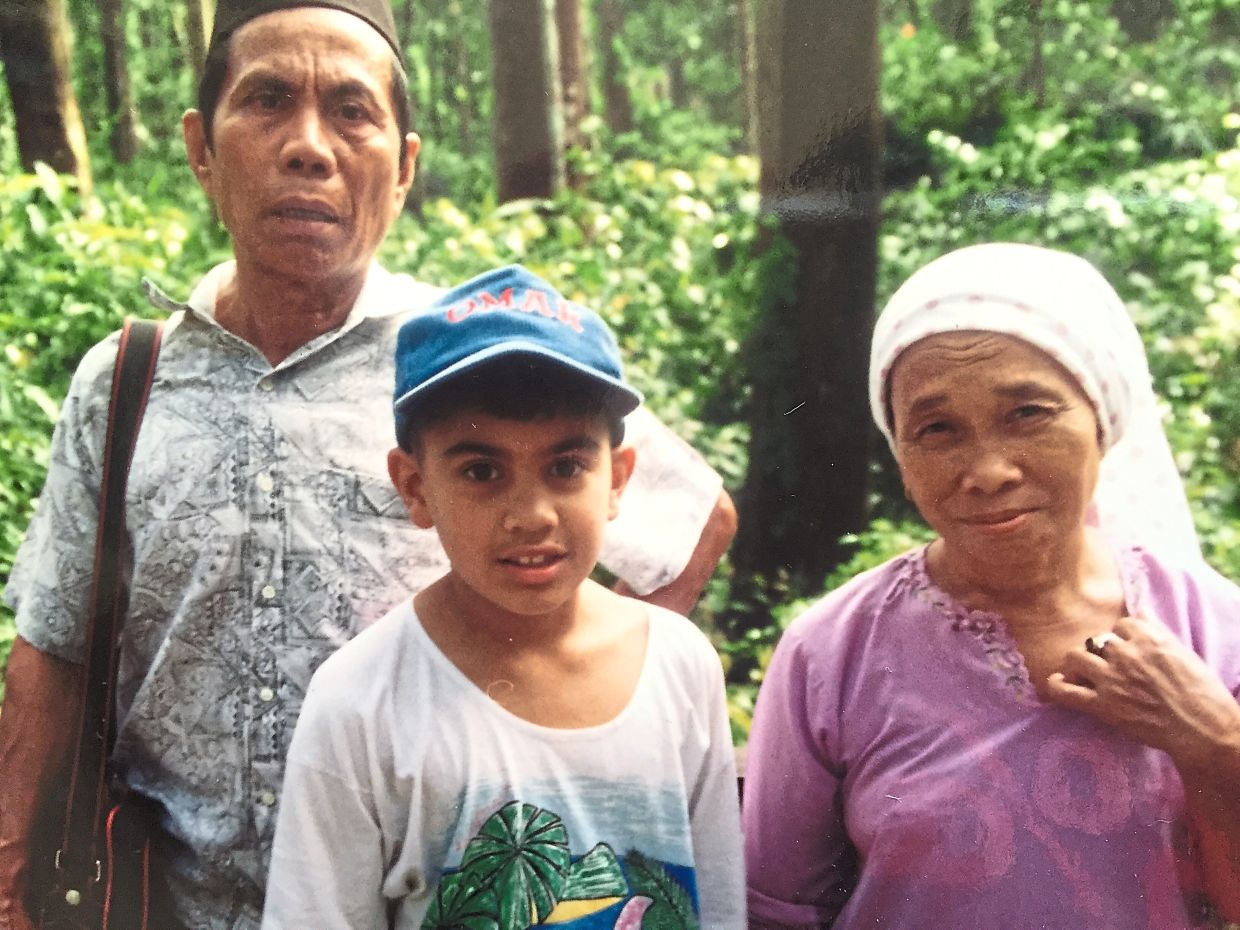
His father, Musa Masran, of Suluk heritage, grew up in Sim Sim Water Village in Sandakan before moving to Australia, leaving behind a homeland whose rhythms and stories would later flow into Omar’s own sense of identity and imagination.
Omar, 41, recalls visiting family members from his father’s side every few years.
“Every time we returned to Sabah, we’d spend months in Sandakan and Lahad Datu to see family, so I developed a deep attachment to Sabah,” he says in a recent interview.
As an adult, however, with family visits becoming increasingly rare, Omar came to realise that his connection to Sabah could slip away if he didn’t actively nurture it.
“When I moved to the US to continue my studies, I remember calling my nenek and struggling to speak with her in Malay – it broke my heart. From that moment, I knew I had to make the effort to return to Malaysia, especially Sabah, as often as I could, at least once a year,” he adds.
Over the years, Omar, a poet, artist and musician, has honoured that promise, returning annually to Sabah and cultivating a personal community (in Kota Kinabalu) that intertwines family with fellow creatives, including members of the art collective Pangrok Sulap and contemporary artist Yee I-Lann.
‘My father’s homeland’
In early 2022, Omar’s presence in Malaysian literary circles strengthened with the release of Killernova, a poetry collection that showcased not only his sharp voice but also his woodcut artwork, cementing his reputation as a bold, multidisciplinary storyteller.
Omar’s new novel, Fierceland, out now, is a work he has longed to share with Malaysian readers. Years in the making, it is a story that, in his own words, needed time to “stew and marinate”, emerging only when it was fully ready to meet its audience.
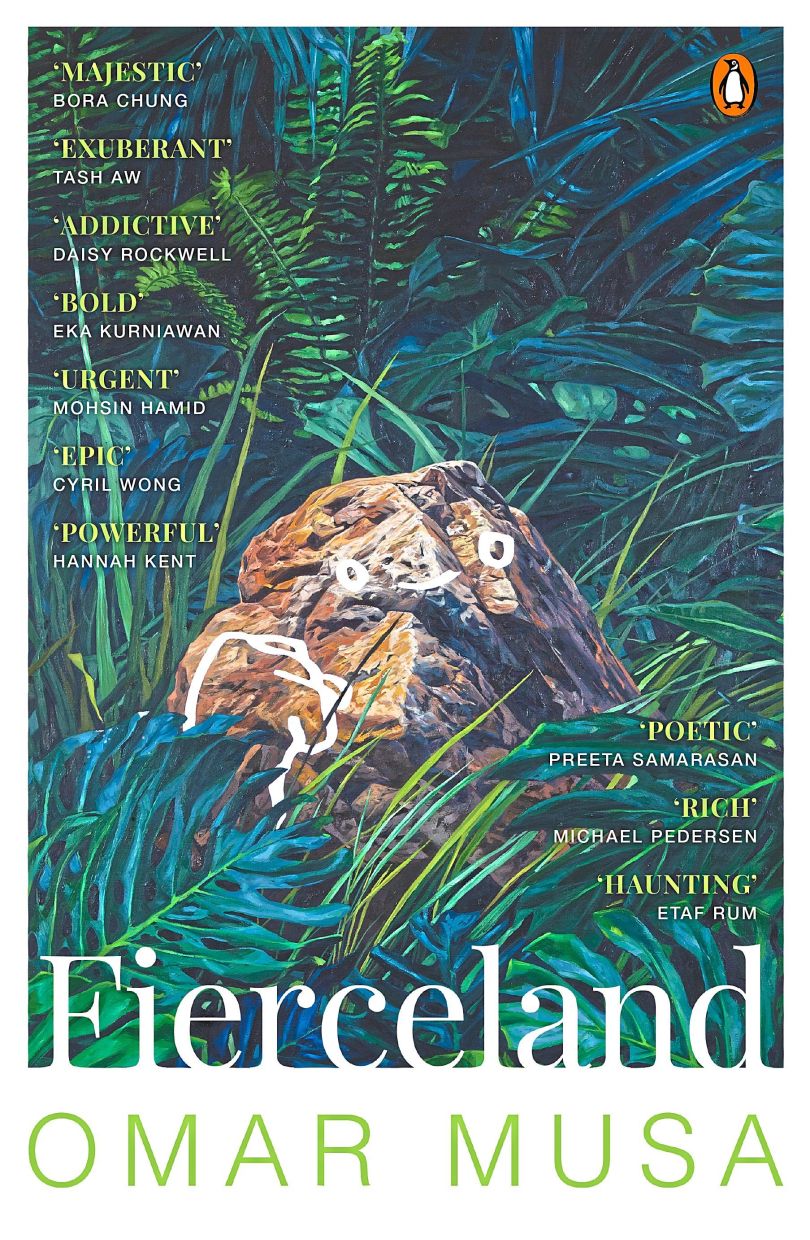
“My first novel, Here Come The Dogs, came out 11 years ago and it was very focused on Australian society and issues within Australia. Even then, I knew that I wanted to turn my face towards Sabah for my next book, but it took me a long time to find my way into what the story would be,” says Omar.
“Eventually, I realised that it was the stories of my father’s homeland – the place that has, in a way, become my own – that inspired me the most, especially in how people interact with the environment and the ways in which this fragile natural world has been exploited.”
The resulting novel, Fierceland, weaves a dramatic, captivating story across countries and decades, following siblings Roz and Harun and the lasting impact of a single family trip deep into Sabah’s rainforests.
During the trip, as their father Yusuf plots to raze sections of the rainforest, Roz and Harun witness the violent disappearance of a mysterious man who stands in his way.
Omar’s story shifts between past and present: the past recounts the incident and its immediate aftermath, while the present follows Roz and Harun returning to Sabah for their father’s funeral. Now adults who have long left the state, they are still haunted by the shadow of that event, which fractured the bond between the once-close siblings.
“Through the book, I wanted to explore how children navigate the legacies of their parents. I’m an only child, but in the stories I write, I’m very drawn to sibling dynamics. Roz is creative, impulsive and a little bit self-destructive, whereas Harun is more logic-driven, calm and he’s into technology.”
Omar’s richly drawn characters strike a chord with local readers, their familiarity bridging distance and experience.
“At the core of the story, they’re both trying to find truth in the world and a way to heal their past, but in completely different ways. No matter how far they try to run away, though, there’s no escaping the traumatic history that binds them together,” says Omar.
The voice of wood
Coming from a family that celebrates the arts – his father a poet, his mother an arts writer – Omar has followed a similar path. In addition to writing fiction, he is a published poet with three collections, a playwright, a rapper, and a visual artist.
Yet confidence in his own identity didn’t come easily. At 16, a time when he felt adrift between two worlds, Omar had an encounter he would never forget – with none other than the late Malaysian poet and writer Salleh Ben Joned.
“He was my father’s friend, and when he came to stay with us for a bit, he gave me a copy of his poetry book, Sajak-Sajak Salleh – Poems Sacred And Profane. Inside, he had written a short poem reminding me that I have two roots, which was a gift,” says Omar.
“As someone of mixed heritage, I think it’s a very common experience to feel as though you don’t fully belong anywhere. But thanks to SBJ’s words, I decided to see my background as a source of enrichment and inspiration.”
In Fierceland, Omar’s other talents shine through: his poem The Song Of The Wood has been translated into 15 languages, including those of Sabah and Sarawak’s indigenous communities, such as Suluk, Kadazan, Bidayuh, and Kelabit.
“It was a weird and fascinating moment for me as a writer, because this was where I let my character – in this case, Crazy Auntie – lead me. In the book, she has the idea to translate this short, simple poem into as many local languages as possible, so that meant that I had to try to do that.
“But I’m not a linguist or an academic, so I had a network of friends and friends of friends that helped translate the poem into these different languages. It was an illuminating process that was far more difficult than I had anticipated and took years, but it was amazing to see how the community came together for this project,” says Omar.
In the section of the book featuring the translated poems, the words are paired with “strange, squiggly lines” – spectral analyses of the sound of sap moving inside a thousand-year-old tree in Tawau, captured by a highly sensitive microphone placed within the tree by Omar’s wife, cellist and composer Mariel Roberts Musa.
“We took those soundwaves and turned them into artwork – so it’s literally the voice of the wood speaking, which was what I wanted: for the forest to become an active character within the book. To be honest, this is one of the things that I’m proudest of,” he says.
Omar admits that the new book is the most ambitious work he has ever undertaken.
“Growing up in the diaspora, you can’t help but feel a sort of Imposter Syndrome,” he says.
“But instead of letting it paralyse me, I took it as a signal to listen more deeply and ask more questions. This book went through 21 drafts – I travelled endlessly around Sabah, heard countless stories, and read as many research papers as I could. Fierceland is essentially the summation of years of hard work, pain, and love. It’s my love letter to Borneo ... and a eulogy for what we’ve lost.”
Omar Musa is set for a Malaysian book tour this November, including a stop at the George Town Literary Festival 2025.