Tiny minority communities linked to Portuguese descendants dating back to more than five centuries ago made history in Timor-Leste late last month.
They came from the shores of Melaka and Macau, forgotten Catholic parishes of Bangkok, war-torn valleys of Myanmar, the green hills of Goa, Kampung Tugu in Jakarta, the Azores isle of Flores and from Sri Lanka and beyond.
Despite their dissimilar skin tones, heights, and traditional garb, they carried a shared story woven by threads of a colourful tapestry straddling across the Indian Ocean.
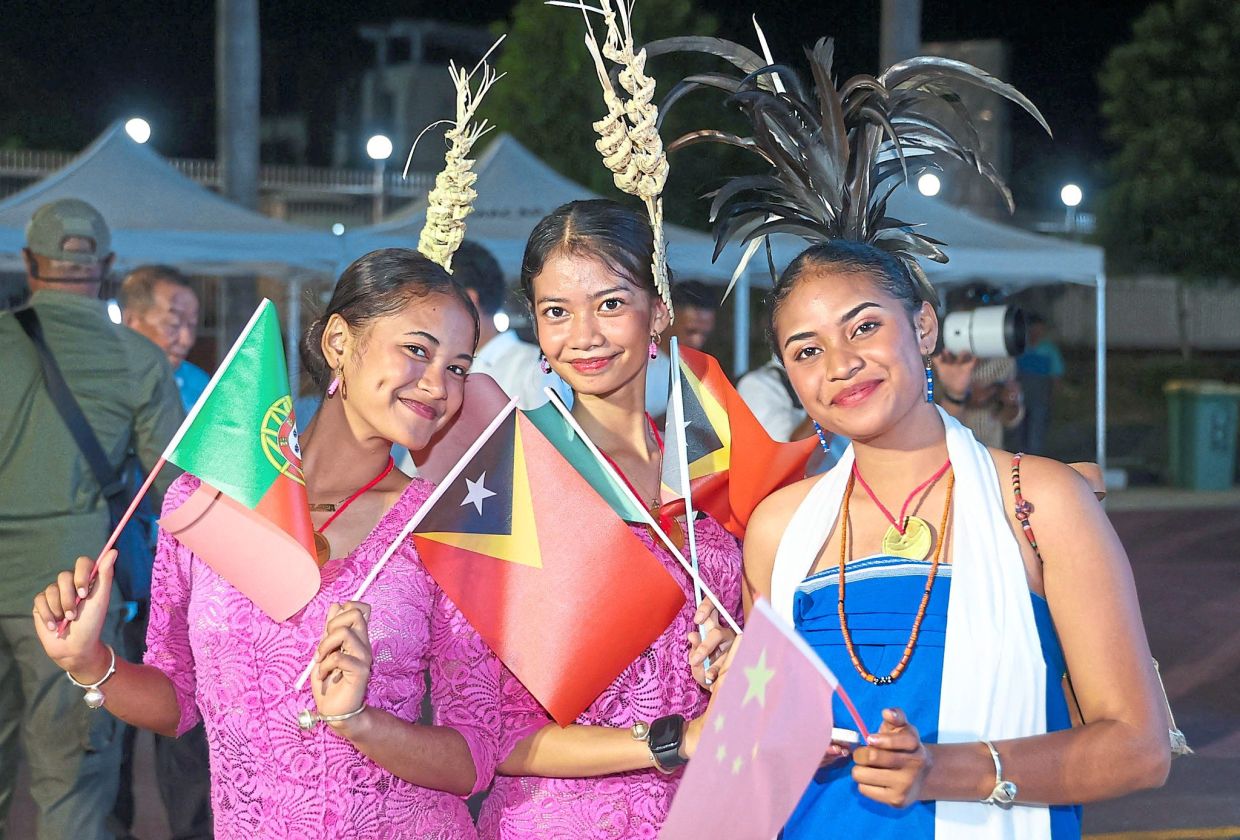
The 4th Asian Portuguese Community Conference (APCC) held at the Dili Convention Centre, witnessed delegates from Portuguese-descendant communities from all over Asia for a landmark three-day gathering focused on cultural preservation and regional cooperation.
The APCC was initiated by Melaka Portuguese community leader Joseph Sta Maria in 2016, with the aim of fostering closer ties, promoting the Portuguese language and culture, and encouraging lasting collaboration among Portuguese-descendant communities in Asia.
The first three conferences, held in Melaka, saw the participation of delegates from the various countries and also prominent personalities, including Timor-Leste Prime Minister Kay Rala Xanana Gusmao and Dr Fernando Nobre, president and founder of AMI (International Medical Assistance Foundation).
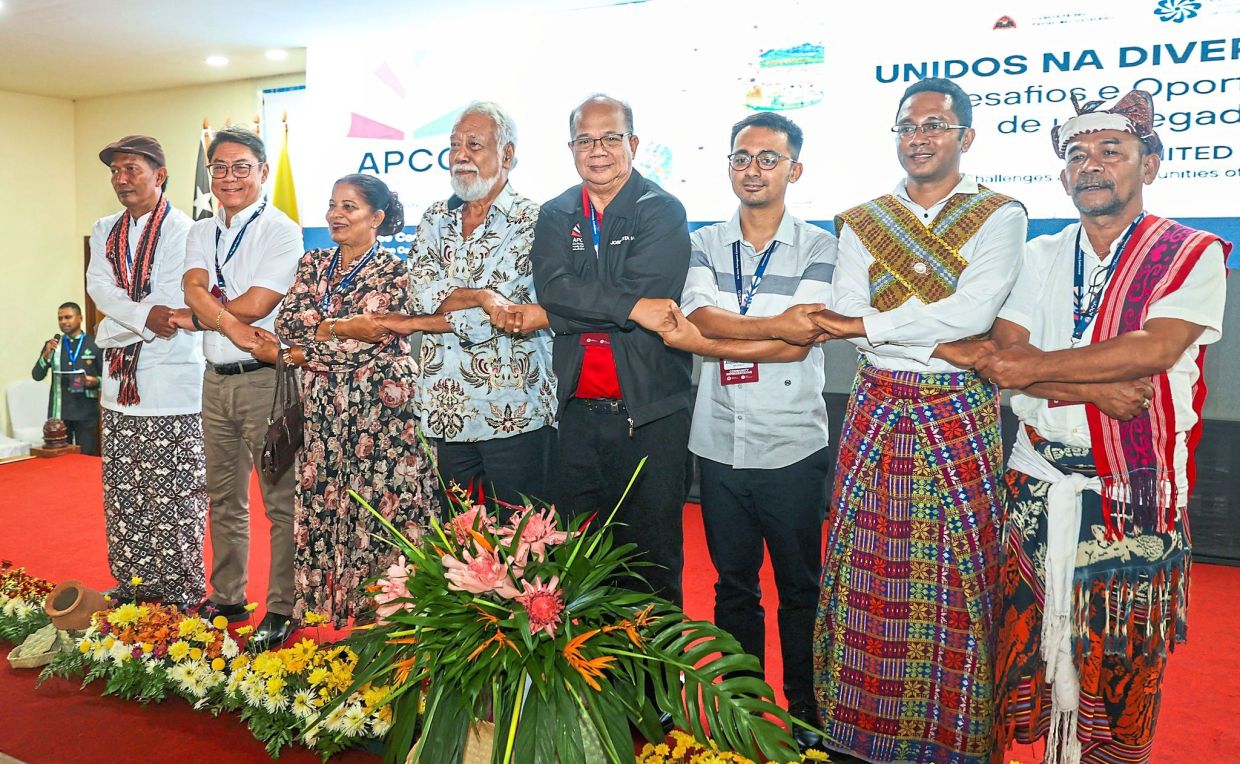
The fourth edition marks the first time that APCC was hosted in Timor-Leste, Asia’s youngest nation and the only Portuguese- speaking country.
It was organised by the Government of Timor-Leste in partnership with the Community of Portuguese-Speaking Countries (CPLP) with United in Diversity: Challenges and Opportunities of an Enduring Legacy as its theme.
The event, which was held from June 27-29, brought together representatives from Malaysia, Sri Lanka, Myanmar, Thailand, China (Macau), India (Goa), and Indonesia, along with scholars, researchers, cultural leaders, and dignitaries from the broader Lusophone world.
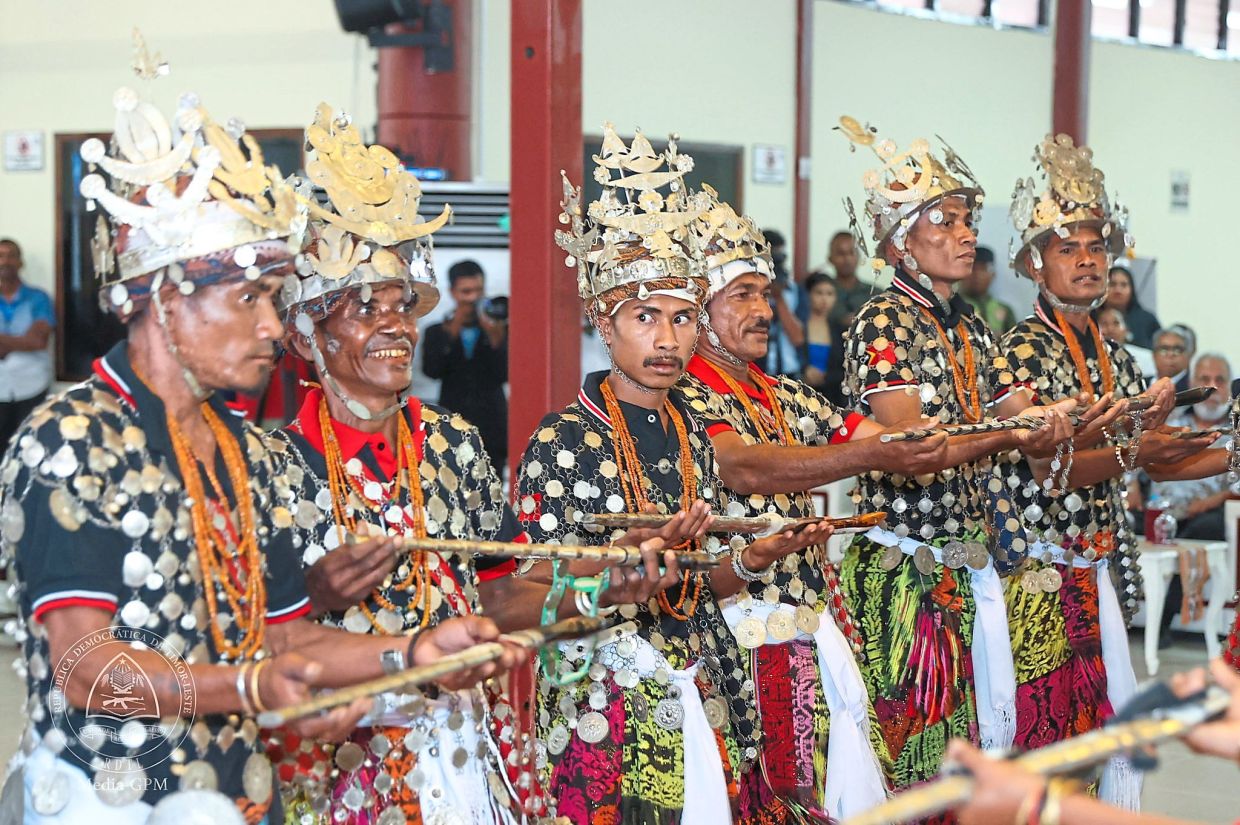
It featured keynote lectures, round-table discussions, cultural exhibitions, academic presentations, and cultural performances showcasing the diverse traditions maintained by Portuguese-descendant communities throughout Asia, over more than 500 years.
Timor-Leste President and Nobel Peace Laureate Jose Ramos-Horta highlighted the historical significance of these communities and their continued relevance.
“This conference is more than just a gathering. We are bringing a family together. It is a moment to reflect on our shared history, to strengthen our bonds of solidarity, and to tell our stories with pride and with honesty, as we look together towards a future built on friendship, respect and renewal,” he said, noting that the shared story began in the sea.
“In the 16th century, brave and curious men from a small country on the edge of Europe looked to the ocean. They launched small sailing ships – caravels – into the unknown, guided by the stars and a thirst for discovery.
“As Luís de Camoes wrote in Os Lusíadas, they were moved by ‘valour, and arms, and the mind’s adventurous will.’ They sailed not only for spices and trade but with a belief – both noble and naive – that the world could be mapped and known.
“Their journey was physical but also spiritual. They carried with them not only weapons but words. They brought both faith and fear, violence and vision. They made the world smaller but also larger. And in their wake, they left behind a new language, a new religion and emerging nations. In doing so, they reshaped the world.”
Indeed, the Portuguese left a mark on Asia which time has not erased and the far-flung communities are evidence of this.
As Ramos-Horta put it, the result was something enduring – the birth of communities that are both European and Asian, resilient peoples who had shaped the countries in which they live.
The highlights of the 4th APCC were the historic step of setting up the Asian Portuguese Communities Association – APCA, and the signing of the Dili Declaration by leaders of the various communities.
The declaration reads: “On the basis of our shared culture, grounded in dialogue and mutual respect and united by the richness of a legacy inherited over centuries, which we wish to pass on to future generations, we express our commitment to seek solutions that bring tangible benefits to each community, while recognising and valuing their unique characteristics.”
The declaration was signed by Joseph Sta Maria (Melaka Portuguese community), Aloysio Thurein (Bayingyi community, Myanmar), Guido Quiko (Kampung Tugu, Jakarta, Indonesia), Earl Bahelot (Portuguese Burgher community, Sri Lanka), Sarayut Supsook (Kudicheen community of Bangkok, Thailand), Honorarius Quintus Ebang (Sicca community, Flores, Indonesia), Carolina Fernandes Po (Goanese community, Goa, India), Miguel Senna Fernandes (Macanese community, Macau, China) and Antonio da Costa (Topass community, Oecusse, Timor-Leste).
According to Ramos-Horta, APCA would be more than a network of people and communities as it would also be a promise and a commitment to preserve, to record and to empower.
“It will recognise the value of communities that are often marginalised or overlooked. The APCA will give voice to Asian Portuguese communities in conversations with governments and international institutions,” he said.
“It will support research, education and economic sustainability. It will help protect the histories and identities of people whose cultures are mixed, complex and proud.
“The goal is not only to honour the past but to make that past a platform for renewal. This will include documenting oral histories, supporting cultural festivals and strengthening community-led development.”
Across Asia, Portuguese-descendant communities have survived wars, famines, migrations and political upheavals. They have adapted and endured.
They have safeguarded traditions, stories, rituals and unique cuisines. Their survival is an act of defiance against forgetting.
And yet, they are often invisible in national narratives. Forgotten by textbooks and histories. Treated as curiosities rather than as contributors to the richness of the nations in which they live.
“That is why it matters so much to come together. You are here not just to remember but to re-imagine and agree on a shared path forward.
“You must value shared bonds, not as nostalgia but as a foundation to resist the erosion of culture, the loss of stories, and the slow drift of communities,” concluded Ramos-Horta.