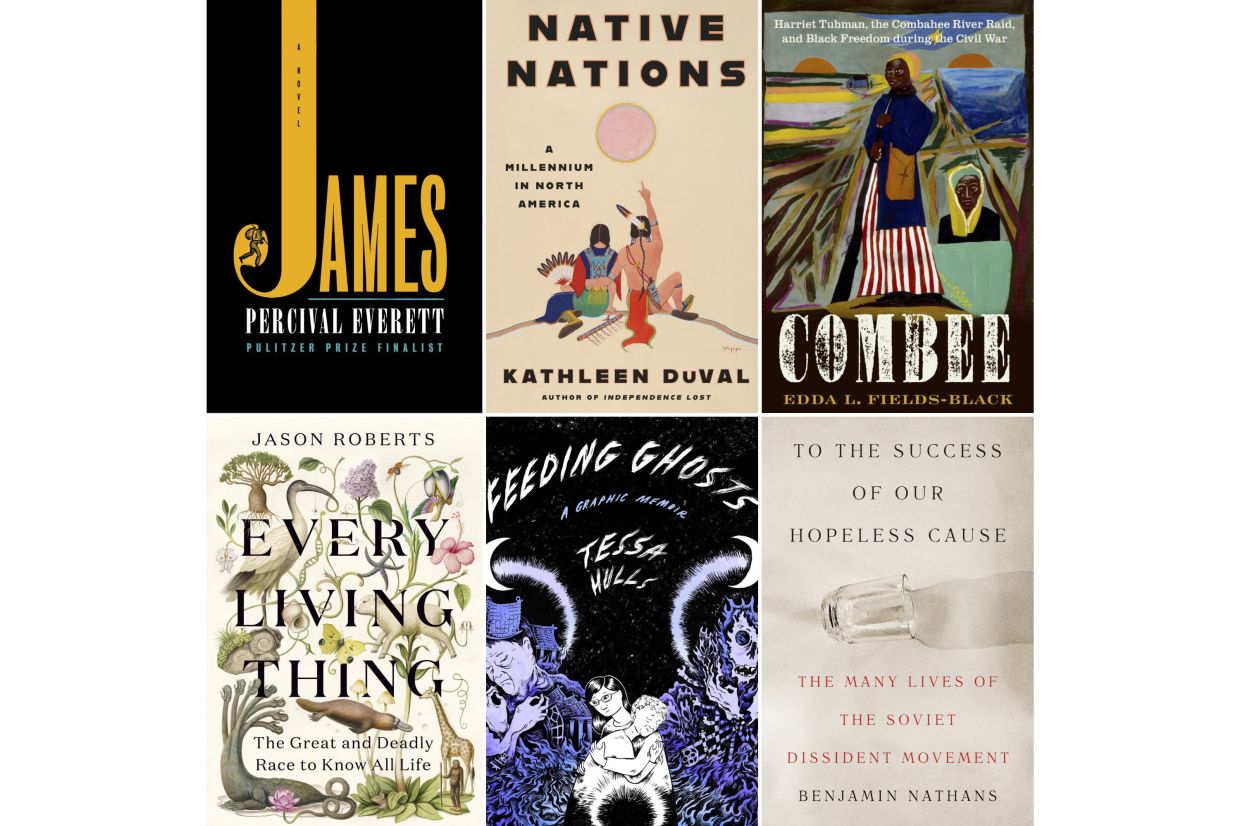
Percival Everett's novel James, his radical reimagining of The Adventures Of Huckleberry Finn from the perspective of the enslaved title character, has won the Pulitzer Prize for fiction.
Purpose, Branden Jacobs-Jenkins’ drawing-room drama about an accomplished Black family destroying itself from within, won for drama. It also earned six Tony Award nominations last week.
Everett’s Pulitzer confirmed the million-selling James as the most celebrated and popular US literary novel of 2024, and accelerated the 68-year-old author’s remarkable rise after decades of being little known to the general public. Since 2021, he has won the PEN/Jean Stein Award for Dr No, was a Pulitzer finalist for Telephone and on the Booker shortlist for The Trees.
Before Monday, James had already won the National Book Award, the Kirkus Prize and the Carnegie Medal for fiction. His racial and publishing satire Erasure, released in 2001, was adapted into the Oscar-nominated 2023 film American Fiction.
The Pulitzer citation called James an "accomplished reconsideration” that illustrates "the absurdity of racial supremacy and provide a new take on the search for family and freedom.” Everett said in a statement that he was "shocked and pleased, but mostly shocked. This is a wonderful honour.”
Purpose was praised in its citation as "a skillful blend of drama and comedy that probes how different generations define heritage.”
Jacobs-Jenkins had been twice nominated for a drama Pulitzer, for Everybody in 2018 and Gloria in 2016. He won the Tony Award for best play revival last year for Appropriate, a work centred on a family reunion in Arkansas where everyone has competing motivations and grievances. He is on the host committee of this year’s Met Gala.
Also Monday, Pulitzer officials announced that Jason Roberts won the biography award for Every Living Thing: The Great And Deadly Race To Know All Life and Benjamin Nathans' To the Success Of Our Hopeless Cause: The Many Lives Of The Soviet Dissident Movement had been cited for general nonfiction.
Two books were announced as history winners, both of them, like James and Purpose, explorations of race in US history and culture: Edda L. Fields-Black's Combee: Harriet Tubman, The Combahee River Raid, And Black Freedom During The Civil War and Kathleen DuVal's Native Nations: A Millennium In North America.
Marie Howe's "New and Selected Poems” won for poetry, and composer-percussionist Susie Ibarra's Sky Islands, an eight-piece ensemble inspired by the rainforest habitats of Luzon, Philippines, was awarded the Pulitzer for music. The Pulitzer for autobiography went to Tessa Hulls' multigenerational Feeding Ghosts: A Graphic Memoir, her first book.
The Pulitzers were announced at a time when the National Endowment for the Arts, which has provided support for thousands of writers and literary organisations, was cutting back funding and pushing staff members to leave. Howe and Everett are both past recipients of NEA creative writing fellowships. - AP