Orkibal, the prolific Malaysian urban art pioneer, has died aged 41


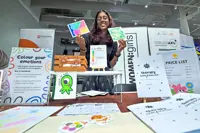
Orkibal had a prolific and ever-evolving career that spanned more than 20 years, leaving behind a colourful legacy of doodles, murals, street art, toys and digital art. He is seen here at his digital art exhibition at DAG in KL last year. Photo: Abdul Shakir

Urban art pioneer Azhar Osman, or better known as Orkibal, died today at the Kajang Hospital in Selangor. He was 41.

Orkibal was one of the graffiti scene trailblazers who championed and transformed urban art culture in Malaysia in the early 2000s.

The news of his death was confirmed by his family on his Facebook page this evening. The cause of death was not announced.

Orkibal, who got his unique moniker from the British dance group Orbital, was a self-taught artist who started out with doodle art and murals, which showcased a world of happy sad creatures, monsters and an exploding colour palette.

Inspired by pop culture, indie US comics artists and global street art, the Selangor-based artist-graphic designer had a prolific and ever-evolving career that spanned more than 20 years.

Orkibal's 'Never Ending Loser' (mixed media, 2017) from the 'Collective/Individual' exhibition in KL in 2017. Photo: Orkibal

Creatively, the gentle-natured and personable Orkibal didn’t stay in one place for too long.

He gradually moved beyond small canvases and printed material, and turned to abandoned buildings and public walls to convey his artistic expression. In 2004, he began modestly with a stencil of monster characters done on stickers, on a wall near a township in Sungai Besi, Kuala Lumpur.

“My aim was to see how the public would react to my work. But back then, I was still afraid that people may not be able to accept my work so I did it at night. The next day, I went back to the location and spent half an hour there to look at how people reacted to it,” recalled Orkibal in an interview with The Star in 2015.

He was also a community-minded activist at heart, working to change the public and authorities’ perceptions surrounding the value of graffiti, or urban street art, which he viewed as a highly valued and socially relevant art form.

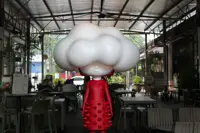
Orkibal's public art installation at the Bandar Tasik Selatan LRT station in KL, which was commissioned by the Urbanscapes Festival in 2016. Photo: Urbanscapes

In the early days, the graffiti movement in the Klang Valley spread like wildfire, and Orkibal’s vibrant and lively works could be spotted wherever there was a bare wall to be found. He also participated in volunteer art programmes involving community centres and schools.

Along the way, he also built a portfolio of commissioned works with international clients and brands, a move that paved the way for today’s generation of graffiti artists to make a stable living with urban art, which rarely fitted into the art gallery system back then.

In the past year, Orkibal moved into the digital art field, focusing on NFTs. Photo: Orkibal

In 2015, he was part of the Foursome KL collective, which included street artists Donald Abraham, Fritilldea and Fauzan Fuad.

Through the years, Orkibal’s art - handrawn or digital - also found its way into independent gallery exhibitions and arts festivals nationwide and regionally. In exploring other mediums, he also created a popular range of toy figurines, which opened up a new audience for his artwork.

In early 2018, the resilient Orkibal, who suffered from gout, pushed through the pain barrier and completed his mural Hati Dan Perasaan (Emotions And The Heart) for the D/SINI group exhibition in Singapore. To create the mural series, he had to walk with the aid of crutches, and could only work on his piece from a plastic chair.

"I don’t have a deeper message. But maybe it's because of my life - I’m not from a well-to-do family, so I get quite depressed sometimes, though I don't show it. My dad’s not very well-educated but he worked hard for the family, and I respect that, but as human beings, sometimes you can’t control your feelings. So maybe that unintentionally gets put into my artwork. Even I get surprised when I see my work in the end sometimes," said Orkibal in the D/SINI exhibition curatorial notes.

Last year, the versatile artist embraced digital art and created a series of NFTs (non-fungible tokens). His last exhibition, an immersive NFT-based show, was held at the Digital Art Gallery in Kuala Lumpur last October.

Orkibal is survived by his wife and three children.

Get 20% OFF The Star Digital Access

Monthly Plan

RM 13.90/month

RM 11.12/month

Billed as RM 11.12 for the 1st month, RM 13.90 thereafter.

Best Value

Annual Plan

RM 12.33/month

RM 9.87/month

Billed as RM 118.40 for the 1st year, RM 148 thereafter.

Follow us on our official WhatsApp channel for breaking news alerts and key updates!

Next In Culture

Bayeux Tapestry arrives in London after epic journey from France
Weekend for the arts: Zhongshan After Hours, Project Seaview, Kanta Darkroom
Fight for freedom of speech, Salman Rushdie urges as he's honoured in�London
Aswara in Kuala Lumpur celebrates regional theatre connections
Cipta Seni Incubator 2026 weaves new narratives of identity, belonging
Norzizi Zulkifli's 'Mak Yong Shakespeare' redefines intercultural theatre
West Bank arts festival kicks off for first time since Gaza war
Hemingway classic still inspires Americans to run with bulls in Pamplona
Welcome to 'FIFA Gully': the Kolkata lane transformed by a love for football
Asia’s first Durian Experience Centre opens in KL, featuring museum, theatre

Others Also Read