
No one ever really cooks alone, for time is always in the kitchen. It tick-tocks in the bubbling of sauces, in the last swirls of steam that climb and vanish before the first taste.
Food does not just rely on time – it shapes it. And sometimes, it even bends it. And therefore, this column is about how food makes time elastic – an essay that probably only cooks can truly understand.
When you stand over a saucepan, waiting for a sauce to reduce, fifteen minutes can stretch into a small eternity. But serve that sauce with lovely seafood to friends in a laughter-filled room and the evening vanishes in a blink. Cooking time, it seems, is an illusory dance between patience, company, and aromas.
In some theoretical models of quantum gravity, time does not appear as a fundamental variable. There is no universal moment which can define “now”, and time is most probably the human perception of a quantum illusion as the universe journeys towards entropy (or a state of total disorder). Our kitchens, then, are not just places of sustenance, but also makeshift laboratories where we can explore this cosmic puzzle one bite at a time.
Perceiving time
Time behaves differently depending on what is on the plate. Fast food, designed to be scoffed down, compresses an hour of normal mealtime into five guilty minutes.
But preparing a slow-cooked stew mesmerises the clock, pulling you into its rhythm – low, patient, repetitive. As you brown the meat and deglaze the pan, you are not just preparing dinner; you are entering a state of culinary hypnosis.
Scientists call this “flow,” but to the cook, it is a luxurious “now” where the future (the meal) and the present (the preparation) blur together. In this state, the kitchen fills with the scent of justified (or hopeful) efforts, and three hours can feel like a single, thickened moment.
This is like quantum gravity in a Dutch oven: a timeless state where the fundamental laws of the universe do not seem to require a “before” or an “after”. You are not waiting; you are at one with the cook inside you.
Here is another analogy: Bread dough takes its own time to rise, and you learn the art of gentle surrender. You cannot command it; you can only wait patiently with it, like two travellers stuck at the same station, trusting the right train will arrive eventually.
In contrast is the stir-fry, a violent manifestation of culinary entropy. Here, flames roar and vegetables perform flips in scorching woks. You have mere seconds before the garlic burns and your self-esteem is gone.
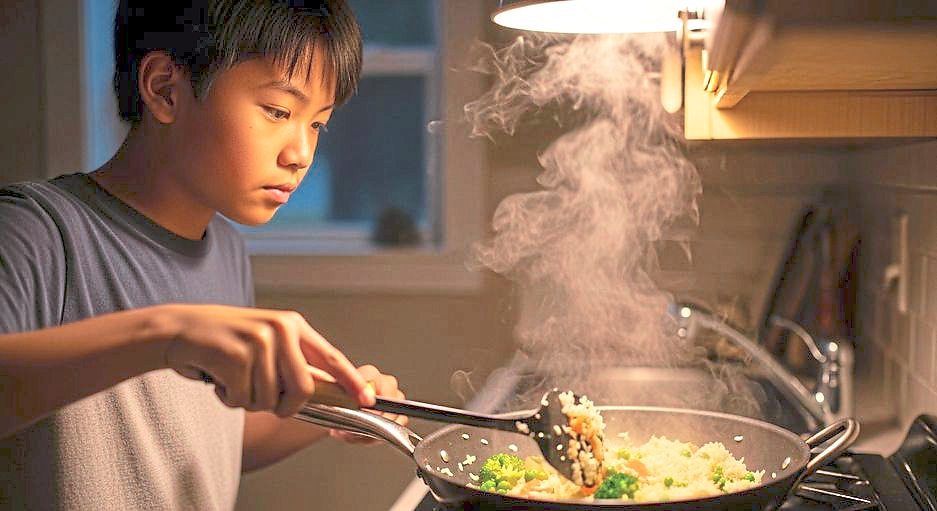
In this frantic battle against overcooking, time compresses into pure panic. One wrong move and a quick meal can turn into a nightmare, leaving you frustrated and shocked at how bad your own cooking can taste.
This is entropy in fast-forward – the lightning-fast shift from order to disorder that reminds us that time never flows in a simple, straight line.
Different times
In the home kitchen, time often meanders. There is room for mistakes, fanciful experiments, and daydreams. A Sunday roast can hum in the oven for hours – and becomes a kind of edible architecture holding up the hours before the family dinner.
Or it can be a quick sprint to get bowls of instant noodles ready before the football game on TV.
In restaurants, however, dinner time is often theatre. The pacing matters: waiters orchestrate the tempo, plates arrive like acts, and dessert is the curtain call. At street food stalls, time collapses again – flavours hit fast, intense, immediate, like a stabbing haiku instead of a novel.
Who you dine with also distorts the clock. Eating alone can highlight the mechanics of mastication and contemplation – a silent meal for one can stretch into long, tiresome beats.
But eat with good friends and laughter slices through the evening like a skilled chef – and before you know it, the plates are empty and midnight has quietly crept in.
Sensory cascade
While physics may question time’s existence, our senses are busy constructing a temporal (time) narrative whenever we eat. Flavours do not hit the palate all at once at the same moment; they arrive in a choreographed cascade.
Chronosensory science maps this progression: primary tastes like sweet, sour, salty and bitter register instantly within the first seconds. These are followed by secondary flavours such as browned notes from Maillard reactions, hints of spice, fragrance of fruits, etc, which take a longer time to capture the palate. This is because the brain requires more time to decode the complex combinations of signals from the gustatory system.
The aftertaste following a meal can linger for minutes, while the memory of the experience can last for days or for life.
Good food also requires the temporal binding of sight, sound, and touch. The crackle of a crisp bite must synchronise with the release of aromas; if they are asynchronous, the sensory impact is dulled.
Crunching a fried golden spring roll needs to release both flavour and aroma simultaneously, else it would disappoint. Mistime or miss any of these components and the spring roll becomes forgettable.
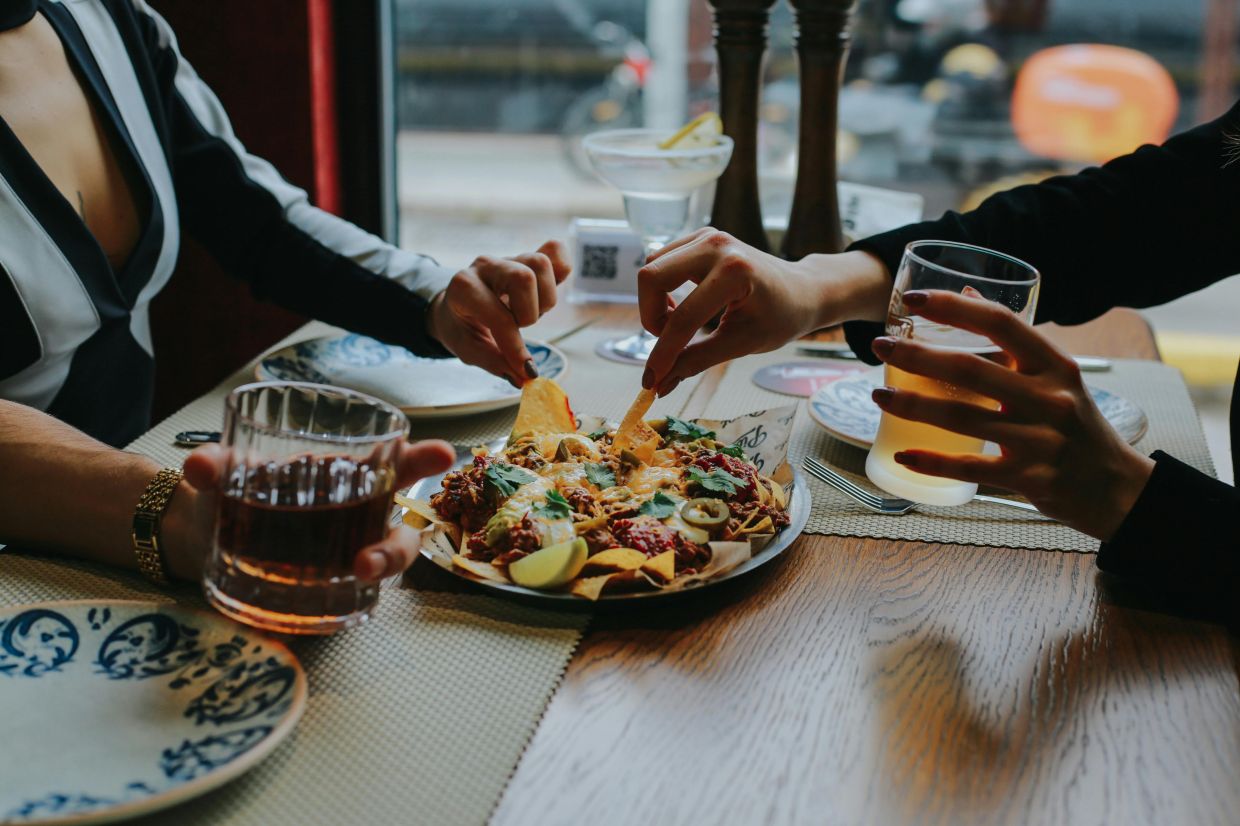
We also contend with flavour adaptation. For example, salt overwhelms tongue receptors faster than other tastes, blurring our palate to subtler flavours.
We often unconsciously have “palate resets” with cleansing teas or wines or other mildly acidic drinks during meals to relax our taste receptors and keep the gustatory pathways active. Without resets, the enjoyment of a meal could end prematurely as taste receptors reach saturation too quickly.
Conversely, fast food is a feat of modern food engineering, specially designed to be hyperpalatable and overwhelm your senses before you even know what you are eating.
Fast food is meant to be devoured in the few guilty minutes before your brain realises you are eating mostly low-quality ingredients packed with unhealthy quantities of sugar, salt, fats and chemical additives.
The result is that you often feel bloated, mildly queasy, and somewhat cheated, as if someone had fast-forwarded the movie of your lunch into a meaningless blur.
Misalignment with our body clocks
Our bodies harbour their own circadian (internal body) clocks that dictate metabolism. These clocks affect organs such as the liver, pancreas and brain, aligning them with sunlight and sleep patterns.
Studies by Spanish biologists into chrononutrition reveal that misaligned eating patterns – such as heavy late-night dinners – can be problematic for many of our important organs. They can spike health risks, for example, when the liver and pancreas are constantly forced to process fats and sugars when they are expecting to wind down for the evening.
This is because feeding is such a dominant event that a meal can perturb other biological rhythms. Basically, what, when and how much we eat can warp our internal balance and have disproportionate effects on health, especially when our metabolic hormones are confused by persistent disruptive eating patterns.
Paradox
Then comes the odd paradox: food from a complex recipe that took ages to make is eaten in moments. Hours of chopping, marinating, heat, and attention disappear in a few mouthfuls. Yet those few minutes – those flavours – linger in the memory far longer than any clock can measure. Perhaps time in food is not about minutes or hours at all. Maybe food is about time travel, as you revisit fond memories of the same dishes made by your mother or grandmother.
This is known as the Proust effect, as smell and taste can often act as the most direct neural highways to the past. One whiff of simmering bak kut teh does not just remind you of a childhood kitchen; it allows you to re-live it.
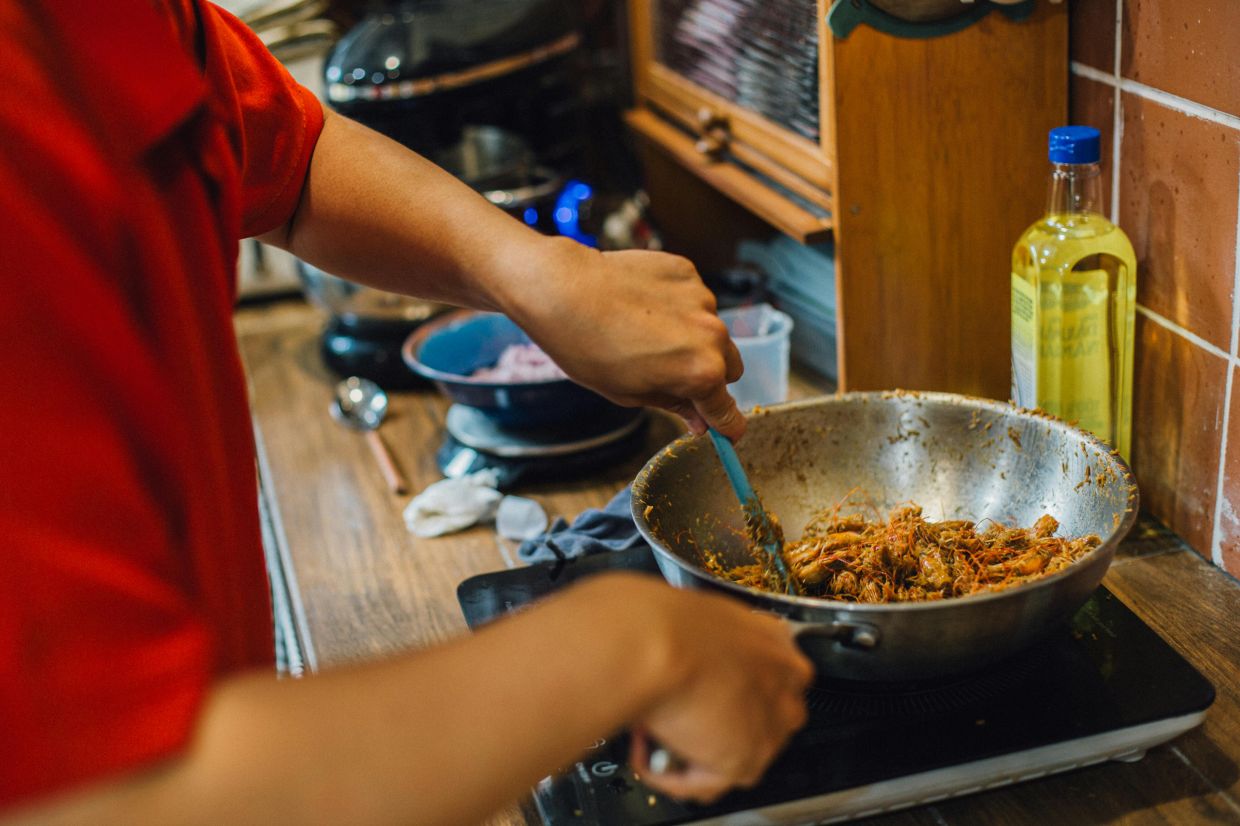
When you follow the faded words of a family recipe, the decades literally collapse. This is the “compression of expertise” effect, where decades or even centuries of trial and error are distilled into a well-worn recipe page.
And so every flavour borrows from the past: the ancestors who cooked it, the rituals embedded within it, our idiosyncratic recollections that first gave it meaning. Food is one of the few ways we can truly taste history – and in those moments, time feels less like a straight line than a layered experience.
In this way, memories of food shape identity, and identity, repeated across generations, becomes culture. When we taste, we remember – and what we remember, we become.
The views expressed here are entirely the writer’s own.