
There is more to nature than just butterflies and bees. Within it lies significant financial risks and economic opportunities.
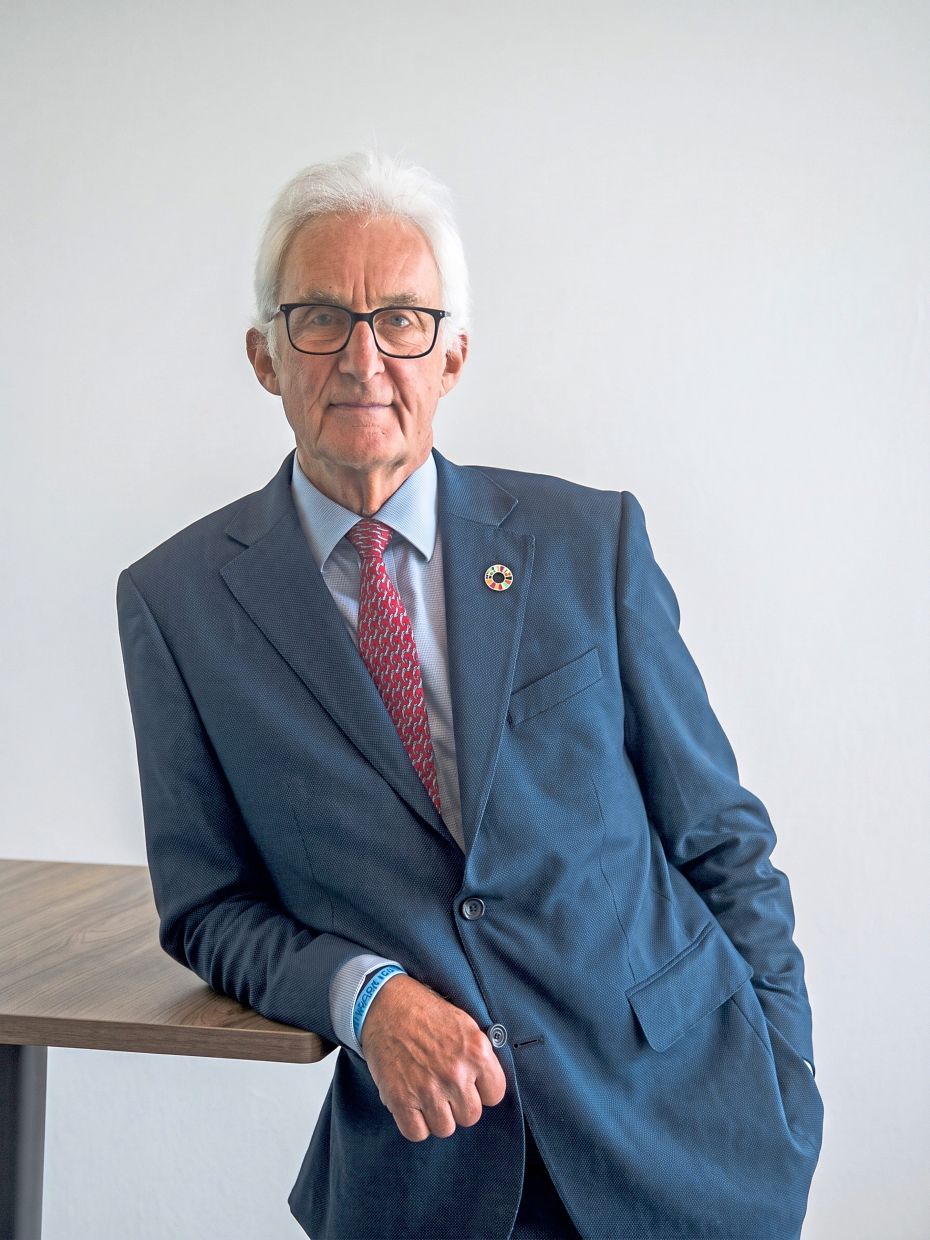
“If I go to asset managers at a pension fund and ask, ‘What do you think about investing in nature?’, what comes to mind is butterflies, bees and flowers. But the opportunities are much, much more than that,” Andrew Mitchell, who is the Taskforce on Nature-related Financial Disclosures (T D) co-founder and senior adviser, said.
Since 1970, the global average wildlife population has declined by 73%, posing risks to the value chains on which businesses depend on, he shared.
Mitchell, who is also the founder of Global Canopy, an Oxford-based tropical forest think tank, was speaking in a session on “Nature: The Biggest Investment Opportunity You’re Ignoring” at the Joint Committee on Climate Change’s Journey to Zero Conference 2026 in Kuala Lumpur.
As one of the world’s 17 megadiverse countries, Malaysia’s economy is deeply intertwined with natural ecosystems. According to a joint report by Bank Negara Malaysia (BNM), the World Bank and the United Nations Development Program’s Biodiversity Finance Initiative, over half of the country’s gross domestic product has a high or very high dependency on at least one ecosystem service.
In the financial sector, 54% of commercial lending flows to sectors highly dependent on ecosystem services, while 36% of loans finance activities that put those same ecosystems under significant pressure.
Quoting the State of Finance for Nature report, Mitchell highlighted estimates that about US$7.5 trillion (RM30.8 trillion) in public and private finance flows towards activities that negatively affect nature, compared with about US$700bil (RM2.9 trillion) invested annually in nature.
“We’re trying to fix a trillion-dollar problem with a billion-dollar solution. And that’s why we always fail,” he said, adding that commercial interests would continue to outweigh conservation efforts unless financial flows were redirected.
Formally launched in 2021, T D provides businesses and financial institutions with a framework to locate, evaluate, assess and disclose their nature-related dependencies, impacts, risks and opportunities.
Its ultimate aim is to shift global financial flows away from nature-negative activities towards nature-positive outcomes.
“Nature is across everything,” Mitchell said, cautioning against treating biodiversity as a concern confined to agriculture or conservation, or one that can be put on hold until businesses sorted out their climate-related disclosures.
For investors, this also means looking at the impact of their funds on nature, beyond just the impact of degradation of nature on their portfolio.
“I get it from a finance point of view, but it’s not good from a planet point of view,” Mitchell said.
He recalled meeting a Chinese pension fund manager who questioned the purpose of having a pension if beneficiaries could no longer breathe clean air when they retired.
“What is the point of having investments inside that pension which, when you are in your 60s and you are giving up your work, the world is dead and you can’t breathe the air? And your investments contributed to that process,” he said.
In October, the International Sustainability Standards Board (ISSB) published an exposure draft of its proposed IFRS Sustainability Disclosure Practice Statement 1 on Nature-related Disclosures.
Rather than introducing a new global reporting standard, the proposed practice statement provides guidance on applying existing ISSB requirements to nature-related risks and opportunities, drawing extensively on the T D framework.
Application of the practice statement is voluntary, unless made mandatory by individual jurisdictions.
Mitchell urged businesses not to wait for their governments. “As a chief executive officer, if you can see what the future is bringing, then get ready now. And T D is the guidebook to get ready now.”
Board commitment
Speaking to StarESG, Mitchell said Malaysia has five publicly announced T D adopters, describing this as a promising start.
He said companies already familiar with the Task Force on Climate-related Financial Disclosures would find T D relatively straightforward to adopt, as both frameworks share a similar structure.
However, T D requires additional data collection, often involving information spread across different departments and a board-level commitment.
“You cannot leave it up to sustainability officers alone and the ESG team without the authority of the board. Often it takes time for the board to be convinced, and that requires education and understanding,” he said.
Addressing the concerns over the business case of adopting T D, Mitchell said companies must recognise that nature-related risks extend beyond agriculture and food production.
Sectors that are most at risk are construction, manufacturing and mining because of their water dependencies, he said, quoting the aforesaid BNM joint report.
“It requires a reframing of how the board perceives nature. That is the first step. They say, ‘We don’t produce food; we’re in real estate.’ But real estate is heavily dependent on the services of nature, including timber, water and so on.”