UNDER Malaysia’s National Energy Transition Roadmap, the government is aiming to establish a Sustainable Aviation Fuel (SAF) blending mandate, beginning with 1% in the near term and then scaling up progressively to 47% by 2050.
In the European Union, the ReFuelEU Aviation Regulation mandated a progressive increase in SAF blending starting at 2% in 2025 and reaching 70% in 2050.
Singapore, meanwhile, has a 1% SAF mandate for all departing flights, which will be increased to 3% to 5% by 2030. A SAF levy will be imposed on tickets for flights departing from Oct 1 this year.
Produced often from waste and residue feedstocks such as used cooking oil (UCO), SAF can cut emissions but is several times more expensive than traditional jet fuel.
For the week ended March 20, the price of traditional jet fuel was US$197 (RM778) per barrel, a 105.8% jump from the previous month’s average. When fuel prices go up, the SAF costs also increase correspondingly.
In Malaysia, commercial SAF production has begun with Hong Kong-based EcoCeres’ 350,000 tonne facility in Pasir Gudang, Johor, with Europe as its main target market.
A larger biorefinery, with an annual capacity of 650,000 tonne, is under development by PETRONAS, Enilive and Euglena in Pengerang, Johor. It is expected to be operational in 2028.
Another player looking to enter the field is FatHopes Energy, which is partnering with Bin Zayed Group International (BZI) on a proposed SAF refinery project at Port Klang.
Proposed Selangor refinery
Feedstock availability is a critical lever for scaling SAF production.
Security, traceability and scalability are the three keywords of biofuel feedstock, said FatHopes Energy founder and chief executive officer Vinesh Sinha. “How can I ensure that it is consistently delivered to me with an auditable supply chain?”
For the last 15 years, FatHopes Energy, which began with biodiesel production, invested in a region-wide aggregation system with purpose-built logistics infrastructure, cultivated long-term supply relationships and built a proprietary native digital traceability system. It is one of the first companies in Asia to recognised by International Sustainability and Carbon Certification (ISCC), a certification system for sustainable, fully traceable supply chains.
“We deliberately chose the harder path, because the logic is that even if you don’t get to scale up enough for a refinery, you can still supply, but the reverse is not true,” he shared.
Locally, it has seen the transformation of residual oil collection in Malaysia into the maturing circular economy it is today, where households, food and beverage industry and food manufacturing businesses can become a contributor to this climate solution.
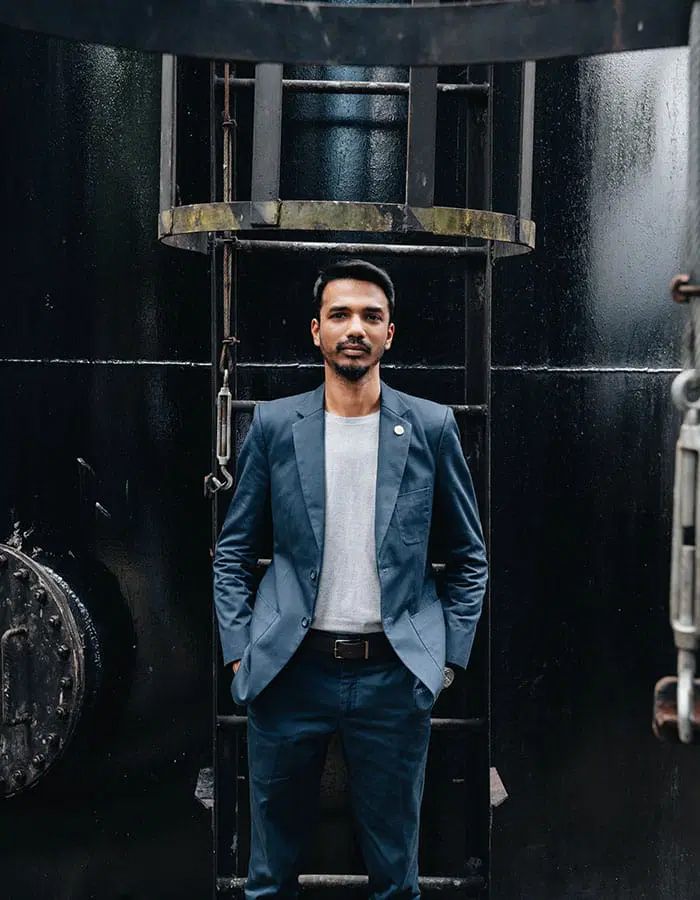
If realised, its proposed refinery at Westport will be the first in Selangor, creating a closed-loop system where waste generated in the state is processed into SAF, which then powers aircrafts flying out of the state.
“Selangor can become the world’s first subnational circular SAF economy, and we can support other carriers to tap into mandated markets,” Vinesh said.
Unlock Malaysia’s potential
A final investment decision will be made after the front end engineering design (FEED) is concluded by the second quarter of 2027, Vinesh said.
With FatHopes Energy’s strength in diversification of feedstock, its proposed refinery will be a multi-feedstock refinery.
Its feedstock strategy is to evolve beyond UCO and palm oil mill effluent oil to incorporate spent bleaching earth oil and empty fruit bunch oil from the palm value chain. It is also exploring algae oil as a future feedstock pathway.
To unlock Malaysia’s SAF potential, Vinesh said several catalytic potentials can make Malaysia globally competitive. One is access to long-term, low-cost financing that will immediately position Malaysian projects more competitively.
“The second is a buyer of last resort at international benchmark prices,” he said, adding that this would give refineries certainty that the government would step in to purchase SAF at a floor price, ensuring they break even.
The third is to prioritise local feedstock for local refining so that value creation remains in the country, Vinesh added.
Coordinated strategy needed
Since 2021, Malaysia Aviation Group (MAG) has operated 20 SAF-powered flights across both passenger and cargo services. It also expanded its SAF efforts through partnerships with PETRONAS and FatHopes Energy.
Last year, it conducted a two-week pilot SAF uplift for the Kuala Lumpur–London route to assess local supply chain readiness at Kuala Lumpur International Airport.
Three key challenges MAG faces in scaling up SAF usage are high SAF cost, lack of policy harmonisation, and lack of dual conformance and certification gaps.
With a fragmented global SAF policy landscape, the lack of alignment creates uneven cost structures and operational complexity for airlines, it said.
“Not all SAF uplifted qualifies across different regulatory and market mechanisms. For instance, SAF used to comply with EU or UK mandates may not always be recognised under Corsia.
“As a result, airlines such as MAG may incur the cost of SAF uplift to meet regional regulatory requirements, but are unable to fully claim the corresponding emissions reduction benefits across other frameworks.This reduces the overall effectiveness and efficiency of SAF investments,” it said.
MAG noted that to address the feedstock supply constraints, the industry must accelerate the development and scaling of alternative pathways, such as alcohol-to-jet and synthetic fuels.
MAG is also exploring corporate SAF programmes using book-and-claim mechanisms, allowing businesses to contribute towards SAF adoption and reduce Scope 3 emissions from air travel and logistics. This will help expand demand beyond airlines and hasten voluntary SAF uptake, it added.
Meanwhile, AirAsia chief sustainability officer Yap Mun Ching shared that the airline would time the introduction of SAF with the start of operations of the PETRONAS refinery in 2028.
“If we use 1% of SAF for AirAsia’s network, the annual cost could reach US$75mil (RM297mil) to US$80mil (RM317mil), which is a huge amount. And we have to incur the expense again next year,” she said.
A policy to regulate the export of UCO, similar to measures adopted by China and Indonesia, is crucial to secure feedstock supply for domestic production, she added. There should also be investment in research and development of new feedstocks.
“The debate right now is very much centred on mandates, but the supply strategy and coordinated response are missing,” she said, noting that this challenge is not unique to Malaysia.