Malaysia has the factories, the incentives and the ambition. Now, it is building the workforce to match.
When a global automaker scouts a new location for an electric vehicle (EV) plant, the checklist is predictable: logistics, tax breaks and proximity to markets. But increasingly, the first question investors ask is not about any of those things.
It is about people: Can you find us engineers who understand battery management systems? Do your graduates know power electronics?
For Malaysia, these are not hypothetical questions. They are the ones that determine whether the next billion-ringgit investment lands here.
“Talent is the strategic asset that determines whether we attract the right investments and whether Malaysia can truly compete in the global industrial arena,” said Malaysian Investment Development Authority (Mida) chief executive officer Datuk Sikh Shamsul Ibrahim Sikh Abdul Majid.

The policy architecture
Malaysia has laid the framework for local EV development, and the momentum behind it is real.
Under the National Energy Transition Roadmap, the adoption of green mobility is essential to address the burden of transportation emissions. Green mobility encompasses all forms of sustainable modes of transport, including the usage of EVs and public transport.
One of its key targets is to strengthen domestic EV production capacity to reach 90% local xEV (electrified vehicles including hybrids) manufacturing.
The New Industrial Master Plan 2030 places the automotive sector at the centre of the country’s high-tech industrial ambitions, with talent development, research and development and workforce readiness written into its core commitments.
Meanwhile, the National Automotive Policy (NAP) 2020 aims to reposition from traditional manufacturing to a high-tech mobility ecosystem.
This shift is designed to create a new breed of automotive talent focused on digital and green technologies.
The NAP 2020 framework introduces the National Roadmap for Automotive and Mobility Talent, which specifically aligns the workforce with future trends like Next-Generation Vehicles (NxGV) and Industry 4.0.
A regional automotive hub
Malaysia is widely recognised as the automotive hub of South-East Asia, particularly for its two homegrown brands, Proton and Perodua.
Beyond its national brands, the country also serves as a critical assembly and export hub for several international manufacturers such as Mercedes-Benz, BMW, Porsche and Chery through complete knock-down operations.
Despite this, the shift from internal combustion engine vehicles to EVs demands a different set of skills, and
that has created an opening for a new kind of intervention: matching what investors need with what universities can deliver.
This is where Mida has stepped in. It acts as a facilitator between universities and investors, matching investor needs with academic institutions and serving as a catalyst to address the skills gap in the local EV manufacturing industry.
Sikh Shamsul Ibrahim said that investors are looking for engineers with strong technical capabilities in battery management systems, power electronics and automotive cybersecurity.
Strategic academia-industry collaboration is key to building a talent ecosystem that meets investor demands, enables EV growth and strengthens ESG-aligned business practices, he added.
Curriculum building
In its strategic advisory capacity, Mida gathers information from international best practices and tailors them for local implementation. It channels real-time industry intelligence into curriculum development and programme design.
“When investors share specific workforce requirements—whether in EV systems, autonomous technologies or advanced manufacturing—we translate these requirements into actionable guidance for our university partners.
“Our advisory role is informed by global best practices. For instance, we study successful collaborations from Europe and use these models to guide Malaysian academic institutions in developing comparable industry relationships.
“This approach ensures that our advice to universities is grounded in proven frameworks that deliver measurable workforce outcomes,” he said.
It also identifies successful collaboration models between automotive manufacturers and local universities, enabling their replication across the sector.
Some of this is already bearing fruit. Perodua serves as an academic advisor to Universiti Malaysia Pahang Al-Sultan Abdullah (UMPSA) and is a core industry partner in the Ministry of Higher Education Research and Industry-Infused Incubator for the automotive sector, collaborating with five universities, including UMPSA, Universiti Teknologi Malaysia (UTM), Universiti Teknikal Malaysia Melaka, Universiti Malaysia Perlis and Universiti Tun Hussein Onn Malaysia, all of which provide structured work-based learning placements and upskilling programmes.
The agency champions this multi-university partnership model to other manufacturers, demonstrating how a single original equipment manufacturer can systematically build talent pipelines across multiple academic institutions simultaneously.
Proton takes a different tack. It maintains an Industrial Advisory Panel with UTM, which reviews and updates the syllabus annually and deploys senior engineers as adjunct lecturers at UMPSA, Universiti Teknologi Petronas and UTM.
Both companies also operate work-based learning programmes that embed students in their operations for extended stints. The common thread here is that Mida facilitates the expansion of both arrangements, transforming individual company initiatives into sector-wide practices that systematically strengthen the academia-industry nexus.
“When successful models are identified, we actively connect other automotive manufacturers with similar academic institutions to accelerate their replication,” he said.
From classrooms to factory floors
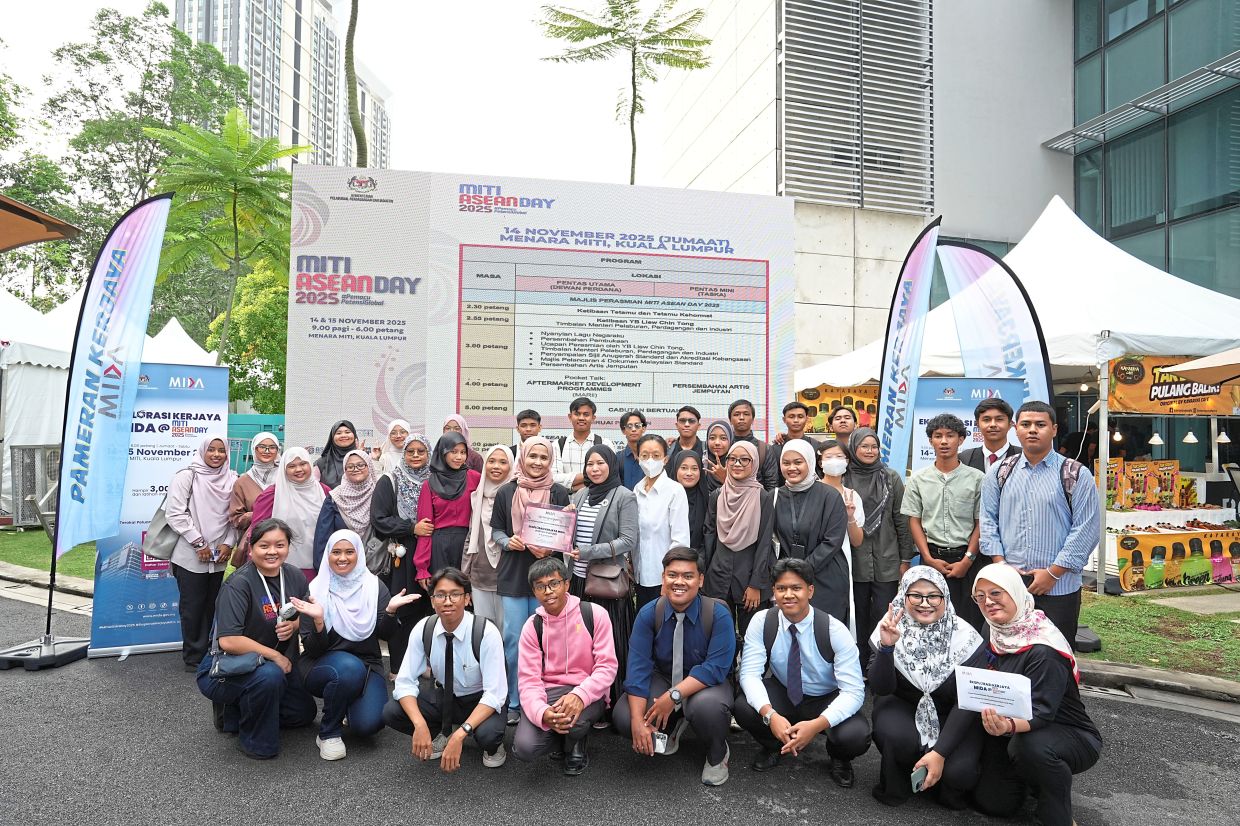
Beyond curriculum reform, Mida bridges academia and industry through its Special Task Force–Talent Facilitation, connecting academia, government agencies and private companies through internship opportunities and job placements.
The agency has facilitated talent placements for companies such as EVE Energy Malaysia, Base Maintenance Malaysia, UWC Berhad and TF AMD Microelectronics, fulfilling around 60% of their hiring needs.
It has also organised direct engagement between local students and industry partners. Mida collaborated with Universiti Teknologi Mara’s engineering school to connect companies like Stellantis and Samsung SDI for a one-year mechatronics placement, a sign of how far the country’s academia–industry linkages have come in a short time.
Separately, Stellantis also took part in the “Eksplorasi Kerjaya Mida”, the agency’s career fair, in 2023 and 2024.
A whole-of-nation playbook
The demand for EV talent is global, and the competition for it is intensifying. What distinguishes Malaysia’s approach is the connective tissue: an agency that actively shapes the investment ecosystem to align with investor requirements.
“Mida is building the bridges that turn investment into innovation. Ensuring Malaysia’s automotive transformation is powered by homegrown research and collaboration, an embodiment of a whole-of-nation approach,” Sikh Shamsul Ibrahim said.
The factories are here. The policies are in place. Now, one graduate at a time, the talent is catching up.
For more information, visit https://www.mida.gov.my/.