CIVIL society organisations and non-governmental organisations (NGOs) in Malaysia are playing an increasingly important role in addressing the country’s pressing social, educational and environmental challenges.
These groups work to reduce food waste, strengthen literacy, support refugee communities and promote gender-responsive climate governance.
Many operate independently of the government, providing vital support to vulnerable populations that might otherwise be overlooked. This feature highlights four organisations making a significant impact on the ground.
The Lost Food Project, MYReaders, Fugee Org and Klima Action Malaysia each focus on distinct areas but share a common commitment to creating a meaningful impact on communities.
Through their initiatives, they demonstrate how local action can address national challenges and empower those most in need.
Collectively, their work illustrates the growing influence of civil society and NGOs in shaping a more inclusive and resilient Malaysia.
The Lost Food Project
In Malaysia, over 4,000 tonnes of edible food are wasted each day. Yet, the National Health and Morbidity Survey 2022 shows that 21.2% of Malaysian children under five years of age are stunted due to malnutrition.
Working to solve this issue is The Lost Food Project (TLFP), one of Malaysia’s leading food banks dedicated to saving and redistributing quality surplus food to those who need it most.
Founded in 2016 by British journalist Suzanne Mooney and a team of dedicated friends and volunteers, the initiative began as a personal effort that evolved into the leading food rescue organisation in Malaysia, now led by a committee and more than 70 volunteers.
At its current capacity, TLFP saves an average of 40 tonnes of food per week from the landfill. This surplus food, rescued from supermarket chains and multinational food manufacturers, is given to Malaysians living in low-cost People’s Housing Project (PPR) units, as well as over 80 vetted charities.
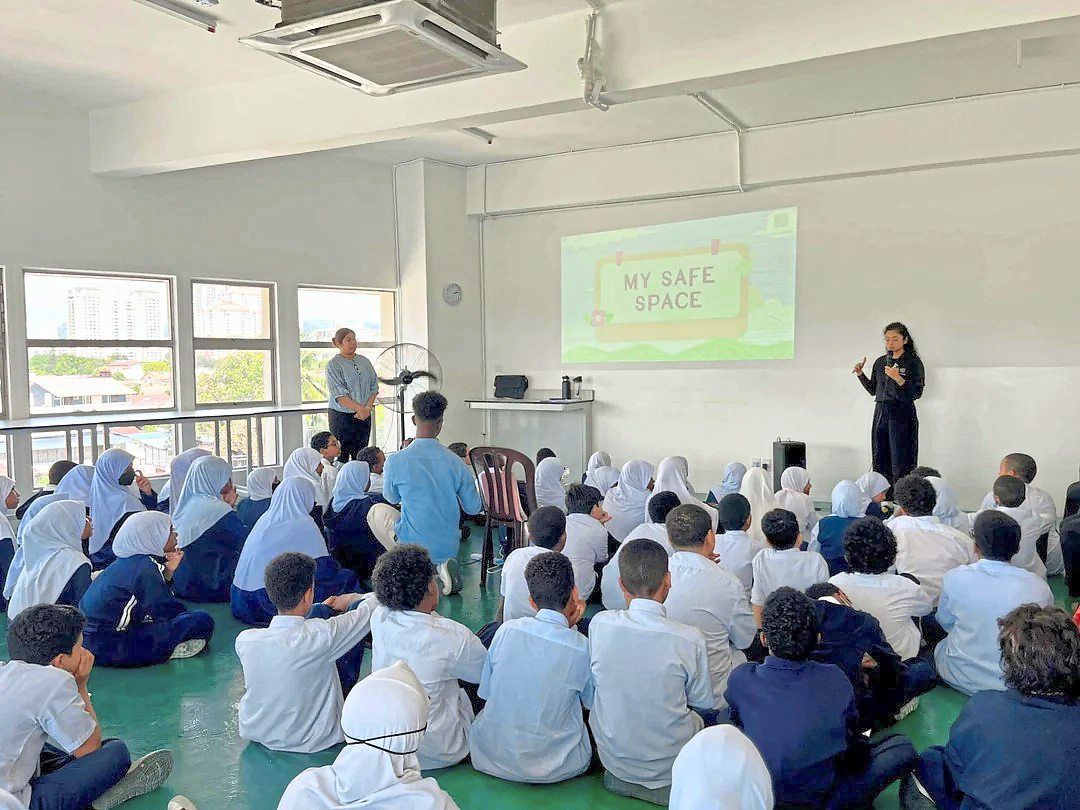
The organisation also has an education team that works closely with schools and universities to deliver workshops educating Malaysian youth about the pressing issue of food wastage.
MYReaders
To quote Malala Yousafzai, “One child, one teacher, one book, one pen can change the world.” This is certainly the mission of MYReaders, a non-profit organisation with humble beginnings that is accelerating the empowerment of children by providing highly-structured reading programmes.
The initiative began in 2014, when Charis Ding, Alex Lim, Rachel Lim and Tay Sue Yen —four English teachers under the Teach for Malaysia fellowship—started after-school mentor-mentee reading programmes in their respective schools after realising that their students could not read or understand basic English sentences.
Literacy is, indeed, an issue across Malaysia. A 2024 report by the World Bank revealed that 42% of Malaysian students failed to achieve reading proficiency by age 11, with lower-income families faced a more significant challenge, where 61% lack reading proficiency.
Through the creation and sharing of literary resources, community empowerment and literacy advocacy, MYReaders has positively impacted over 36,000 students, 1,972 parents, 1,057 teachers and 2,420 volunteers. Their flagship Literacy Hub provides structured English reading intervention through a toolkit that includes a variety of materials aligned with key reading components.
Fugee
There are over 192,000 refugees in Malaysia, including 56,000 children who are denied access to legal education and healthcare—as Malaysia is not a signatory to the 1951 Refugee Convention. Many live in fear and exploitation, facing a daily struggle for dignity and survival.
Fugee Org is a leading non-profit focused on improving life outcomes for refugees in Malaysia by providing quality education services.
Founded in 2009 by Deborah Henry, what began as tuition for four Somali siblings has grown into Fugee School, an institution recognised by UNHCR Malaysia that empowers over 700 refugee and stateless students.
Throughout their education journey, Fugee aims to equip these students with comprehensive knowledge, confidence and skills for a better quality of life.
Also offering higher education scholarships and youth programmes, Fugee hopes to increase graduation rates among refugees—education is important for refugee and stateless children to assimilate into society, improve well-being and gain financial stability and independence.
Klima Action Malaysia
Klima Action Malaysia (KAMY) is a self-described feminist climate justice organisation advancing rights-based, gender-responsive climate governance in Malaysia.
Since 2020, they have worked to bridge grassroots communities—especially women, indigenous peoples and youth—with policy-makers to ensure Malaysia’s climate response focuses on the most vulnerable.
Through research, advocacy and coalition-building, KAMY works to translate complex climate policies into accessible content while platforming marginalised voices.
They contribute to the Convention on the Elimination of All Forms of Discrimination against Women (CEDAW) and the Universal Periodic Review (UPR) processes, highlighting the importance of gender considerations in climate governance.
KAMY’s past activities include protests and demonstrations, workshops, programmes championing indigenous participation in climate dialogue, educational advocacy and beyond.
KAMY also has a resource hub: a central knowledge platform created to empower movements, researchers and the public with key climate and human rights resources.
On this resource hub, visitors may explore curated publications, expert directories and policy briefs—to strengthen advocacy for climate justice in Malaysia.
The Star Journalism Apprenticeship Programme offers hands-on experience
and mentorship for aspiring journalists. Interested students can apply at
brats@thestar.com.my