AS the sun rises on a new era of energy, few companies are as uniquely positioned – or as resolutely committed – to lead the transition to a lower carbon future as national oil company Petroliam Nasional Bhd (PETRONAS).
With a legacy rooted in powering Malaysia and the region, the oil and gas giant is not merely responding to change – it is engineering it.

It announced a net-zero ambition in 2020.
But this is no ordinary pledge. It’s an intricate strategy that balances the dual imperatives of energy security and environmental stewardship.
According to PETRONAS projects, technology and health, safety, security and environment senior vice-president Mohd Yusri Mohamed Yusof, the plan rests on three key pillars.
One of the pillars of its energy transition strategy is to focus on its core oil and gas production, providing more energy with less emissions.
The second pillar is to explore new business growth opportunities in renewable energy, hydrogen, green mobility, specialty chemicals, carbon capture and storage (CCS) and bio-based value chain to meet the demands of a changing energy landscape.
The third pillar focuses on its commitment to achieve net-zero carbon emissions by 2050.
Mohd Yusri points out that its NZCE contains short, medium and long-term targets that rely on four decarbonisation levers to improve its operational excellence and environmental performance.
These are zero routine flaring and venting, energy efficiency, electrification and CCS.
Already, the results are showing. “We are making steady progress toward our 2030 target of reducing our group-wide emissions by 25%,” Mohd Yusri says.
PETRONAS capped its emissions at 46.06 million tonnes of carbon dioxide equivalent (MtCO₂e) in Malaysia – below its 2024 target – and halved its methane emissions from 2019 levels well ahead of schedule.
“Our NZCE Pathway sets short and mid-term targets to reduce methane emissions in our group-wide and Malaysian natural gas value chain. Accelerating methane emissions reduction is important, given methane’s potent impact on global warming," he adds.
Accelerating methane emissions is important, given methane’s potent impact on global warming,” he adds.
Beyond its decarbonisation efforts, Mohd Yusri shares that PETRONAS is also expanding into lower carbon energy growth areas.
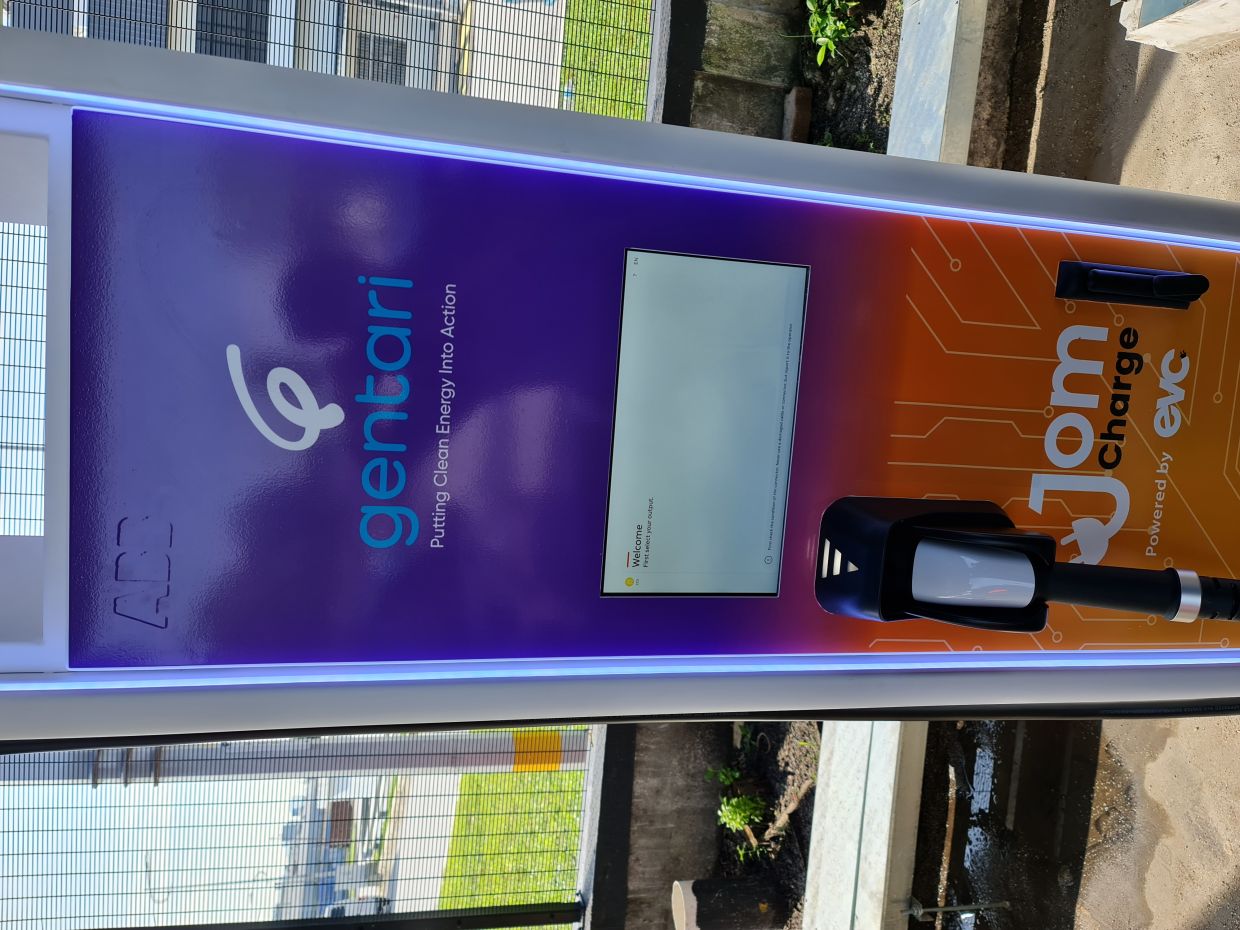
“For instance, in 2022, we established Gentari to fully focus on clean energy solutions in the energy transition space, including renewable energy, hydrogen and green mobility,” he adds.
PETRONAS’ NZCE plan is not pursued in isolation. It aligns with Malaysia’s national commitments under the Paris Agreement, including the pledge to reduce carbon intensity by 45% by 2030.
As a key player in Malaysia’s National Energy Transition Roadmap (NETR), PETRONAS leads critical projects in carbon capture and hydrogen – technologies essential for achieving long-term sustainability.
“Our adoption of the United Nations Environment Programme’s Oil and Gas Methane Partnership 2.0 framework underscores our commitment to accurate and comprehensive methane emissions reporting, a critical aspect of global climate action.”
PETRONAS is also a key enabler of the NETR, in which it will lead two emissions abatement projects for the country, CCS and hydrogen, as well as contributing to the development of future fuels.
Global standards and transparency remain paramount. The company adheres to the Greenhouse Gas Protocol and the Oil and Gas Methane Partnership 2.0 framework, showcasing its dedication to credible reporting and global best practices.
For PETRONAS, sustainability isn’t a side project – it is a core strategy. “PETRONAS’ Energy Transition Strategy is designed to balance energy security, affordability and sustainability, through three core pillars: monetising and reducing emissions from our core business, expanding cleaner energy through new business and advancing our pathway to net zero.
“Delivering net-zero carbon emissions is a key component of our sustainability approach. So sustainability is very much directly integrated into our core business strategy,” Mohd Yusri highlights.
The company has embedded environmental goals across its operations and supply chain as well as developed sustainability solutions in-house and with partners, introducing advanced materials to leveraging corrosion prediction tools.
Malaysia’s geology positions it well as a CCS hub, and PETRONAS is leading the charge. It views CCS not just as a way to decarbonise its offshore operations, but also as a scalable business model for hard-to-abate industries at home and abroad.
At the same time, electrification is gaining momentum. PETRONAS is deploying solar solutions at its onshore facilities and exploring offshore electrification strategies.
Through Gentari, its clean energy subsidiary, the company is also building out solar projects, electric vehicle (EV) charging networks and hydrogen logistics – all crucial levers in the global decarbonisation effort.
“In green mobility, Gentari is expanding its EV charging network and promoting electric vehicle adoption through its Vehicle-as-a-Service model, which offers seamless fleet electrification supported by EV leasing, maintenance and charging services.
“On the hydrogen front, we are maturing hydrogen opportunities while exploring logistics solutions through strategic partnerships for clean ammonia shipping and floating storage,” Mohd Yusri says.
As the world navigates the complex realities of the energy transition, PETRONAS is emerging as a torchbearer – not just for Malaysia, but for Asia.
Its leadership at the Energy Asia forum and technical partnership with the UK-based Energy Institute underscore its commitment to fostering innovation ecosystems for the region’s net-zero future.
In the words of Mohd Yusri : “We’re not just delivering energy – we’re building a sustainable legacy.” And in doing so, it is lighting the way for others to follow.