NEWS that the government will disclose more pertinent information regarding government contracts is a welcomed move towards casting light on how taxpayers’ money is being spent.
For a long time, the flow of information has been patchy over which company has been granted a government contract.
Sometimes, revelations are released obscurely. Other times, there are no disclosures at all. Secrecy seems to be the staple.
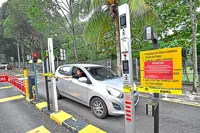
One famous example is toll road concessions. Some toll roads have their concession agreements classified under the Official Secrets Act (OSA) 1972.
The irony is that almost all, if not all, toll roads have bonds, sukuk or debt facilities whose terms need to be disclosed to lenders, yet details of the concession agreements remain classified as government secrets and are kept from the general public and inquisitive minds.
Ridiculous.
It was reported that, starting next year, the government will release information on the contract values of projects and the contractors involved.
This will be made possible under the Government Procurement Act 2027, which is set to go live next year. The law was passed last year.
Finance Minister II Datuk Seri Amir Hamzah Azizan said in a report that the move was part of broader efforts to strengthen transparency and accountability.
The decision to release the information was prompted by scandals in the past involving the Federal Land Development Authority or Felda, 1Malaysia Development Bhd or 1MDB, and Lembaga Tabung Haji.
What should be revealed are details of public infrastructure and development projects, such as the construction of roads, hospitals, schools and universities.
Who was appointed as the contractor and which company won the bid are important information.
Along with these, pertinent details like the justification for the project, its value and the costs associated with taxpayer-funded projects could also be revealed, together with updates to track the progress of the project.
Information on the winning bidder should also be furnished, as taxpayers need to know how and why a company won a bid for the project. Also, details on who are the suppliers engaged by the winning bidder could also be disclosed.
Hopefully, greater transparency will prevent a repeat of the fiascos involving projects that have featured in the Auditor-General’s reports, and help the public understand what went wrong.
Progress updates should also be forthcoming. At least, the public would know how taxpayers’ money is being spent and accounted for, rather than a surprise being sprung that large sums have been spent but a project is nowhere close to completion or delivery.
The Littoral Combat Ship and Pan Borneo Highway projects are a couple of examples where greater disclosure would be welcome.
The intent to disclose more information was evident when the government tabled the Freedom of Information (FOI) Bill 2026 in July. The bill is now before a Parliamentary Special Select Committee.
The bill aims to create a process where the public can request certain information from the government, but it has drawn criticism for falling short on genuine transparency standards.
There is a list of dos and don’ts governing what information can be released to the public, and the bill could be seen as merely setting out a procedural process for releasing information.
The FOI Bill does not override the OSA or grant carte blanche access to information. Hence, the government’s willingness to release granular details of government contracts will be at its discretion.
It will bear watching just what information is eventually divulged, given the government’s tendency to grasp information tightly.
The move for greater disclosure does not end there. The report also said the government is drafting a Government-Owned Entities Bill to establish a clearer and more uniform financial governance framework for statutory bodies and government-owned companies.
The report says these entities are currently subject to different regulations and reporting requirements, making comprehensive oversight and compliance more difficult.
It was reported that the proposed bill would provide a more consistent framework, particularly for investment activities, procurement and asset disposal.
It is about time details of government-linked companies’ investments, government contracts and their contractors be revealed.
Malaysia has an unenviable track record of overpaying for projects and proceeding with projects that could be deemed unfeasible.
Past examples have shown a propensity to overpay for projects under various pretexts, which inflates the cost of the project and that puts a burden on government finances.
Better disclosure of projects and their contractors could also put rent-seeking activities under a greater spotlight, as the public should have access to information on who benefits from government contracts.
But procurement needs to be expanded beyond just brick-and-mortar projects or physical goods.
We have seen how the government has outsourced different service-based functions, like electronic processes and payments, as well as the issuance of passports and national identity cards.
The revelation of contract details should be extended to such services and what is undertaken by listed companies engaged in the supply of government services.
That way, the spotlight is on how government money is being spent, and hopefully, such disclosure can be a panacea for overspending.